How to Prepare: What to Wear, What to Bring, and How to Time Your Visit for the Morning Alms in Luang Prabang
- How to Prepare: What to Wear, What to Bring, and How to Time Your Visit for the Morning Alms in Luang Prabang
- Understanding the Morning Alms Ceremony (Tak Bat)
- What to Wear for the Morning Alms Luang Prabang: Attire Guidelines
- What to Bring: Offerings and Essentials
- How to Time Your Visit: The Best Approach
- Essential Etiquette and Respectful Observation
- Beyond the Alms: Exploring Luang Prabang Responsibly
- คำถามที่พบบ่อย (FAQ)
The ancient town of Luang Prabang, a UNESCO World Heritage site, is renowned for its serene beauty and deep-rooted spiritual traditions. Among its most captivating daily rituals is the morning alms Luang Prabang ceremony, known locally as ‘Tak Bat’. This sacred procession, where saffron-robed monks collect food offerings from devout locals, offers a profound glimpse into Laotian Buddhist culture. For visitors, observing or participating in this ceremony can be a truly unforgettable experience, provided it’s approached with the utmost respect and understanding. This guide will walk you through everything you need to know to prepare, ensuring your presence enhances, rather than detracts from, this cherished tradition.
Understanding the Morning Alms Ceremony (Tak Bat)
Before delving into the practicalities, it’s crucial to grasp the essence of Tak Bat. This daily ritual is not a performance for tourists, but a deeply spiritual act of devotion and merit-making. Monks, who rely entirely on the community for their sustenance, walk silently through the streets, collecting food offerings (primarily sticky rice) from the faithful. This act allows the laypeople to gain merit and show respect to the monastic order, fostering a symbiotic relationship between the community and the temple.
A Daily Ritual of Devotion
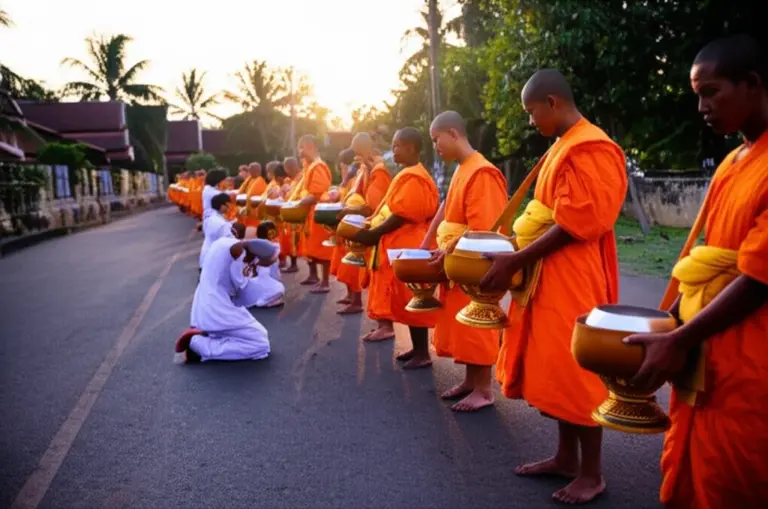
Every sunrise, as the first light touches the gilded rooftops of Luang Prabang’s temples, hundreds of monks emerge from their wats. Barefoot and silent, they walk in single file, their orange robes a vibrant streak against the dawn. This tradition has continued uninterrupted for centuries, symbolizing the enduring Buddhist faith in Laos. It’s a moment of quiet contemplation, community solidarity, and profound spiritual significance.
The Role of Monks and Laypeople
For monks, the alms round is not just about collecting food; it’s an opportunity for mindfulness and to offer blessings. For the laypeople, it’s a chance to practice generosity (dana) and accumulate good karma. They kneel respectfully, often in silence, placing small portions of sticky rice or other food items into each monk’s alms bowl. This exchange is a cornerstone of Theravada Buddhism, emphasizing detachment for the monks and compassion for the community.
What to Wear for the Morning Alms Luang Prabang: Attire Guidelines
Appropriate dress is paramount when observing or participating in the morning alms Luang Prabang. This demonstrates respect for the monks, the local culture, and the sacred nature of the ceremony. Your clothing should be modest and conservative.
Modesty is Key
Both men and women should ensure their shoulders, chest, and knees are covered. This typically means wearing long trousers or skirts/dresses that reach below the knee, and shirts that cover the shoulders. Avoid tank tops, shorts, mini-skirts, or any overly revealing clothing. It is also customary for women to wear a sinh (traditional Lao skirt) if participating in the alms giving.
Practical Considerations
While modesty is primary, comfort is also important. The mornings in Luang Prabang can be cool initially but quickly warm up. Opt for lightweight, breathable fabrics. You’ll likely be sitting or kneeling on the ground, so choose clothing that allows for easy movement. Remember to remove your shoes if you are participating directly in the alms giving, as is customary when interacting with monks or entering sacred spaces.
What to Bring: Offerings and Essentials
If you plan to participate in the alms giving, there are specific items you’ll need. Even as an observer, a few essentials will enhance your experience.
Traditional Offerings: Sticky Rice
The most common and traditional offering is freshly cooked sticky rice (khao niao). It’s crucial to buy this from local vendors early in the morning, as they prepare it fresh. Avoid purchasing pre-packaged or mass-produced offerings from commercial tourist stalls, as these often exploit the tradition. Buying from local women supports the community and ensures the offerings are appropriate. Sometimes, small snacks or fruit may also be offered.
Other Considerations
- Camera: If you plan to take photos, ensure your camera has a good zoom lens and you know how to use it discreetly without flash. More on photography etiquette below.
- Water: It can get warm quickly. A small bottle of water can be helpful.
- Small Change: For purchasing offerings from local vendors.
- Shawl/Sarong: A versatile item that can be used to cover shoulders or legs if your existing clothing isn’t quite modest enough.
How to Time Your Visit: The Best Approach
Timing is everything for experiencing the morning alms Luang Prabang. This is an early morning event, and punctuality, combined with a respectful distance, is key.
When Does it Start?
The alms ceremony typically begins just before sunrise, usually between 5:30 AM and 6:30 AM, depending on the season and light. It’s best to check with your guesthouse or a local guide for the exact start time during your visit. The main route is along Sisavangvong Road, but smaller processions also occur on side streets.
Arriving Early: Finding a Respectful Spot
Aim to arrive at least 15-30 minutes before the estimated start time. This allows you to find a suitable and respectful viewing spot without rushing or disturbing others. If you are participating, local vendors will typically set up low stools and mats along the route, usually across the street from where the monks walk. If you are observing, find a spot across the street or further back, ensuring you do not block the path of the monks or the local participants.
Duration of the Ceremony
The procession itself is relatively brief, lasting about 30-45 minutes. Monks from various temples will pass by, and once they have all collected their alms, they return to their respective wats. It’s a fleeting yet powerful experience.
Essential Etiquette and Respectful Observation
Your behavior during the morning alms is critical. Remember, this is a religious ceremony, not a tourist attraction for entertainment. Adhering to proper etiquette ensures you contribute positively to the experience.
Maintaining Distance and Silence
Keep a respectful distance from the monks and local participants. Do not stand directly in their path. Maintain silence throughout the ceremony; avoid talking loudly, laughing, or making any disruptive noises. Turn off your phone’s ringer. If you are participating, kneel or sit at a lower level than the monks.
Photography Guidelines
Photography is allowed, but must be done with extreme discretion. Never use a flash, as it is highly disruptive. Do not get too close to the monks or local participants; use a zoom lens from a distance. Avoid pointing your camera directly into their faces. The goal is to capture the moment without intruding on its sanctity. If you see others being disrespectful with their cameras, do not emulate them.
Avoiding Direct Interaction with Monks
Do not touch the monks, their robes, or their alms bowls. Women, in particular, should be mindful not to make physical contact with monks, as this is forbidden by monastic rules. Do not interrupt their procession or try to engage them in conversation. If you are giving alms, do so quietly and respectfully, without making eye contact or speaking. It’s about giving, not interacting.
The Ethical Tourist
Be an ethical tourist. This means understanding that your presence has an impact. Avoid aggressive street vendors who might try to push inappropriate offerings or encourage disrespectful behavior. Your respectful conduct sets an example and helps preserve this beautiful tradition for future generations and for the people of Luang Prabang.
Beyond the Alms: Exploring Luang Prabang Responsibly
While the morning alms are a highlight, Luang Prabang offers much more. Continue your respectful exploration by visiting the temples, the Royal Palace Museum, and the stunning Kuang Si Falls. Engage with local communities, try traditional Lao cuisine, and support local artisans. Your mindful approach to the alms ceremony can extend to all your interactions, enriching your entire Laos Tourism experience.
คำถามที่พบบ่อย (FAQ)
References
- UNESCO World Heritage Centre: Town of Luang Prabang
- Lonely Planet: Morning Alms Giving Ceremony, Luang Prabang
- Official Tourism Laos: Alms Giving Ceremony
- Morning Alms in Luang Prabang: How to Participate Respectfully
- Why Do Locals and Tourists Join the Luang Prabang Alms Ceremony? — Understanding Cultural Significance, Best Times to Watch, and Responsible Tourism Intent
- Step-by-Step Guide to Participating Respectfully — Proper Behavior, Giving Etiquette, Photography Rules, and How to Interact with Monks