How to Choose the Right Travel Adapter and Voltage Converter for Laos: Devices, Safety, and Dual-Voltage Tips
- How to Choose the Right Travel Adapter and Voltage Converter for Laos: Devices, Safety, and Dual-Voltage Tips
- Understanding Laos Electrical Standards: Voltage and Plug Types
- Adapter vs. Converter: Making the Right Choice for Your Devices
- Device Compatibility Guide for Laos Travel
- Safety and Dual-Voltage Tips for Peace of Mind
- Visualizing Power Connections in Laos
- Location Context: Power Infrastructure in Laos
- คำถามที่พบบ่อย (FAQ)
- Do I need a voltage converter for my iPhone or Laptop in Laos?
- Can I use a US two-prong plug directly in Laos?
- What is the safest type of adapter to buy for Laos?
- If my device is single-voltage (120V only), what happens if I plug it into a 220V socket in Laos without a converter?
- Are power surges common in Laos?
- References
Planning your electronics setup for Laos is a vital step for any traveler. Understanding the local electrical standards—specifically the plug types and voltage—will save you stress and protect your valuable devices. This comprehensive guide details exactly **How to Choose the Right Travel Adapter and Voltage Converter for Laos: Devices, Safety, and Dual-Voltage Tips**, ensuring you stay powered up from Vientiane to Luang Prabang.
Understanding Laos Electrical Standards: Voltage and Plug Types
Before packing, you must identify the two crucial electrical components: the standard voltage used by the grid and the physical shape of the sockets. Incorrectly matching these can lead to anything from a non-functional device to a blown fuse or, worse, a fire hazard.
Laos Voltage: The Critical Number
Laos primarily operates on a standard voltage of **220V** with a frequency of 50Hz. This is consistent across most of the country, especially in urban centers and tourist hubs. This is crucial information when considering voltage conversion.
Laos Plug Types: What You Need to Look For
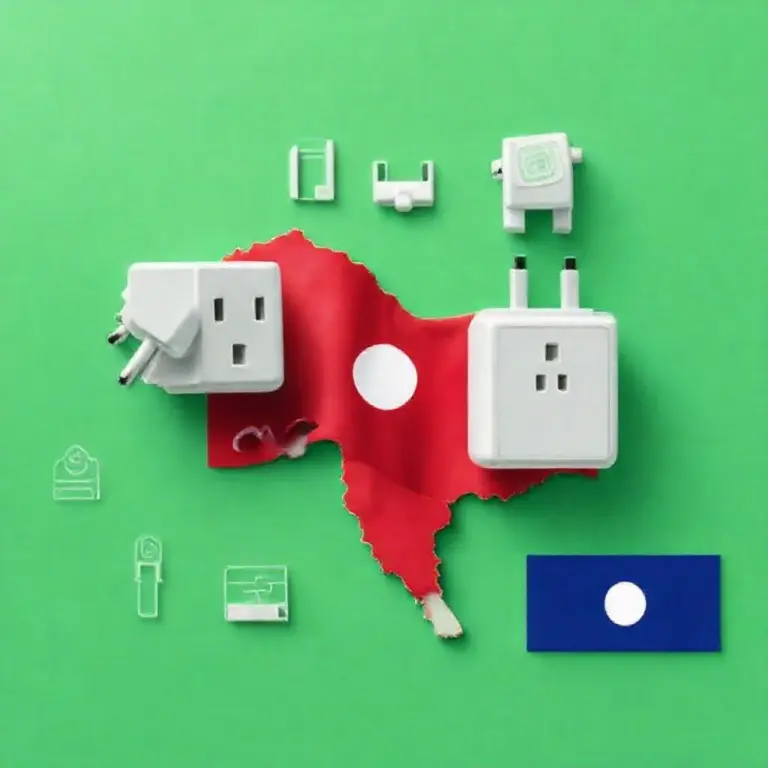
Laos utilizes a blend of plug types due to historical and regional influences. The most common types you will encounter are:
- Type A: Two flat parallel pins (common in North America).
- Type C: Two round pins (the common European standard).
- Type E/F: Similar to Type C but with an earthing pin/socket (less common, but possible).
Because the sockets are often ungrounded and accept multiple plug shapes, a simple universal adapter is usually sufficient for physical connection. However, voltage remains the primary concern for sensitive electronics.
Adapter vs. Converter: Making the Right Choice for Your Devices
Many travelers confuse adapters and converters. Understanding the difference is key to protecting your gear, especially when traveling from a 110V country (like the US or Japan) to the 220V environment of Laos.
1. Travel Adapters (Plug Converters)
A travel adapter simply changes the physical shape of the plug so it fits into the wall socket. **It does not change the voltage.** If your device is rated for 220V, an adapter is all you need.
2. Voltage Converters (Transformer)
A voltage converter (or transformer) actively changes the electrical current from the source voltage (220V) down to a lower voltage (like 110V). You only need a converter if your device is strictly single-voltage (e.g., only rated for 100V-120V).
Device Compatibility Guide for Laos Travel
The modern traveler carries numerous electronics. Here is a breakdown of what typically requires what for use in Laos:
| Device Type | Typical Input Voltage | Laos Requirement |
|---|---|---|
| Smartphones/Tablets | 100-240V | Adapter Only |
| Laptops | 100-240V | Adapter Only |
| Digital Cameras | 100-240V | Adapter Only |
| Hair Dryers (Basic/Old) | 100-120V only | Adapter + Converter |
| Non-Dual-Voltage Appliances | 110V or 120V | Adapter + Converter |
For high-wattage items like curling irons or travel hair dryers, ensure the converter you purchase can handle the appliance’s wattage rating (usually listed in Watts, W). Overloading a converter is a serious safety risk.
Safety and Dual-Voltage Tips for Peace of Mind
Traveling to a region with slightly older infrastructure requires mindful electrical habits. Prioritizing safety ensures your trip isn’t interrupted by preventable electrical mishaps.
Choosing the Right Universal Adapter
When selecting an adapter for Laos, look for one that explicitly supports Type A and Type C plugs. High-quality universal adapters often include built-in surge protection and physical shutters for extra security. Ensure the adapter is rated for 250V, which covers the 220V requirement comfortably.
When to Use a Voltage Converter (And When to Skip It)
If you have older, non-digital appliances, you will need a converter. However, most modern electronics (phones, laptops, tablets) are designed to handle global voltage ranges (100-240V). Carrying a heavy, bulky converter for these items is unnecessary weight. If you must use one, purchase a lightweight, modern unit, and never plug a converter into a power strip or another adapter.
Best Practices for Charging in Laos
Here are some essential safety habits:
- Only charge devices when you are present, especially in guesthouses or remote areas.
- Avoid charging overnight near flammable materials (like bedding).
- Use high-quality, certified charging cables; cheap knock-offs can fail under varying electrical loads.
- If you notice sparking, smoke, or unusual heat from an outlet, immediately unplug your device and notify your accommodation staff.
Visualizing Power Connections in Laos
To provide a visual aid on what the plugs look like and how to use adapters effectively, please review this helpful resource:
This video offers practical demonstrations that complement the technical details discussed above, helping you recognize the correct socket configurations you’ll encounter throughout Laos.
Location Context: Power Infrastructure in Laos
While Vientiane and Luang Prabang generally have reliable power, travelers venturing into smaller villages or remote areas (such as the Bolaven Plateau or Phongsali) may experience occasional brownouts or even complete power outages. In these less developed areas, surge protection becomes even more critical. Having a power bank charged and ready is always a wise precaution.
For context on where you might be staying and the general infrastructure, consider the following major tourist center:
คำถามที่พบบ่อย (FAQ)
Here are answers to the most common questions regarding electrical compatibility for travel in Laos.
Do I need a voltage converter for my iPhone or Laptop in Laos?
No. Modern smartphones, tablets, and laptops are almost universally dual-voltage (100-240V). You only need a physical travel adapter to fit the Lao sockets (Type A or C).
Can I use a US two-prong plug directly in Laos?
Sometimes, but it is not guaranteed. Since Laos accepts Type A plugs (two flat pins), your US plug might fit directly. However, for security and compatibility with Type C sockets, a universal adapter is strongly recommended.
What is the safest type of adapter to buy for Laos?
The safest adapter is a universal model that covers multiple standards (especially A and C) and includes built-in surge protection. Always ensure the adapter is rated for at least 250V.
If my device is single-voltage (120V only), what happens if I plug it into a 220V socket in Laos without a converter?
If you plug a device designed only for 120V directly into a 220V outlet using only a plug adapter, the device will receive nearly double the intended voltage. This usually results in immediate damage, often visible as smoke, overheating, or complete burnout of the internal components.
Are power surges common in Laos?
While less frequent in major cities, power fluctuations and surges can occur, particularly during thunderstorms or in areas with older electrical grids. Using a high-quality adapter with surge protection or a portable UPS (Uninterruptible Power Supply) for very sensitive gear provides an extra layer of defense.
References
International Electrotechnical Commission (IEC) Standards Overview
UK Foreign Travel Advice: Laos Electrical Information