Which Plugs and Adapters Work in Laos: Type C, Type E/F, and Local Variations Explained
Welcome, fellow traveler! Planning your trip to the serene landscapes of Laos means one crucial thing: preparing your electronics. Before you pack your drone, camera, or laptop, you must understand the local power situation. Navigating foreign outlets can be a headache, but armed with the right knowledge, you can avoid dead batteries entirely. This comprehensive guide will break down exactly Which Plugs and Adapters Work in Laos: Type C, Type E/F, and Local Variations Explained, ensuring you stay powered up from Vientiane to Luang Prabang.
Understanding Laos’ Electrical Landscape
Laos operates on a relatively modern electrical grid, though variations exist, especially outside major tourist hubs. Knowing the standard voltage and frequency is the first step toward safe charging.
Voltage and Frequency in Laos
Laos primarily uses a voltage standard of **220V** with a frequency of **50Hz**. This is consistent with much of Southeast Asia and Europe. If your device is rated for 100V-240V (which most modern electronics like laptops, phones, and cameras are), you will only need a physical plug adapter. If you are bringing older, single-voltage devices (like some older hair dryers or shavers rated only for 110V/120V), you will also require a voltage converter to prevent damage.
The Dominant Plug Types: C, E, and F
The good news for most international travelers is that Laos’ sockets are largely compatible with European standards. The most commonly encountered sockets are:
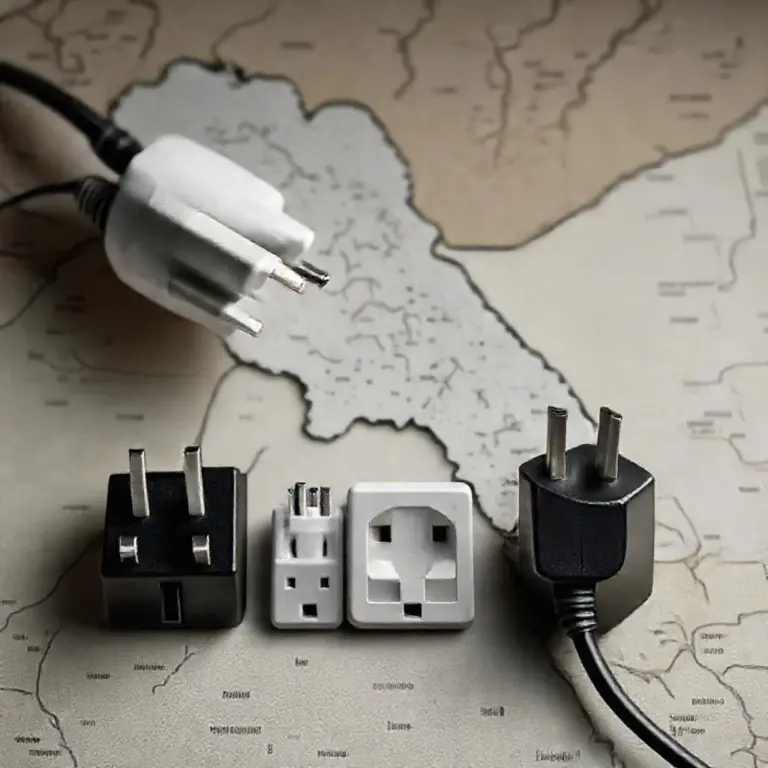
- Type C: The standard two-round-pin plug (Europlug). This is extremely common.
- Type E/F (Schuko): These are often used interchangeably. Type F (Schuko) has two round pins and two grounding clips on the sides. Type E has a grounding pin hole. In Laos, sockets are frequently designed to accept both Type C and Type E/F plugs.
Specific Adapter Requirements for Key Tourist Regions
While Type C/E/F dominates, the reality on the ground can sometimes present older or less standardized sockets, particularly in guesthouses or rural areas. Here is a breakdown of what to prepare for:
Hotels and Major Tourist Areas (Vientiane, Luang Prabang)
In newer, internationally-affiliated hotels or higher-end establishments, you will almost certainly find multi-socket outlets that accept Type A, C, and sometimes even Type I plugs. However, relying solely on these universal sockets is risky.
Guesthouses and Homestays
Guesthouses often feature older wiring. Here, Type C is king, but you might find sockets that only accept the thinner Type C pins, meaning bulky Type E/F plugs might not fit perfectly. Carrying a universal adapter is the safest bet.
Local Variations and The ‘Laotian Hybrid’ Socket
Some older buildings or locally run shops might have sockets that look like a hybrid, often accepting a Type C plug but lacking robust grounding. While Type E/F plugs might physically fit into some Type C sockets, the grounding connection might be poor or non-existent.
Table: Plug Types You Might Encounter in Laos
| Plug Type | Pin Configuration | Required Adapter? | Commonality |
|---|---|---|---|
| Type C | Two round pins | No (if you have European plugs) | Very High |
| Type E/F | Two round pins + Grounding | No (if you have European plugs) | High |
| Type A/B | Two flat parallel pins | Yes (Use a universal adapter) | Low (mostly in modern hotels) |
| Type I | Three angled flat pins | Yes (Use a universal adapter) | Very Low |
To truly master Which Plugs and Adapters Work in Laos: Type C, Type E/F, and Local Variations Explained, you need a reliable travel adapter.
Choosing the Right Travel Adapter for Laos
For maximum flexibility across Laos, we strongly recommend a high-quality Universal Travel Adapter. This single device will cover Type C, E, and F compatibility, and crucially, provide the necessary configuration for Type A/B plugs common to travelers from North America or Australia.
Key Features to Look For:
- Compatibility: Must explicitly support Type C, E, and F input slots.
- Surge Protection: Since power fluctuations can occur, built-in surge protection adds a layer of safety for sensitive electronics.
- USB Ports: Modern adapters often include built-in USB-A or USB-C ports, allowing you to charge your phone directly without needing a separate USB wall charger.
It is far better to carry one robust universal adapter than several single-purpose ones. Check out this quick video guide on selecting the best travel tech for your journey:
What About Power Strips?
If you travel with many devices (camera batteries, tablet, phone), bringing a small, grounded power strip that plugs into your adapter is highly efficient. Ensure your power strip can handle 220V input, although most modern ones are dual-voltage.
Safety Precautions and Electrical Etiquette
Safety is paramount when dealing with foreign electrical systems. Remember, while Laos uses 220V, the wiring standards in older buildings might not match those you are used to.
- Never Force a Plug: If a plug doesn’t slide in easily, do not force it. You could damage the socket or the adapter. Check if you need a Type C instead of an E/F plug, or vice versa.
- Check Adapter Quality: Cheap, uncertified adapters are a fire hazard. Invest in a reputable brand that carries safety certifications (like CE).
- Unplug When Not in Use: Especially in remote areas, unplugging non-essential electronics when you leave the room or go to sleep minimizes the risk associated with potential power surges or brownouts.
- Grounding Matters: For high-draw appliances (if you bring one), ensure your adapter and the socket support grounding for safety. Your phone and laptop chargers are usually safe with just Type C, but grounding is ideal.
By understanding the prevalence of Type C and E/F sockets, you have nearly solved the puzzle of powering up in Laos. A good universal adapter handles the rest.
คำถามที่พบบ่อย (FAQ)
Can I use my European Type C adapter in Laos?
Yes, Type C plugs (two thin round pins) are universally accepted throughout Laos, even in sockets designed for the larger Type E/F plugs. This is your most basic requirement.
Do I need a voltage converter for my US electronics in Laos?
If your electronics are modern (post-2000s), they likely accept 100V-240V and only require a physical plug adapter. If your device is rated only for 110V/120V, you absolutely need a voltage converter to prevent it from burning out.
Are Type E and Type F plugs the same in Laos?
They are often interchangeable. Most sockets designed for Schuko (Type F) will accept Type E plugs, and vice-versa, as they both use the two round pins. The main difference lies in the grounding mechanism.
Is it safe to charge my phone overnight in a rural Laotian guesthouse?
It is generally safe, but for peace of mind, use a quality surge-protected adapter and consider unplugging non-essential items before sleeping, especially if you notice frequent flickering lights, which indicates unstable voltage.
What is the best plug type to bring if I am traveling from Australia?
If you are coming from Australia (Type I), you will need a universal adapter that specifically converts Type I plugs into the Type C/E/F format used in Laos.