Understanding Laotian Culture and Social Etiquette for Visitors
Welcome to the ‘Land of a Million Elephants.’ When engaging with laos tourism, understanding the local heartbeat is just as important as visiting the stunning waterfalls of Luang Prabang or the karst landscapes of Vang Vieng. Laotian culture is deeply rooted in Theravada Buddhism, characterized by gentleness, respect, and a relaxed pace of life known as ‘Muang Lao’. To ensure your visit is harmonious and respectful, this guide delves into the essential social norms and etiquette every traveler should know.
The Core of Laotian Identity: Buddhism and Respect
Buddhism is not just a religion in Laos; it is the foundation of daily life. You will see saffron-robed monks collecting alms at dawn and spirit houses adorned with flowers outside homes. Respecting these traditions is paramount for anyone participating in laos tourism. The concept of ‘saving face’ is also vital; Laotians avoid public confrontation and value a calm, polite demeanor. Raising your voice or showing anger is considered a sign of low self-control and is highly discouraged.
Essential Social Etiquette: Do’s and Don’ts
Navigating social interactions in Laos requires a bit of mindfulness. Here are the most critical rules to follow:
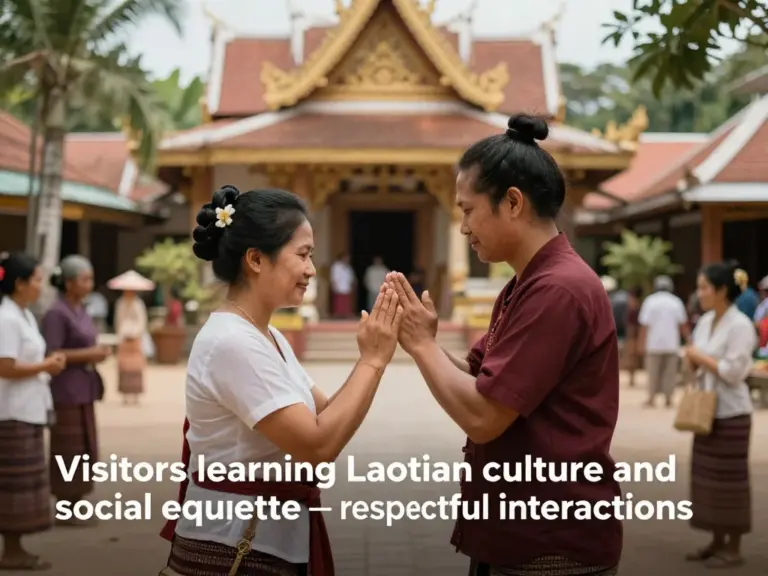
- The Nop: The traditional Laotian greeting involves placing your palms together in a prayer-like gesture at chest level. The higher the hands, the more respect is shown.
- The Head and Feet: The head is considered the most sacred part of the body, while the feet are the lowest and ‘dirtiest.’ Never touch a Laotian person’s head, and never point your feet at people or sacred objects like Buddha statues.
- Dress Code: Modesty is key. When visiting temples or rural villages, ensure your shoulders and knees are covered. Women are often encouraged to wear a ‘Sinh’ (traditional wrap-around skirt) when entering religious sites.
- Public Affection: Laos is a conservative society. Public displays of affection (PDA) between partners are generally frowned upon.
Visiting Temples and Religious Sites
Temples (Wats) are the spiritual centers of Laotian communities. When entering a temple building, always remove your shoes. Inside, sit with your feet tucked behind you rather than crossing your legs. If you encounter a monk, women should never touch them or hand things directly to them; instead, place the item on a cloth or table for the monk to retrieve.
The Alms Giving Ceremony (Sai Bat)
One of the most iconic experiences in laos tourism is witnessing the morning alms giving. If you choose to participate, do so quietly and respectfully. Buy your sticky rice from a local market beforehand rather than from street vendors hovering near the ceremony. If you are just observing, maintain a respectful distance and avoid using flash photography, which can be highly intrusive to the meditative process.
| Action | Etiquette Status | Reason |
|---|---|---|
| Removing shoes indoors | Mandatory | Shows respect for the home/temple cleanliness. |
| Touching someone’s head | Taboo | The head is the most sacred part of the body. |
| Stepping over someone | Offensive | Feet are considered spiritually ‘low’. |
| Sharing a meal | Encouraged | Laotian culture is communal; sharing food builds bonds. |
Dining Customs and Socializing
Laotian food is meant to be shared. Sticky rice (Khao Niew) is the staple, served in a woven basket (Thip Khao). It is traditionally eaten with the right hand by rolling it into a small ball and dipping it into sauces or meat dishes. If you are invited to a Laotian home, it is polite to bring a small gift like fruit or flowers. It is also customary to remove your shoes before entering the house.
คำถามที่พบบ่อย (FAQ)
คำถามที่พบบ่อย (FAQ)
- What should I wear when visiting temples in Laos?
You should wear modest clothing that covers your shoulders and knees. A sarong or ‘Sinh’ is highly recommended for women. - Is it okay to take photos of monks?
Yes, but always ask for permission first or keep a respectful distance. Never use flash, especially during ceremonies like the morning alms giving. - How do I perform the ‘Nop’ greeting correctly?
Place your palms together in front of your chest and bow slightly. If greeting an elder or a monk, place your hands higher (near the nose or forehead). - Can I drink tap water in Laos?
It is generally not recommended to drink tap water. Stick to bottled water, which is widely available, to ensure your health during your trip.