Toiletries, Tech, and Packing Hacks: Space-Saving Roll, Quick-Dry Towels, Power Adaptors, and Keeping Valuables Dry
- Toiletries, Tech, and Packing Hacks: Space-Saving Roll, Quick-Dry Towels, Power Adaptors, and Keeping Valuables Dry
Welcome, intrepid traveler! Preparing for a journey through the serene landscapes and vibrant culture of Laos requires smart packing. Whether you’re trekking through the northern mountains or relaxing by the Mekong, maximizing space and ensuring your essentials are protected is key. This comprehensive guide focuses on mastering Toiletries, Tech, and Packing Hacks: Space-Saving Roll, Quick-Dry Towels, Power Adaptors, and Keeping Valuables Dry, ensuring you travel light and smart.
Mastering Space-Saving Roll Techniques for Clothing
The art of the roll versus the fold is a perennial travel debate, but for compact storage, especially when space is tight in a backpack destined for Luang Prabang, rolling wins. Rolling minimizes hard creases and maximizes vertical packing space.
The KonMari Roll Adaptation for Travel
Adopt the KonMari method, adapted for travel. Roll items tightly—especially t-shirts, synthetic fabrics, and lightweight trousers. For bulkier items like sweaters or jeans, folding once before a tight roll can sometimes yield better results, creating firm ‘logs’ that fit snugly together.
Compression Cubes: The Modern Solution
While rolling saves space, compression cubes organize and compress further. They are invaluable for separating dirty laundry or grouping similar items (e.g., all electronics accessories). Use one cube specifically for items you’ve rolled tightly.
The Essential Quick-Dry Towel for Humid Climates
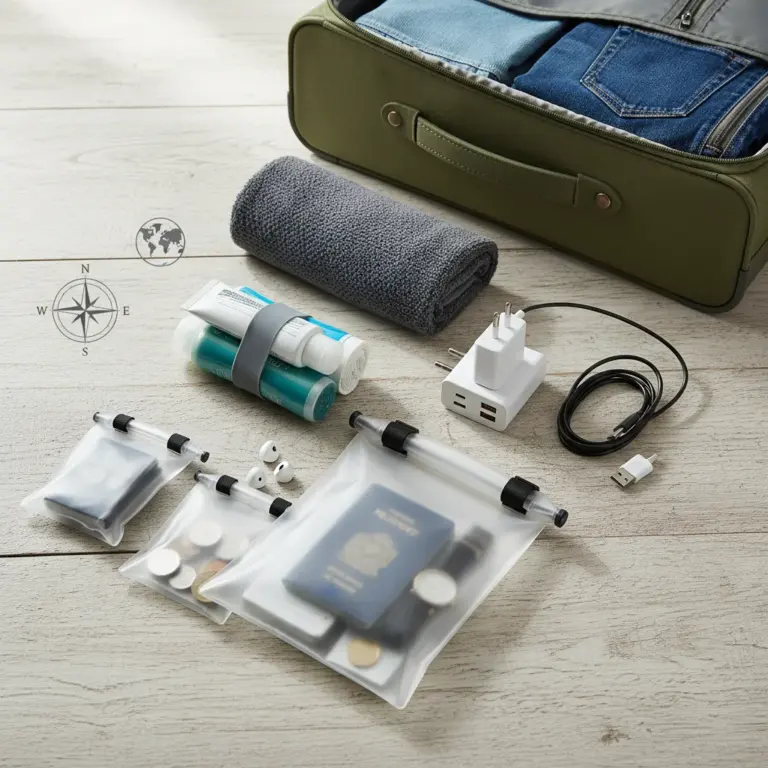
Laos, especially during the wet season, is incredibly humid. A standard cotton towel is a recipe for mildew and bulk. For any traveler planning to stay in guesthouses, hostels, or engage in water activities, a microfiber quick-dry towel is non-negotiable.
Pro Tip: Towel Sizing
Opt for a medium-sized towel (bath sheet size is too large). A 30×50 inch towel provides enough coverage while drying in a few hours, even in high humidity, provided you hang it in a shaded, breezy area.
Why Microfiber Excels in the Tropics
Microfiber materials wick moisture away from the skin efficiently and have significantly less mass than cotton. They pack down to the size of a small wallet. Remember to air them out completely each evening to prevent any lingering dampness.
Understanding the electrical standards is a crucial part of Toiletries, Tech, and Packing Hacks: Space-Saving Roll, Quick-Dry Towels, Power Adaptors, and Keeping Valuables Dry. Laos primarily uses Type A, C, and E sockets, operating at 220V/50Hz. While many modern devices (laptops, phone chargers) are dual-voltage, you absolutely need the correct physical adaptor.
Choosing the Right Universal Adaptor
Invest in a high-quality universal travel adaptor that covers multiple plug types. Look for one that includes USB-A and USB-C ports, allowing you to charge multiple devices simultaneously without needing multiple bulky wall chargers. This significantly reduces the tech footprint in your bag.
| Plug Type | Common in Laos | Required Adapter |
|---|---|---|
| Type A | Yes (Two flat parallel pins) | Adapter Needed |
| Type C | Yes (Two round pins) | Often compatible, but check |
| Type E/F | Less common, but possible | Adapter Needed |
Power Surges and Voltage Safety
While 220V is standard, power stability can sometimes be an issue, especially outside major cities like Vientiane. For sensitive electronics (like professional cameras or high-end laptops), consider packing a small, low-wattage surge protector strip that plugs into your adaptor. This adds minimal weight but offers excellent protection.
Essential Hacks for Keeping Valuables Dry
Laos features stunning waterfalls, river crossings, and unpredictable tropical downpours. Protecting passports, electronics, and cash is paramount. This section covers the best defense mechanisms for Keeping Valuables Dry.
The Dry Bag System
A high-quality, roll-top dry bag (10L or 20L depending on trip length) is more reliable than any Ziploc bag, especially if you plan on kayaking the Nam Ou River or taking a long-tail boat.
Layered Protection for Electronics
Never rely on a single barrier. Use a three-layer approach for your most vital tech:
- Primary Layer: Small, heavy-duty Ziploc freezer bags (double-bagging recommended).
- Secondary Layer: Silica gel packets (to absorb residual moisture inside the plastic).
- Tertiary Layer: Place the sealed bags inside your dedicated dry bag or a waterproof camera compartment within your main pack.
Toiletries: Decanting and Sealing
Liquids are a double threat: they can leak and ruin other items, and they add unnecessary weight. Decant all shampoo, soap, and sunscreen into high-quality, leak-proof silicone travel bottles. Use a small strip of plastic wrap over the bottle opening before screwing the cap back on for an extra seal against humidity.
Finalizing Your Carry-On Strategy
The true success of these Toiletries, Tech, and Packing Hacks: Space-Saving Roll, Quick-Dry Towels, Power Adaptors, and Keeping Valuables Dry comes down to organization in your day bag. Keep your power adaptor, phone, and passport easily accessible for border crossings or long bus rides. A well-packed carry-on is your lifeline.
คำถามที่พบบ่อย (FAQ)
References
UK Government Travel Advice for Laos
International Electrotechnical Commission Plug Standards
- What to Pack for Laos: Ultimate Dry Season vs Rainy Season Checklist for Comfortable, Safe, and Stylish Travel
- Essential Clothing and Footwear for Laos by Season: Layering, Fabrics, and Footwear Tips for Heat, Humidity, and Monsoon Conditions
- Gear, Gadgets, and Health Essentials: Rainproof Backpacks, Chargers, First Aid, Mosquito Protection, and Travel Documents