How Laos’ transport network works: routes, schedules, and what to expect on trains, long-distance buses, and slow boats
Navigating the Laos transport network has undergone a radical transformation in recent years. Once known exclusively for its winding, mountainous dirt roads and slow-paced river travel, the introduction of high-speed rail has bridged the gap between traditional charm and modern efficiency. Whether you are drifting down the Mekong or hurtling through the mountains at 160km/h, understanding the logistics of Laotian travel is essential for any traveler exploring this landlocked gem of Southeast Asia.
The Game Changer: The Laos-China Railway (LCR)
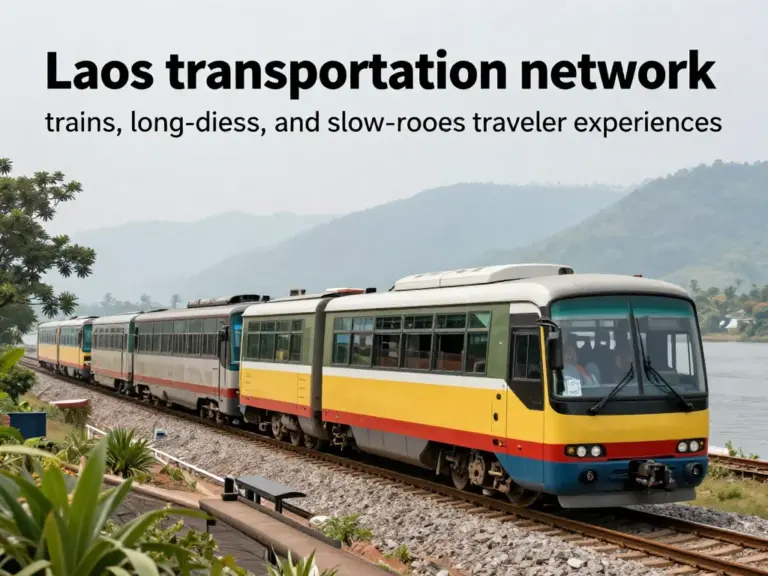
The most significant update to the Laos transport network is the high-speed railway connecting Vientiane with the Chinese border. This line has slashed travel times between major tourist hubs like Luang Prabang and Vang Vieng from several hours to under an hour.
- Routes: Vientiane – Vang Vieng – Luang Prabang – Muang Xai – Luang Namtha (Nateuy) – Boten.
- Schedules: There are typically multiple departures daily, including EMU (high-speed) and slower ordinary trains.
- What to Expect: Stations are massive and located outside city centers. Security is airport-style, so arrive at least 60 minutes early. You must show your ID/Passport to purchase tickets and enter the station.
The Classic Experience: Slow Boats on the Mekong
For many, the quintessential Laos experience is the two-day slow boat journey from Huay Xai (on the Thai border) to Luang Prabang. It offers a meditative look at rural life along the riverbanks.
The boats depart daily around 11:00 AM. The journey stops overnight in the small village of Pakbeng. Expect hard wooden benches (though many now have old car seats), stunning limestone scenery, and a very relaxed pace. It is advisable to bring your own snacks and a cushion for extra comfort.
Long-Distance Buses and Minivans
While the train handles the north-south spine, buses remain the backbone of the Laos transport network for reaching the Bolaven Plateau, Thakhek, or the 4,000 Islands (Si Phan Don).
| Vehicle Type | Best For | Comfort Level |
|---|---|---|
| Sleeper Bus | Overnight long hauls (e.g., Vientiane to Pakse) | High (Beds provided) |
| VIP Bus | Inter-city daytime travel | Medium |
| Minivan | Mountainous routes with fewer passengers | Low (Can be cramped) |
Schedules for buses are often ‘flexible.’ While there are posted times, vehicles frequently wait until they are full before departing. Booking through your guesthouse usually includes a tuk-tuk transfer to the bus station, which is highly recommended.
Within cities like Vientiane or Luang Prabang, three-wheeled tuk-tuks and jumbo (larger versions) are everywhere. Always negotiate the fare before getting in. For a more modern experience, the ‘Loca’ app (similar to Uber/Grab) works well in Vientiane and Luang Prabang, providing fixed pricing and reliable service.
คำถามที่พบบ่อย (FAQ)
Q1: Can I buy train tickets online in Laos?
A1: Yes, you can use the official ‘LCR Ticket’ mobile app, though it requires a local or supported international phone number for registration. Alternatively, travel agencies can book them for a small fee.
Q2: Is the slow boat safe for travelers?
A2: Generally, yes. It is a very popular tourist route. Ensure you wear a life jacket if provided and keep your valuables with you at all times during the Pakbeng overnight stop.
Q3: How far in advance should I book long-distance buses?
A3: For popular routes or sleeper buses, booking 24 hours in advance is usually sufficient. During peak festival seasons (like Lao New Year in April), book at least 3-4 days ahead.
References
- Getting Around Laos: Complete Guide to Trains, Buses, and Slow Boats for First-Time Travelers
- Choosing the best option by route and time: comparing travel time, cost, comfort, and scenic value (Vientiane–Luang Prabang, Vang Vieng, Pakse, and southern corridors)
- Booking, tickets, and seasonal tips: where to buy tickets, peak-season changes, refunds/cancellations, and safety considerations