Getting Around Laos: Complete Guide to Trains, Buses, and Slow Boats for First-Time Travelers
- Getting Around Laos: Complete Guide to Trains, Buses, and Slow Boats for First-Time Travelers
Laos, the land of a million elephants, has long been a dream destination for those seeking tranquility, stunning landscapes, and a slower pace of life. However, for a long time, navigating the rugged terrain of this landlocked nation was a challenge. Today, laos Tourism is undergoing a massive transformation. With the introduction of high-speed rail and improved road networks, getting from the golden temples of Luang Prabang to the bustling streets of Vientiane has never been easier or more diverse.
The Game Changer: The Laos-China Railway (LCR)
The most significant update to laos Tourism in recent years is the opening of the Laos-China Railway. This high-speed marvel has slashed travel times between major hubs. What used to be a grueling 10-hour bus ride from Vientiane to Luang Prabang now takes less than two hours. The trains are modern, clean, and punctual, offering a level of comfort previously unseen in the country.
- Major Stations: Vientiane, Vang Vieng, Luang Prabang, and Oudomxay.
- Booking: Tickets can be purchased via the ‘LCR Ticket’ app or at the station 2-3 days in advance.
- Security: Be prepared for airport-style security checks at all stations.
The Iconic Journey: The Mekong Slow Boat
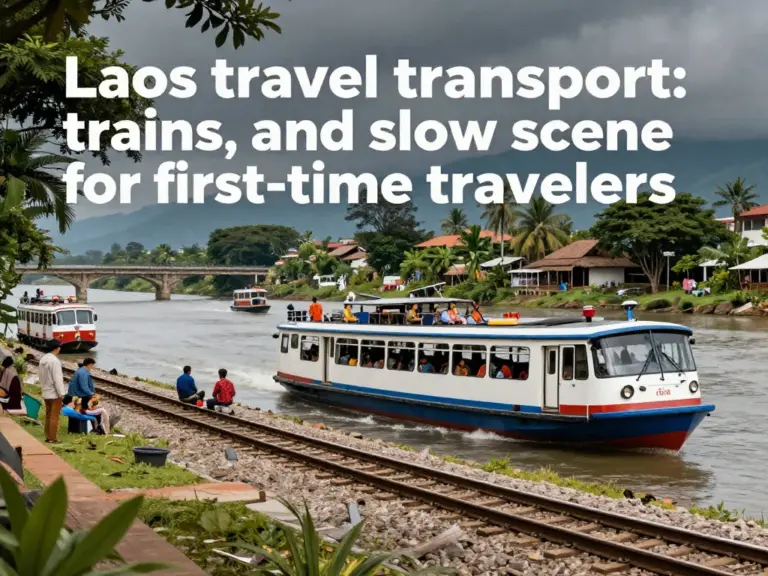
For many first-time travelers, the slow boat from Huay Xai (on the Thai border) to Luang Prabang is a rite of passage. This two-day journey down the Mekong River offers unparalleled views of rural life, lush jungles, and limestone karsts. It is the epitome of ‘slow travel.’ You will spend the night in the small village of Pakbeng, which has evolved into a cozy stopover for international backpackers.
| Feature | Slow Boat Details |
|---|---|
| Duration | 2 Days (with overnight in Pakbeng) |
| Starting Point | Huay Xai (Bokeo Province) |
| Ending Point | Luang Prabang |
| Comfort Level | Basic wooden benches (cushions recommended) |
The Backbone of Laos Tourism: Buses and Minivans
Despite the new train, buses remain the most flexible way to explore Laos, especially for reaching southern destinations like Thakhek or the 4,000 Islands (Si Phan Don).
1. Sleeper Buses
Perfect for long distances (e.g., Vientiane to Pakse), these buses feature semi-flat beds. Note that beds are often shared between two people, so if you are a solo traveler, you might find yourself cozying up to a stranger unless you book both spots!
2. VIP Minivans
Minivans are the primary choice for shorter mountain routes, such as Luang Prabang to Vang Vieng (via the old scenic road). They are faster than large buses but can be cramped. They are ideal for navigating the winding, mountainous terrain of Northern Laos.
Local Transport: Tuk-Tuks and Loca
Once you arrive in a city, the ubiquitous Three-Wheeled Tuk-Tuk is your best friend. However, in Vientiane and Luang Prabang, a new player has emerged: Loca. This is the Lao equivalent of Grab or Uber. It offers transparent pricing and air-conditioned cars, making it a favorite for modern travelers who want to avoid haggling.
Essential Tips for First-Time Travelers
- Download Offline Maps: Signal can be spotty in the mountains.
- Keep Cash Handy: While Loca takes cards, most buses and tuk-tuks require Lao Kip.
- Patience is Key: In Laos, things happen on ‘Lao Time.’ Don’t stress if a bus departs 30 minutes late.
- Motion Sickness: If you are prone to car sickness, the winding roads in the north are challenging; bring medication.
คำถามที่พ่อย (FAQ)
References
- How Laos’ transport network works: routes, schedules, and what to expect on trains, long-distance buses, and slow boats
- Choosing the best option by route and time: comparing travel time, cost, comfort, and scenic value (Vientiane–Luang Prabang, Vang Vieng, Pakse, and southern corridors)
- Booking, tickets, and seasonal tips: where to buy tickets, peak-season changes, refunds/cancellations, and safety considerations