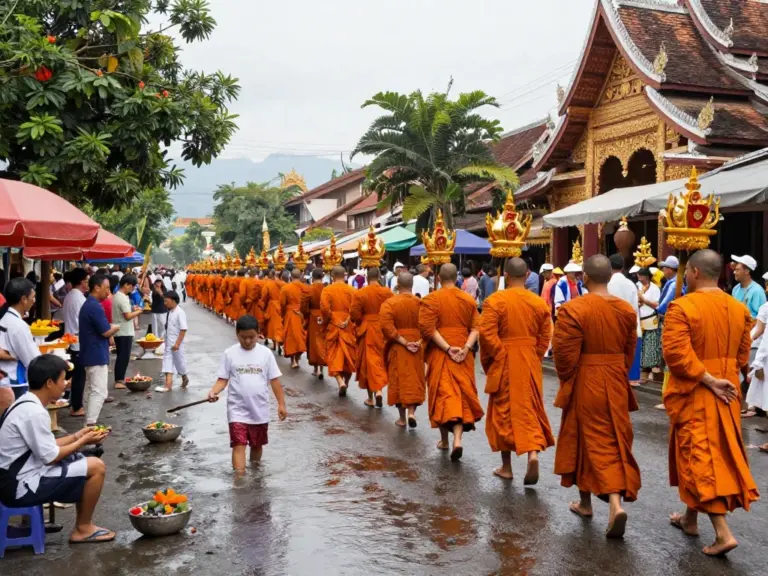
What is Pi Mai (Lao New Year) in Luang Prabang? Origins, cultural significance, and when to go
Pi Mai, also known as Songkran in neighboring countries, is the most significant festival in the Lao calendar. While celebrated nationwide, Pi Mai (Lao New Year) in Luang Prabang offers a uniquely spiritual and grand experience. This UNESCO World Heritage city transforms into a vibrant stage of ancient rituals, colorful processions, and joyous water battles, drawing travelers from across the globe to witness the rebirth of the lunar year.
The Origins and Spiritual Essence of Pi Mai
The roots of Pi Mai are deeply embedded in Buddhist traditions and Brahmanic legends. The festival marks the passage of the sun into the sign of Aries. In Luang Prabang, the celebration is not merely a party but a profound spiritual cleansing. The act of pouring water symbolizes the washing away of bad luck and sins from the past year, making room for prosperity and happiness in the new one.
Cultural Significance and Key Traditions
Pi Mai (Lao New Year) in Luang Prabang is distinguished by specific local customs that you won’t find elsewhere in Laos. One of the most sacred events is the procession of the Prabang, the city’s namesake gold Buddha statue, from the National Museum to Wat Mai. Devotees gather to pour perfumed water over the image, a ritual believed to bring merit and blessings to the community.
Other significant traditions include:
- Sand Stupas: Building sand stupas (Chedee Sand) on the banks of the Mekong to prevent evil spirits from entering the new year.
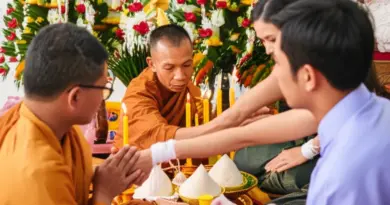
- Baci Ceremonies: Families gather for soul-calling rituals to tie white strings around wrists for good luck.
- Pu Gneu Ya Gneu: The appearance of the ancestral masks (the red-faced protectors of Luang Prabang) during the main parade.
When to Go: Planning Your Visit
The official dates for Pi Mai are April 14th to 16th every year. However, in Luang Prabang, the festivities often extend for a full week.
| Date | Significance | Key Activity |
|---|---|---|
| April 13-14 | Sangkhan Luang | Last day of the old year; cleaning houses and building sand stupas. |
| April 15 | Sangkhan Nao | The ‘day of no day’; a time for rest and the grand parade. |
| April 16 | Sangkhan Khuen | First day of the New Year; visiting temples and Baci ceremonies. |
If you plan to attend Pi Mai (Lao New Year) in Luang Prabang, book your accommodation at least 3-4 months in advance, as the city reaches full capacity during this period.
Essential Tips for Travelers
To make the most of your experience during Pi Mai (Lao New Year) in Luang Prabang, keep these tips in mind:
- Expect to get wet: Water is thrown everywhere. Use waterproof bags for electronics.
- Dress Appropriately: While it is a water festival, Luang Prabang is conservative. Wear clothes that cover shoulders and knees, especially when visiting temples.
- Participate Respectfully: Use clean, scented water when pouring it over elders or Buddha images. Avoid ice water or high-pressure hoses.
คำถามที่พบบ่อย (FAQ)
What is the best place to watch the Pi Mai parade?
The main street (Sisavangvong Road) is the heart of the action. Arrive early to secure a spot near Wat Mai to see the Prabang image and the Nang Sang Khan procession.
Is it safe for tourists to join the water fights?
Yes, it is very safe and locals love it when tourists participate. Just remember to keep the spirit friendly and avoid splashing monks or the elderly unless they initiate it.
What should I wear during Lao New Year?
Light, quick-drying clothing is best. Many locals wear traditional Lao textiles or ‘Pi Mai’ shirts. Always carry a sarong if you plan to enter temple grounds.
How do I say Happy New Year in Lao?
You can say ‘Sabaidee Pi Mai’ to wish locals a happy new year!
References
Lao National Tourism Board Official Website
UNESCO World Heritage Centre – Town of Luang Prabang
- Lao New Year (Pi Mai) in Luang Prabang: Water Rituals, Parades, and How to Experience Them Authentically
- Water rituals explained: Song sin, bathing Buddha images, and respectful ways tourists can participate
- Parades, traditional music, and processions: key events, routes, and schedules in Luang Prabang