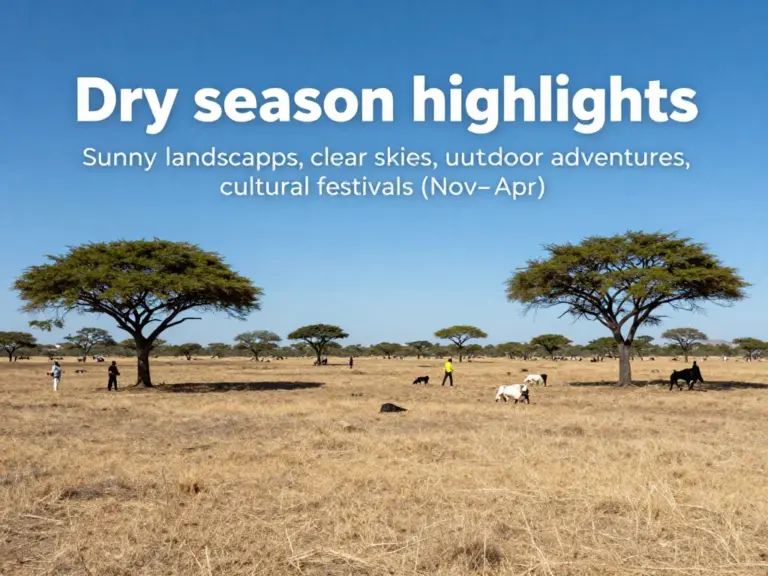
Dry Season Highlights (November–April): Ideal Times for Sightseeing, Outdoor Adventures, and Cultural Events
Laos, the jewel of Southeast Asia, reveals its most enchanting side during the dry season. Spanning from November to April, this period offers the perfect balance of cool temperatures and clear skies, making it the ultimate window for travelers. Whether you are seeking the serenity of ancient temples or the adrenaline of limestone karst climbing, the Dry Season Highlights of Laos provide an unparalleled experience for every type of explorer.
Optimal Sightseeing: Heritage and Nature in Perfect Light
During the dry season, the lack of rain ensures that roads are accessible and the Mekong River is calm. In Luang Prabang, a UNESCO World Heritage site, the morning mist clears to reveal golden stupas and saffron-robed monks. The comfortable temperatures allow for extended walking tours through the historic French colonial streets without the humidity of the monsoon.
Further south, the Bolaven Plateau becomes a hiker’s paradise. The waterfalls, such as Tad Fane and Tad Yuang, remain majestic but are much safer to approach than during the slippery wet season. The clear air also provides the best visibility for visiting the mysterious Plain of Jars in Xieng Khouang.
Outdoor Adventures: From River Tubing to Mountain Trekking
For thrill-seekers, the Dry Season Highlights include world-class outdoor activities. Vang Vieng, once known only for its party scene, has transformed into an eco-adventure hub. The dry weather is essential for rock climbing on the jagged limestone cliffs and exploring the vast cave systems like Tham Phu Kham (Blue Lagoon).
- Kayaking: The Nam Song River is gentle and crystal clear.
- Trekking: Trails in Northern Laos (Muang Ngoy and Nong Khiaw) are dry and firm.
- Cycling: Rent a bike in Vientiane or Luang Prabang to explore rural villages.
Cultural Events and Festivals
The dry season coincides with some of the most significant cultural celebrations in Laos. In November, the That Luang Festival in Vientiane draws thousands of pilgrims for a week of religious ceremonies and fireworks. As the dry season reaches its peak in April, the entire country erupts in celebration for Pi Mai (Lao New Year). This water festival is a joyous occasion where people douse each other with water to wash away the past year’s misfortunes and welcome the rains to come.
| Month | Event | Location |
|---|---|---|
| November | That Luang Festival | Vientiane |
| February | Wat Phou Festival | Champasak |
| April | Pi Mai (Lao New Year) | Nationwide |
Planning Your Visit
Because this is the peak travel season, it is recommended to book accommodations and transport in advance, especially for Luang Prabang and Vang Vieng. The weather is cool in the evenings, so packing a light jacket is essential if you are heading to the mountainous northern regions.
คำถามที่พบบ่อย (FAQ)
When is the best time to visit Laos for dry weather?
The best time is between November and February when the weather is consistently dry and temperatures are pleasantly cool.
What should I pack for the dry season in Laos?
Lightweight cotton clothing is best for the day, but you should bring a sweater or light jacket for the cooler evenings, especially in the north.
Is the dry season crowded?
Yes, November to January is peak tourist season. It is advisable to book your hotels and flights at least 2-3 months in advance.
Can I still see waterfalls during the dry season?
Absolutely. While they may not be as thunderous as in the wet season, waterfalls like Kuang Si remain stunningly beautiful and are much safer for swimming.