Wet Season Considerations (May–October): Pros, Cons, and How to Travel Safely and Enjoyably During the Rains
Traveling to Laos during the wet season, which typically spans from May to October, offers a unique and vibrant perspective of this landlocked Southeast Asian gem. While many travelers gravitate toward the dry season, understanding the specific wet season considerations can unlock a world of emerald-green landscapes, powerful waterfalls, and a more authentic local experience. In this guide, we explore the advantages and challenges of visiting during the monsoon months, providing you with the essential knowledge to navigate the rains with confidence and ease.
The Pros: Why Visit Laos During the Rainy Season
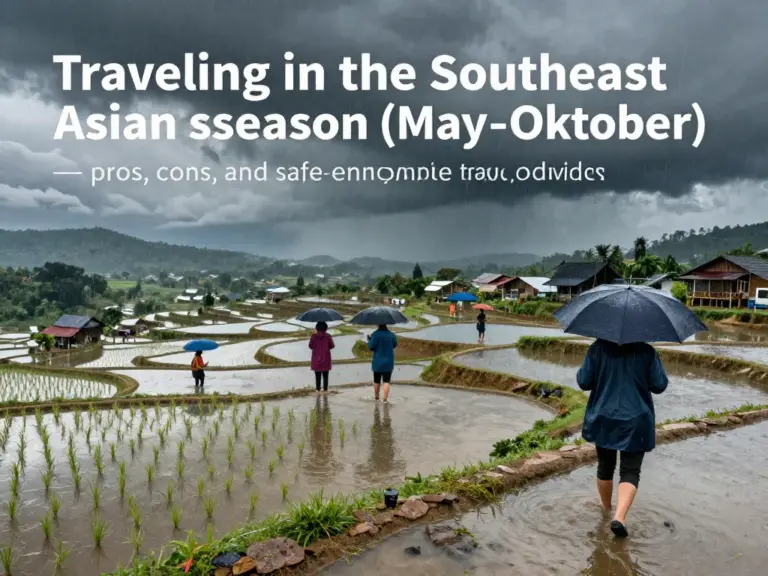
The most immediate benefit of the wet season is the transformation of the landscape. The dusty brown hills of the dry season turn into a lush, vibrant green. Rice paddies are at their most photogenic, and the country’s many waterfalls, such as Kuang Si in Luang Prabang, are at their most thunderous and impressive.
Beyond the scenery, travelers benefit from significantly fewer crowds. Popular sites that are usually packed with tourists become peaceful retreats. Furthermore, this is the ‘low season’ for the tourism industry, meaning you can often find substantial discounts on high-end boutique hotels and luxury eco-resorts that might be over-budget during the peak winter months.
The Cons: Potential Challenges to Keep in Mind
While the beauty is undeniable, there are practical wet season considerations regarding logistics. Infrastructure in rural Laos can be sensitive to heavy rain. Unpaved roads may become muddy and difficult to navigate, potentially leading to delays in bus or van travel. Boat travel on the Mekong is generally faster due to higher water levels, but increased currents require experienced operators.
Humidity levels are also significantly higher during these months, which can make outdoor activities like trekking more strenuous. Additionally, the wet environment is ideal for mosquitoes, making malaria and dengue fever prevention even more critical for travelers venturing into jungle areas.
How to Travel Safely and Enjoyably
Preparation is the key to a successful rainy season trip. Packing the right gear is essential: a high-quality lightweight poncho, waterproof covers for your backpack, and quick-drying clothing will make a world of difference.
- Flexible Itinerary: Allow for ‘rain days’ where you can enjoy a coffee in a Luang Prabang cafe while waiting for a storm to pass.
- Footwear: Opt for sandals with good grip (like Tevas) or waterproof hiking boots; flip-flops can be slippery on wet limestone.
- Health: Use high-DEET insect repellent and consider sleeping under a mosquito net if staying in rural homestays.
Best Regions to Visit During the Rains
Luang Prabang remains highly accessible and charming, with its paved streets and indoor activities like cooking classes and textile workshops. Vang Vieng is spectacular as the mist clings to the karst mountains, though river tubing should be approached with caution as water levels rise. The Bolaven Plateau in the south is also a highlight, as its famous waterfalls reach peak flow during this period.
คำถามที่พบบ่อย (FAQ)
Is it safe to travel to Laos during the wet season?
Yes, it is generally safe. However, travelers should stay informed about weather reports, avoid trekking in heavy downpours due to landslide risks, and be prepared for potential road delays.
Does it rain all day in Laos from May to October?
Rarely. Most days see sunshine or overcast skies with short, intense bursts of rain in the late afternoon or overnight. Entire days of constant rain are uncommon until the peak of the season in August and September.
What should I pack for the rainy season?
Focus on waterproof gear, quick-dry fabrics, insect repellent, and a dry bag for electronics. A light sweater is also useful as air conditioning on buses can be quite cold.
Are the waterfalls better in the wet season?
Visually, yes. They are much more powerful and impressive. However, the water may appear brown due to sediment, and swimming areas at places like Kuang Si may occasionally be closed if currents become too strong.