H2: What to Expect at Local Weaving Villages: Looms, Silk, Cotton, and Artisan Techniques
Visiting local weaving villages in Laos is more than just a sightseeing trip; it is an immersion into a living history that spans centuries. In these remote communities, the rhythmic clacking of wooden looms serves as the heartbeat of daily life. For travelers interested in authentic Laos tourism, understanding the craftsmanship behind the intricate textiles is essential. From the initial processing of raw silk to the final complex patterns, here is what you can expect when visiting these cultural hubs.
The Heart of the Village: Traditional Looms
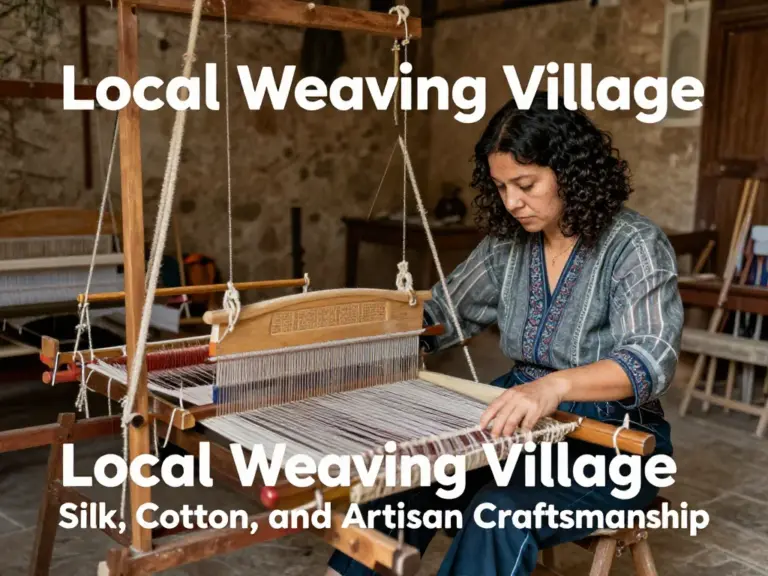
The first thing you will notice upon entering a weaving village is the omnipresence of the floor loom. These are not factory machines; they are handcrafted wooden structures, often passed down through generations. You will see artisans sitting on low stools, expertly manipulating foot pedals and shuttles with a grace that comes only from decades of practice. The connection between the weaver and the loom is palpable, representing a deep-rooted cultural heritage that defines the region’s identity.
Silk and Cotton: The Raw Materials
Laotian textiles are famous for their high-quality materials. At local weaving villages, you will get a rare behind-the-scenes look at how raw silk is harvested from silkworms and spun into fine threads. Similarly, cotton cultivation remains a vital agricultural practice. You can observe the entire process: the boiling of cocoons, the dyeing of threads using natural botanical dyes derived from roots, barks, and leaves, and the meticulous preparation of the warp and weft. It is a slow, methodical process that emphasizes sustainability and patience.
Mastering Artisan Techniques
The techniques employed by Laotian weavers are complex and highly specialized. You will encounter various styles, including the famous mudmee (ikat) technique, where threads are tie-dyed before being woven to create intricate patterns. Another common sight is the tapestry weave, which produces bold, geometric designs often depicting mythological creatures like the Naga (serpent). Each village often specializes in a specific pattern or color palette, making every piece of fabric a unique signature of that community’s artistic lineage.
| Material | Characteristics | Typical Use |
|---|---|---|
| Silk | Lustrous, durable, soft | Ceremonial skirts (Sinh), scarves |
| Cotton | Breathable, sturdy | Everyday wear, blankets, bags |
Supporting Local Economies
By purchasing directly from the source, you are contributing to the preservation of these ancient skills. Many of these villages operate as cooperatives, ensuring that the profits return to the artisans themselves. Buying a hand-woven scarf or table runner is not just a souvenir; it is a tangible way to support fair trade and help ensure that younger generations have the incentive to continue the craft.
คำถามที่พบบ่อย (FAQ)
1. Is it appropriate to buy textiles directly from the weavers?
Yes, it is highly encouraged. Buying directly from local weaving villages ensures that the money goes directly to the artisans and supports the local economy.
2. Can I participate in a weaving workshop?
Many villages are opening their doors to tourism and offer short workshops where you can try your hand at the loom under the guidance of an expert weaver.
3. What should I wear when visiting these villages?
It is respectful to dress modestly, covering your shoulders and knees, as these are often traditional and conservative communities.