Top Cultural Highlights and Historical Sites in Luang Prabang: Temples, Morning Alms Ceremony, and Local Museums Explained
- Top Cultural Highlights and Historical Sites in Luang Prabang: Temples, Morning Alms Ceremony, and Local Museums Explained
Nestled in a tranquil valley at the confluence of the Mekong and Nam Khan rivers, Luang Prabang stands as a beacon of cultural and historical preservation in Southeast Asia. This UNESCO World Heritage site, often considered the spiritual heart of Laos, offers visitors an unparalleled journey into a rich tapestry of ancient traditions, stunning architecture, and profound spirituality. For those exploring Laos, understanding the Luang Prabang cultural highlights is essential to truly appreciate its unique charm and enduring legacy. From the serene grandeur of its temples to the moving spectacle of the Morning Alms Ceremony and the insightful narratives held within its museums, Luang Prabang promises an unforgettable experience.
The Spiritual Heart: Magnificent Temples of Luang Prabang
Luang Prabang is renowned for its exquisite Buddhist temples, or ‘wats’, which showcase a distinctive architectural style and serve as vibrant centers of spiritual life. These sacred sites are not merely historical relics but living institutions where monks continue their daily rituals, offering a glimpse into the enduring faith of the Lao people. Exploring these temples is undoubtedly one of the paramount Luang Prabang cultural highlights. Each temple tells a story, adorned with intricate carvings, shimmering mosaics, and revered Buddha images.
Wat Xieng Thong: The Golden City Temple
Considered the most magnificent of all Luang Prabang’s temples, Wat Xieng Thong, or the ‘Temple of the Golden City’, is a masterpiece of Lao temple architecture. Built in 1560 by King Setthathirath, it remained a royal temple until 1975. Its gracefully sweeping, multi-tiered roof almost touches the ground, a signature feature of the Luang Prabang style. Inside, visitors are captivated by stunning mosaics, particularly the ‘Tree of Life’ mosaic on the rear wall of the main sim (ordination hall), depicting a vibrant narrative of Buddhist mythology. The complex also houses several smaller chapels and stupas, each with unique decorative elements and revered Buddha statues. [22]
Wat Mai Suwannaphumaham: Royal Temple Grandeur
Just next to the Royal Palace Museum, Wat Mai is instantly recognizable by its striking five-tiered roof and its richly decorated golden bas-reliefs that adorn the front facade. These intricate carvings depict scenes from the Vessantara Jataka, a traditional Buddhist story. Built in the late 18th century and largely restored in the 19th, Wat Mai served as the temple for the Lao royal family and housed the revered Phra Bang Buddha image for a period before it was moved to the Royal Palace Museum. Its vibrant history and artistic detail make it a significant stop on any cultural tour. [7]
Wat Visounnarath: The Watermelon Stupa
Wat Visounnarath, also known as Wat Visun, is one of Luang Prabang’s oldest operating temples, dating back to 1513. Its most distinctive feature is the large, hemispherical stupa known as That Pathum or the ‘Watermelon Stupa’ due to its unusual shape. The original sim was destroyed by Black Flag invaders in the 19th century but was meticulously rebuilt. The temple once housed the Phra Bang Buddha and now contains a collection of ancient Buddha images and stelae, offering a fascinating look into the region’s religious artistry.
A Sacred Tradition: The Morning Alms Ceremony
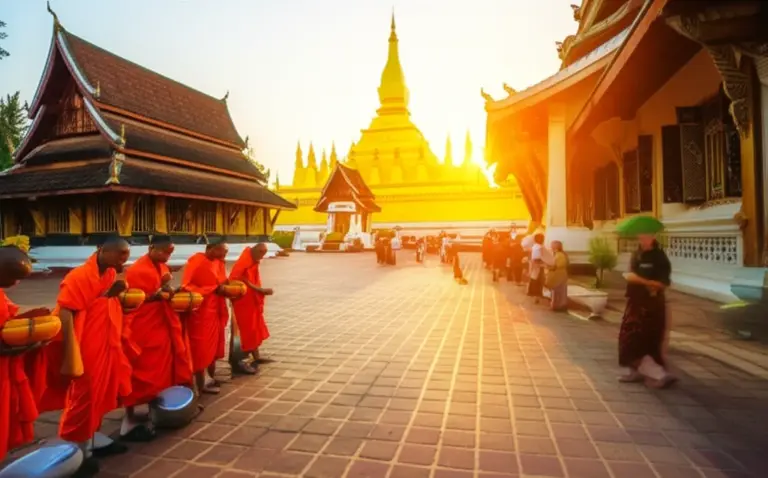
Among the most profound and moving Luang Prabang cultural highlights is the daily Morning Alms Ceremony (Tak Bat). As dawn breaks, lines of saffron-robed Buddhist monks from various monasteries walk silently through the streets, collecting offerings of sticky rice and other food items from devout locals and respectful tourists. This age-old tradition, deeply rooted in Buddhist philosophy, symbolizes humility, devotion, and the interconnectedness of the community. [8, 12, 13]
| Aspect | Description |
|---|---|
| Time | Between 5:30 AM and 6:30 AM (varies with sunrise) |
| Location | Main streets of Luang Prabang, particularly Sisavangvong Road |
| Etiquette | Observe respectfully from a distance. Dress modestly. Do not use flash photography. Do not disrupt the procession. If participating, purchase offerings from local vendors in advance and follow local customs. |
Participating in or observing this ceremony is a privilege that offers deep insight into the spiritual life of Luang Prabang. It is a powerful reminder of the city’s commitment to preserving its traditions and spiritual heritage. [8]
Windows to the Past: Luang Prabang’s Historical Museums
Beyond its temples, Luang Prabang offers a fascinating journey through its history and culture via its well-maintained museums. These institutions provide context to the city’s royal past, diverse ethnic groups, and the challenges it has faced.
Royal Palace Museum (Haw Kham)
The Royal Palace Museum, also known as Haw Kham, was built in 1904 during the French colonial era for King Sisavang Vong and his family. After the Lao Revolution in 1975, it was converted into a national museum. The architecture is a blend of traditional Lao and French Beaux-Arts styles. The museum showcases royal artifacts, including the king’s reception room, bedrooms, and the throne room. It also houses the revered Phra Bang Buddha, the golden Buddha image from which Luang Prabang derives its name and which symbolizes Lao sovereignty. [7, 23, 27]
Traditional Arts and Ethnology Centre (TAEC)
For a deeper understanding of Laos’s diverse ethnic groups, the Traditional Arts and Ethnology Centre (TAEC) is a must-visit. Housed in a charming French colonial building, TAEC is a non-profit museum dedicated to preserving and promoting the traditional arts and cultural practices of Laos’s many ethnic communities. Exhibits feature traditional costumes, textiles, tools, and religious artifacts, providing invaluable insights into their unique ways of life, customs, and beliefs. [7]
UXO Laos Visitor Centre
While somber, the UXO Laos Visitor Centre offers a crucial educational experience about the devastating impact of unexploded ordnance (UXO) remaining from the Vietnam War. Laos is the most heavily bombed country per capita in history, and this center highlights the ongoing efforts to clear UXO and the challenges faced by the Lao people. It provides a sobering but important perspective on a significant aspect of Laos’s recent history and its path towards recovery. [9]
Beyond the Main Attractions: Other Cultural Experiences
Luang Prabang’s cultural tapestry extends beyond its religious sites and museums. The city itself, with its blend of traditional Lao and French colonial architecture, is a living museum. Engaging with local life offers further insights into the vibrant culture.
Mount Phousi: Panoramic Views and Spiritual Significance
For breathtaking panoramic views of Luang Prabang, the Mekong River, and the surrounding mountains, a climb up Mount Phousi is highly recommended. This 100-meter-high hill, located in the heart of the peninsula, is not only a scenic viewpoint but also a sacred site. A winding staircase, adorned with Naga (mythical serpent) balustrades, leads to the Wat Chomsi stupa at its summit. Many visitors ascend for sunrise or sunset, making it a popular spot for reflection and photography. [5, 7, 23]
Luang Prabang Night Market: Local Crafts and Flavors
As evening descends, Sisavangvong Road transforms into a vibrant night market, offering a treasure trove of local handicrafts, textiles, jewelry, and souvenirs. This bustling market is an excellent place to find unique, ethically sourced gifts and to interact with local artisans. Adjacent food stalls also offer a delightful array of Lao street food, from traditional noodle soups to fresh fruit shakes and grilled meats. It’s a perfect spot to experience the local culture and cuisine in a lively atmosphere. [7]
Mekong River Cruises: A Glimpse into Local Life
The Mekong River is the lifeblood of Luang Prabang, and a cruise along its waters offers a unique perspective on local life and the surrounding landscapes. From short sunset cruises to longer journeys to the Pak Ou Caves (housing thousands of Buddha images), these river excursions provide tranquility and stunning views, connecting visitors to the timeless rhythms of this ancient waterway.
Luang Prabang is truly a jewel of Southeast Asia, a city where ancient traditions thrive amidst breathtaking natural beauty. Its temples, the solemn Morning Alms Ceremony, insightful museums, and vibrant markets all contribute to an experience that is both enriching and deeply moving. These Luang Prabang cultural highlights offer more than just sightseeing; they provide a window into the soul of Laos, inviting visitors to immerse themselves in its spiritual and historical grandeur. A visit here is not just a trip; it’s a journey into a living heritage that continues to inspire and captivate.
คำถามที่พบบ่อย (FAQ)
Q: What is the best time of year to visit Luang Prabang for cultural experiences?
A: The cool, dry season from October to February is generally considered the best time to visit Luang Prabang. The weather is pleasant for exploring, and major cultural festivals often take place during this period.
Q: How should tourists dress when visiting temples and participating in the Morning Alms Ceremony?
A: When visiting temples or observing the Morning Alms Ceremony, it is essential to dress modestly. Shoulders and knees should be covered. For women, a traditional Lao skirt (sinh) or long trousers are appropriate. Removing shoes before entering temple buildings is also customary.
Q: Is photography allowed during the Morning Alms Ceremony?
A: Photography is generally allowed, but it’s crucial to be respectful and discreet. Do not use flash photography, avoid getting too close to the monks, and do not obstruct the procession. It’s best to observe from a distance and be mindful of the sacred nature of the event. [11]
Q: What are some traditional dishes to try in Luang Prabang?
A: Don’t leave Luang Prabang without trying sticky rice, Laap (minced meat salad), Or Lam (a spicy, stew-like dish), and Mok Pa (steamed fish in banana leaves). The night market and local restaurants offer excellent opportunities to savor these authentic flavors. [11, 20]
References
- 10 Incredible Things To Do In & Around Luang Prabang – YouTube
- TOP 15 Things To Do In Luang Prabang Laos – YouTube
- Almsgiving Ceremony in Luang Prabang – YouTube
- Journey Through the Cultural Treasures of LUANG PRABANG! – YouTube
- LUANG PRABANG TRAVEL GUIDE Best Things to Do, See, Eat, Drink & Experience in Luang Prabang, Laos – YouTube
- Takbat Morning Alms Giving Ceremony in Luang Prabang, Laos 4K – YouTube
- Luang Prabang Morning Alms Giving, Laos – YouTube
- Laos 🇱🇦 The Most Beautiful Temple – YouTube
- Luang Prabang – Wikipedia
- Luang Prabang Royal Palace + National Museum & Sunset at Phousy Hill ເມືອງຫຼວງພະບາງ Laos Day 3 – YouTube
- Luang Prabang, Laos World Heritage City and Cultural Capital (4K HDR) – YouTube
- Northern Laos Adventure: The Ultimate Luang Prabang Travel Guide for Culture, Nature, and Food Lovers
- Why Luang Prabang Belongs on Your Northern Laos Bucket List: Best Time to Visit, How to Get There, and What to Expect
- Outdoor Adventures Around Luang Prabang: Waterfalls, Kuang Si Park, Mekong River Cruises, and Day Hikes for Every Skill Level