Must-try signature dishes in Luang Prabang: Or Lam, Khao Soi, Mok Pa, Tam Mak Hoong, and breakfast favorites
- Must-try signature dishes in Luang Prabang: Or Lam, Khao Soi, Mok Pa, Tam Mak Hoong, and breakfast favorites
Luang Prabang, a UNESCO World Heritage site nestled in the mountains of Northern Laos, offers much more than stunning temples and tranquil river views—it is a hidden culinary paradise. For visitors planning Laos tourism, exploring the local cuisine is non-negotiable. The food here reflects the region’s rich history and agricultural bounty, characterized by fresh herbs, fermented flavors, and the omnipresent sticky rice. If you are looking for the absolute Must-try signature dishes in Luang Prabang, prepare your palate for an adventure that spans complex stews, aromatic steamed fish, and fiercely flavorful salads. This guide will take you through the essential tastes that define this magical city.
The Culinary Heart of Laos: Defining Luang Prabang Cuisine
Lao cuisine, particularly in the former royal capital of Luang Prabang, stands distinct from its neighbors. While it shares some ingredients with Thai and Vietnamese food, Lao dishes are often characterized by less sugar, more bitter or sour notes, and heavy reliance on fermented fish sauce (Padek) for umami depth. The foundation of nearly every meal is *Khao Niao* (sticky rice), which is hand-rolled into small balls and used to scoop up the main dishes. The UNESCO designation protects not just the city’s architecture, but also its unique cultural heritage, which is inextricably linked to its food traditions.
Savory Delights: The Essential Signature Dishes
Or Lam (Lao Stew): The Rustic Masterpiece
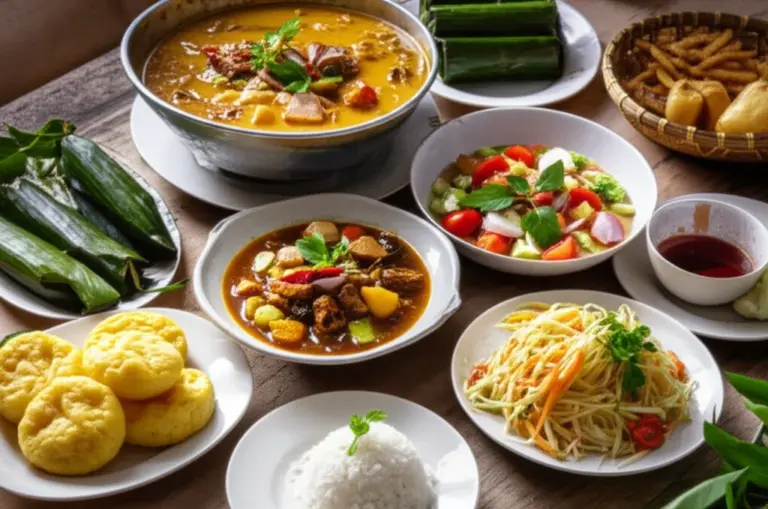
Or Lam is arguably the most unique dish on this list and a true representation of Luang Prabang’s rustic, mountainous cooking. It is a thick, mildly spicy, and deeply savory stew traditionally made with dried buffalo skin (though often replaced with beef or chicken today), mushrooms, lemongrass, chili, and eggplant. The defining ingredient, however, is *Sakaan*—a small, woody vine that imparts a slightly bitter, peppery, and numbing sensation. This complexity of flavor—savory, bitter, and aromatic—is what makes Or Lam a Must-try signature dish in Luang Prabang. It is hearty and best enjoyed on a cool evening.
Mok Pa (Steamed Fish): Fragrance and Flavor
Mok Pa is the epitome of gentle, aromatic Lao cooking. Fresh river fish (often tilapia or catfish) is marinated in a vibrant paste of lemongrass, dill, galangal, kaffir lime leaves, chilies, and coconut milk, often bound with egg. This mixture is then carefully wrapped in banana leaves and steamed until tender. The steaming process infuses the fish perfectly with the herbs, creating a moist, fragrant parcel that is incredibly healthy and flavorful. When unwrapped, the aroma alone is enough to transport you to the heart of Lao cuisine. Mok Pa is a must-order for those who prefer milder flavors but still crave authentic Lao preparation.
Khao Soi (Noodle Soup): Northern Lao Comfort
While the name Khao Soi might sound familiar to fans of Northern Thai cuisine, the Luang Prabang version is distinct and generally simpler. It features wide rice noodles in a clear, pork-based broth, topped with a generous dollop of ground pork and tomato mixture (similar to a ragu), fresh herbs, shredded cabbage, and dried chilies. Unlike the creamy, coconut-based Khao Soi found in Chiang Mai, the Lao version is light, savory, and focused on the rich, acidic taste of the pork and tomato topping. It is the perfect quick lunch, easily found at stalls throughout the morning market.
A visual guide to the bustling night markets and street vendors of Luang Prabang.
Spicy & Tangy: The Papaya Salad Experience
Tam Mak Hoong (Lao Papaya Salad): Fierce and Fermented
Tam Mak Hoong is the Lao name for papaya salad, and it is crucial to understand that the Lao version is fundamentally different from the popular Thai *Som Tum*. While both use shredded green papaya, chilies, lime, and tomatoes, Tam Mak Hoong relies heavily on *Padek* (fermented fish sauce) and often incorporates strong ingredients like crab paste, fish sauce, and sometimes small crabs. The resulting flavor profile is intensely savory, funky, sour, and usually much spicier than its Thai counterpart. It is served alongside sticky rice and fresh vegetables. Ordering this dish is essential for a complete understanding of Lao culinary identity.
| Dish | Key Ingredient | Flavor Profile | Best Time to Eat |
|---|---|---|---|
| Or Lam | Sakaan wood, dried buffalo skin | Hearty, savory, slightly bitter/peppery | Dinner |
| Mok Pa | River fish, dill, lemongrass | Aromatic, moist, mild, herbaceous | Lunch/Dinner |
| Khao Soi | Rice noodles, pork-tomato ragu | Light, savory, acidic | Lunch |
| Tam Mak Hoong | Padek (fermented fish sauce), chilies | Intensely spicy, sour, funky | Anytime (with sticky rice) |
Starting the Day Right: Luang Prabang Breakfast Favorites
The early mornings in Luang Prabang are vibrant, especially around the morning market, where locals gather for their daily breakfast rituals. The breakfast scene beautifully blends traditional Lao comfort food with influences left over from the French colonial era.
Khao Piak Sen (Lao Noodle Soup)
Khao Piak Sen is the ultimate comfort food and a staple Luang Prabang breakfast. It consists of thick, chewy rice or tapioca noodles in a rich, slightly viscous chicken broth, topped with shredded chicken, fried shallots, and fresh cilantro. The broth often thickens naturally due to the starch released by the noodles, making it incredibly satisfying. It’s the perfect warm start before a long day of temple exploration.
Baguettes and Lao Coffee
Thanks to the French influence, fresh baguettes are ubiquitous. They are sold plain or transformed into delicious, cheap sandwiches (*Khao Jii Pâté*), filled with creamy pâté, pork floss, pickled vegetables, and a drizzle of chili sauce. This fusion breakfast is often paired with strong Lao coffee, typically brewed through a sock filter and served sweetened with condensed milk. Finding a street vendor serving this classic pairing is essential for any tourist exploring the Must-try signature dishes in Luang Prabang.
Experiencing the Food Scene
To truly experience these signature dishes, tourists should visit the Night Market (for snacks and grilled items) and the Morning Market (for fresh bowls of Khao Soi and Khao Piak Sen). For a more formal dining experience of dishes like Mok Pa and Or Lam, look for restaurants near the Mekong Riverfront that specialize in traditional Lao food. Remember that Luang Prabang is a laid-back city, and the best culinary experiences often happen at small, unassuming stalls. Don’t forget to sample local desserts, particularly the fresh coconut pancakes and sweet sticky rice with mango.
คำถามที่พบบ่อย (FAQ)
1. Is Lao food very spicy?
Lao food can be intensely spicy, especially dishes like Tam Mak Hoong (papaya salad) and various chili dips (Jaew). However, many stews and noodle soups (like Khao Piak Sen or Or Lam) are milder. When ordering, it is always wise to request *Mai Phet* (not spicy) if you are sensitive to heat, as the standard Lao spice level is significantly high.
2. What is the difference between Lao Tam Mak Hoong and Thai Som Tum?
The primary difference lies in the use of fermented fish sauce. Lao Tam Mak Hoong uses *Padek*, which provides a strong, pungent, and savory flavor. Thai Som Tum often relies on palm sugar and regular fish sauce, resulting in a sweeter, more balanced profile. Additionally, the Lao version is usually pounded more aggressively and is wetter, designed to be eaten with sticky rice rather than as a standalone salad.
3. Where is the best place to try Or Lam in Luang Prabang?
While many restaurants offer Or Lam, for the most authentic experience, seek out traditional Lao restaurants slightly away from the main tourist strip, or look for stalls in the Morning Market that serve it hot. Restaurants focusing on traditional Lao cuisine, often identified by signs in both Lao and English, usually offer high-quality versions of this complex stew.
References
Lonely Planet: Luang Prabang Food Guide |
Eater: A Definitive Guide to Lao Food |
Culture Trip: Must-Try Dishes in Luang Prabang