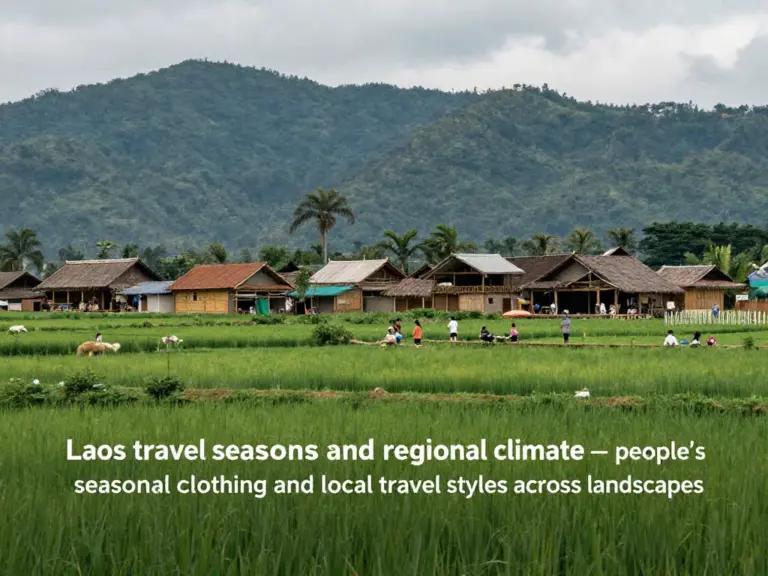
Why season and region matter: understanding Laos’ climate, travel styles, and dress customs
When planning a journey into the heart of Southeast Asia, Laos tourism offers a unique blend of spiritual tranquility, rugged landscapes, and rich cultural heritage. However, the experience of a traveler in the misty mountains of the north can be vastly different from one exploring the river islands of the south. Understanding how the seasons and specific regions interact is crucial for any traveler looking to navigate this landlocked gem with respect and comfort.
The Dual Seasons of Laos Tourism
Laos generally experiences two main seasons: the dry season (November to April) and the wet season (May to October). The dry season is often considered the peak time for Laos tourism because the weather is predictable and the roads are easily navigable. Within the dry season, the period from November to February is the ‘cool dry’ phase, where temperatures are pleasant, making it ideal for trekking and temple hopping. From March to May, the ‘hot dry’ phase sets in, with temperatures often soaring above 35°C, particularly in the lowlands.
The wet season, or monsoon, brings lush green landscapes and full waterfalls. While some rural roads may become muddy and difficult, the rain usually comes in short, heavy bursts, leaving the rest of the day fresh. For those who prefer fewer crowds and vibrant photography opportunities, the ‘green season’ is a hidden secret of Laos tourism.
Regional Variations: North vs. South
Geography plays a massive role in how you experience Laos. Northern Laos, including Luang Prabang and Phongsaly, is mountainous. During the cool season, temperatures here can drop to near freezing at night. Travelers often find themselves needing heavy sweaters and jackets, a stark contrast to the tropical image of Southeast Asia.
In contrast, Southern Laos, home to Pakse and the 4,000 Islands (Si Phan Don), remains consistently warmer. The Mekong River widens here, creating a humid, tropical atmosphere. The Bolaven Plateau provides a slight reprieve from the heat due to its elevation, but generally, the south demands lighter, breathable fabrics year-round.
Dress Customs and Cultural Etiquette
Laos is a deeply conservative and Buddhist nation. Respectful dress is not just a suggestion; it is a core part of the local culture. When visiting temples (Wats) or rural villages, both men and women should keep their shoulders and knees covered.
- The Sinh: Women are often encouraged to wear the ‘Sinh’, a traditional wrap-around skirt, especially when participating in religious ceremonies.
- Footwear: Always remove your shoes before entering a private home or a temple building.
- Swimwear: While swimming in waterfalls like Kuang Si, it is culturally appropriate to wear a sarong or t-shirt over swimwear, rather than revealing bikinis.
Travel Styles: Adventure vs. Relaxation
Your choice of season will dictate your travel style. If you are an adventure seeker looking for mountain biking or multi-day trekking in Nam Et-Phou Louey, the dry season is essential for safety and accessibility. However, if your travel style is more about slow living, river cruises, and enjoying the misty atmosphere of the Mekong, the transition months (May or October) offer a peaceful, poetic experience without the dust of the peak dry season.
| Season | Best For | Recommended Clothing |
|---|---|---|
| Cool Dry (Nov-Feb) | Trekking, Sightseeing | Layers, Light Jackets, Cotton |
| Hot Dry (Mar-May) | River activities, Songkran | Linen, Sun protection, Breathable fabrics |
| Wet Season (Jun-Oct) | Waterfalls, Photography | Quick-dry clothes, Raincoat, Waterproof shoes |
คำถามที่พบบ่อย (FAQ)
What is the best month for Laos tourism?
November to February is generally considered the best time as the weather is cool and dry, perfect for all activities.
What should I pack for Northern Laos in January?
Pack layers, including a warm fleece or light down jacket, as nighttime temperatures in the mountains can be very cold.
Are there strict dress codes for tourists?
Yes, especially at religious sites. Shoulders and knees must be covered. Carrying a sarong or scarf is a handy way to stay prepared.
Is it worth visiting Laos during the wet season?
Absolutely. The landscape is incredibly green, waterfalls are at their most powerful, and accommodation prices are often lower.
References
Official Laos Tourism Website
World Bank: Lao PDR Overview