What is the Baci Ceremony? Origins, spiritual meaning, and its role in Lao culture and life events
- What is the Baci Ceremony? Origins, spiritual meaning, and its role in Lao culture and life events
For any traveler venturing into the heart of Southeast Asia, especially Laos, the Baci Ceremony is one of the most profound and beautiful cultural experiences you can witness. It is more than just a tradition; it is the spiritual bedrock of the Lao people, a ritual of immense importance that binds communities and welcomes guests. Understanding the Baci is key to appreciating the deep-seated cultural values of the nation. This ancient ritual, known in Lao as Sou Khuan (meaning ‘calling of the soul’), is a non-Buddhist, animist tradition that has been seamlessly integrated into the country’s Buddhist framework.
Discovering the Heart of Laos: The Spiritual Meaning of the Baci Ceremony
The core belief behind the Baci Ceremony centers on the concept of Khuan, or the 32 guardian spirits believed to reside within the human body. These spirits protect the different organs and are essential for maintaining the body’s spiritual and physical balance. In Lao belief, when a person experiences a major life change, illness, trauma, or even extensive travel, their Khuan may wander away, leaving the individual vulnerable to misfortune or sickness. The Baci ceremony is the ritual act of calling these spirits back to the body, restoring harmony, and ensuring good luck and prosperity.
Sou Khuan: Calling the 32 Souls Back
The term Sou Khuan is often used interchangeably with Baci, as it describes the fundamental action of the ritual. The ceremony is a communal effort, reinforcing the idea that an individual’s well-being is intrinsically linked to the health and happiness of their family and community. By gathering together, the collective positive energy and well-wishes act as a powerful magnet to recall the scattered spirits. This tradition predates the arrival of Theravada Buddhism in Laos, tracing its roots back to ancient animist practices that revered nature and spiritual entities. It is a beautiful example of how Lao culture successfully harmonizes ancient beliefs with modern faith.
Anatomy of the Ritual: Key Elements of the Baci Ceremony
The Central Pha Kwan (Flower Arrangement)
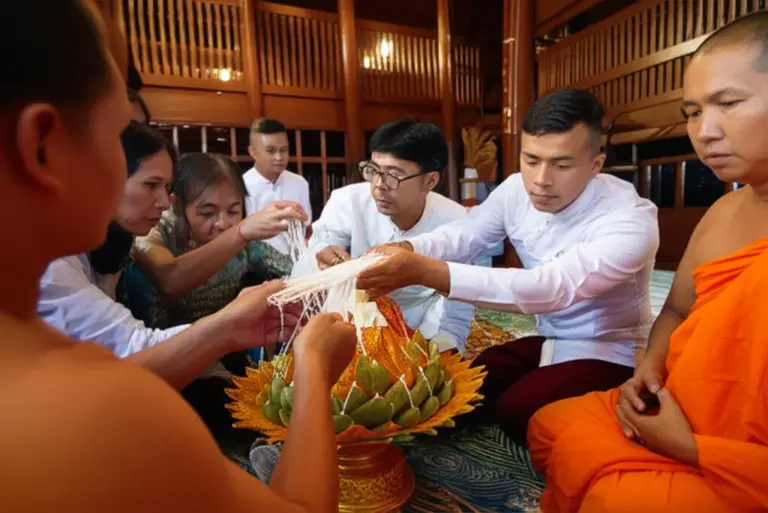
The visual centerpiece of the Baci is the Pha Kwan (or Bai Sri in Thai/Isan regions). This is an elaborate, cone-shaped arrangement meticulously crafted from banana leaves and marigold flowers. It is laden with symbolic offerings, often including hard-boiled eggs, sticky rice, sweets, and bottles of local liquor (Lao-Lao). White cotton strings radiate outwards from the Pha Kwan, connecting the central altar to the honored guests and participants. The Pha Kwan is placed on a white cloth on the floor, and all participants gather around it, signifying the spiritual center of the event.
The Mor Phon and the Chanting
The ceremony is led by the Mor Phon, a respected elder, often a former monk, who acts as the master of ceremonies. The Mor Phon begins the ritual by chanting a long, poetic prayer in the ancient Pali language. This chant is the actual ‘calling of the soul’ (*Sou Khuan*), invoking the 32 spirits to return to the body of the honored individual and bringing blessings from ancestors and higher powers. During the chanting, participants typically place their hands near the Pha Kwan or hold one of the radiating cotton strings to be spiritually connected to the ritual.
The Symbolic Tying of the White Cotton Strings
The most recognizable part of the Baci Ceremony is the tying of the white cotton strings. White symbolizes purity and is believed to secure the Khuan firmly in place. After the chanting is complete, the Mor Phon is the first to tie strings around the wrists of the honored person, followed by family, friends, and other guests. As each string is tied, the person tying it whispers a personal blessing, wishing the recipient health, happiness, safe travels, or good fortune. It is a deeply personal and heartfelt exchange that strengthens communal bonds. It is considered disrespectful to immediately remove the strings; they should be worn for a minimum of three days, or ideally, until they fall off naturally.
Baci in Lao Life: Celebrating Transitions and Milestones
The ubiquity of the Baci Ceremony in Laos speaks to its central role in the national identity. It is not reserved for grand occasions but is performed to mark virtually any significant transition or event in life. This makes it a ceremony travelers are likely to encounter, particularly in a tourism context where it is frequently held to formally welcome important guests or groups, symbolizing a wish for a safe and prosperous journey.
The ceremony concludes with a communal feast, where the honored guests and participants share the food and drink that was offered on the Pha Kwan. This festive atmosphere, filled with music and shared meals, solidifies the spiritual connection and the community’s bond. The Baci is a powerful demonstration of Lao hospitality and a genuine expression of goodwill that leaves a lasting impression on all who take part.
Attending a Baci: Etiquette and Respect for Travelers
For tourists, being invited to a Baci Ceremony is an immense honor. To show respect, follow these simple guidelines:
- Dress Code: Wear modest clothing. Long trousers or skirts and shirts that cover the shoulders are essential. Avoid flashy or revealing attire.
- Seating: Sit respectfully on the floor, ensuring your feet are not pointing towards the Pha Kwan or the Mor Phon, as this is considered highly impolite.
- During Chanting: Remain quiet and attentive. Place your hands in the Nop (prayer position) or hold a cotton string connecting you to the central arrangement.
- The Strings: Accept the tied strings with gratitude. Do not cut them off. The blessing is meant to last, so allow them to fall off naturally after the minimum three-day period.
Participating in a Baci Ceremony offers a rare and intimate glimpse into the soul of Laos. It is a powerful cultural exchange that transcends language, leaving you with not just a souvenir, but a tangible blessing of peace, health, and good fortune tied around your wrist.
คำถามที่พบบ่อย (FAQ)
References
Lao Cultural History and Spiritual Practices – General Overview
The Role of Animism in Theravada Buddhist Countries
Traveler Etiquette for Cultural Ceremonies in Laos
- The Baci Ceremony: A Complete Guide to Meaning, Ritual Steps, Cultural Etiquette, and How to Experience a Traditional Lao Blessing
- Step-by-step Baci ritual: preparations, tying of khene threads, prayers, and the sequence of blessings
- What to bring, wear, and say: cultural etiquette, respectful participation for visitors and hosts