The Baci Ceremony: A Complete Guide to Meaning, Ritual Steps, Cultural Etiquette, and How to Experience a Traditional Lao Blessing
- The Baci Ceremony: A Complete Guide to Meaning, Ritual Steps, Cultural Etiquette, and How to Experience a Traditional Lao Blessing
Welcome to the heart of Lao spirituality. For any traveler diving into the rich tapestry of Southeast Asian culture, the Baci Ceremony is an unforgettable experience. More than just a ritual, it is a profound expression of hospitality, community, and the ancient belief in the power of the human spirit. This guide offers a complete look at this traditional Lao blessing, ensuring you understand its deep meaning and how to participate with the utmost respect. Experiencing a Baci is essential for anyone interested in authentic Laos tourism, providing a direct connection to the soul of the Lao people.
Quick Cultural Insight
The Baci (pronounced ‘baa-see’) ritual is also known as Sou Khuan, which literally translates to ‘calling of the soul.’ It is an animist tradition, deeply integrated with Buddhism in Laos, making it a unique spiritual practice in the region.
The Profound Meaning of the Baci Ceremony
The core belief underpinning the Baci is the concept of the Khuan, or the 32 vital spirits believed to inhabit the human body. According to Lao tradition, these spirits are the essence of life, health, and harmony. Throughout life’s journey—be it through travel, sickness, joy, or grief—these spirits can wander away, causing an imbalance that may lead to illness or misfortune. The Baci’s primary goal is to call all 32 Khuan spirits back to the body and secure them in place, restoring spiritual equilibrium and bringing good luck and prosperity.
When is the Baci Ceremony Performed?
The versatility and importance of the ritual mean it is used to mark nearly every significant life event. It is a ceremony of welcome, celebration, and spiritual healing. Occasions include:
- Welcoming honored guests (like tourists or dignitaries).
- Weddings and baby naming ceremonies.
- Housewarmings or the start of the Lao New Year (Pi Mai Lao).
- Healing the sick or comforting those recovering from a long journey.
- Sending off travelers or welcoming home someone who has been away.
The Essential Elements: The Pha Khuan and Offerings
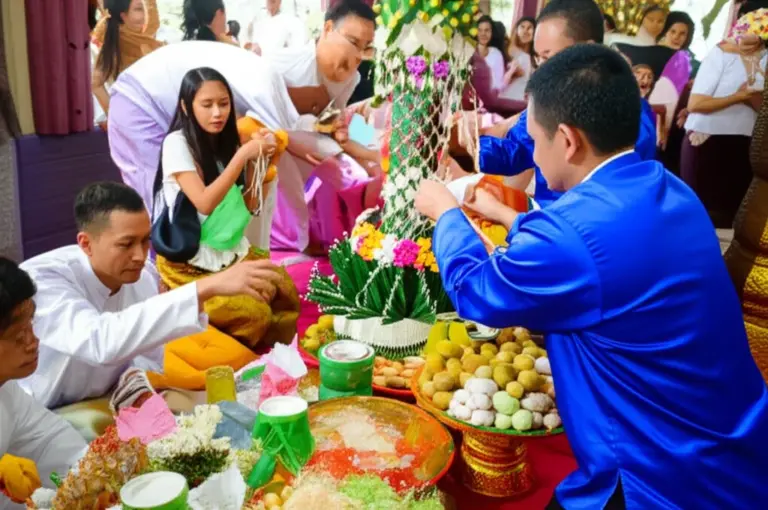
The focal point of the ceremony is the Pha Khuan (or Pa Kwan), a meticulously prepared, cone-shaped offering structure. This centerpiece is a true work of folk art, often made by elderly women in the community. It symbolizes the spiritual connection and the heart of the ritual.
| Element | Significance |
|---|---|
| White Cotton Strings | The physical means to tie the spirits (Khuan) back to the body, symbolizing purity, peace, and longevity. |
| Marigold and Flowers | Aesthetics and purity, used to decorate the structure. |
| Hard-Boiled Eggs | Symbolize fertility and the beginning of life. |
| Fruits, Sweets, and Rice Wine | Offerings to the spirits, symbolizing abundance and the sweetening of life. |
Step-by-Step Guide to the Baci Ritual
The ceremony is led by a respected elder or ex-monk known as the Mor Phon (Master of the Ceremony or Wisher). The ritual is divided into three main phases:
1. The Gathering and Invocation
Participants gather around the Pha Khuan, which is placed on a clean white cloth at the center of the room. The person or people being honored sit closest to the centerpiece, facing the Mor Phon. The ceremony begins with the Mor Phon chanting a long invocation, often in Pali, calling the wandering Khuan spirits back to the body and offering prayers for health, happiness, and good fortune.
2. The Sacred String Tying
This is the pinnacle of the Baci Ceremony. Once the chanting concludes, the Mor Phon ties the first white cotton strings around the wrists of the honored person(s), securing the returning spirits. Family members and guests follow, taking a string from the Pha Khuan and tying it onto the wrists of the honored person(s) and then each other. As they tie the string, they whisper personal blessings and good wishes. Tourists are encouraged to participate in this beautiful act of community bonding.
3. The Feast and Celebration
After all the strings have been tied, the offerings are shared. This is a communal feast (Kin Khao) where the food is considered blessed. The atmosphere becomes joyous and social, often involving traditional Lao music and dancing, marking the successful return of the spirits and the strengthening of social bonds.
Cultural Etiquette for Tourists: Participating Respectfully
As a guest in Laos, being invited to a Baci is a great honor. By following a few simple rules of cultural etiquette, you show respect for this sacred tradition:
- Dress Modestly: Wear clean, modest clothing. Shoulders and knees should be covered, similar to visiting a temple.
- Posture: Sit respectfully. Ensure your feet do not point towards the Pha Khuan or the Mor Phon, as this is considered highly offensive.
- During the Chanting: Remain quiet, keep your hands in a respectful Nop (prayer-like gesture), and lightly touch the Pha Khuan or the person next to you to maintain the spiritual connection.
- Receiving the Strings: Extend your palm upward to receive the blessing. Do not pull away. Accept the string with grace and gratitude.
- The String Rule: The most important etiquette rule is to keep the strings tied around your wrists for a minimum of three full days. This allows the blessing and the spirits to settle. After this time, they can be removed, but should be untied, never cut.
The Baci Ceremony is a beautiful, tangible connection to the spiritual generosity of the Lao people. It is a moment of pure, heartfelt blessing that enriches any Laos tourism experience, leaving you with not just a souvenir, but a deep sense of peace and belonging.
คำถามที่พบบ่อย (FAQ)
References
Traditional Baci ceremony in Laos – Asia King Travel
Baci – A blessing ceremony – The Bamboo Experience
Baci Ceremony – A Tie between Body and Soul – Vietnam Tour