Khao Piak (Rice Noodle Soup) Explained: Traditional Recipes, Seasonal Occasions, and Home-Style vs. Restaurant Versions
- Khao Piak (Rice Noodle Soup) Explained: Traditional Recipes, Seasonal Occasions, and Home-Style vs. Restaurant Versions
- What is Khao Piak? The Essence of Lao Noodle Soup
- Seasonal Occasions: When is Khao Piak Eaten in Laos?
- Home-Style vs. Restaurant Khao Piak: A Culinary Comparison
- Mastering the Art: A Simplified Khao Piak Gai (Chicken Noodle Soup) Guide
- Finding the Best Khao Piak in Vientiane
- คำถามที่พบบ่อย (FAQ)
- Is Khao Piak spicy?
- How is Khao Piak different from Vietnamese Pho?
- Can I find vegetarian Khao Piak?
- What is the best time of day to eat Khao Piak?
Welcome to the heart of Lao culinary tradition! For travelers exploring Laos, few dishes offer a warmer embrace than Khao Piak (Rice Noodle Soup). This seemingly simple bowl of broth, tender noodles, and herbs is a cornerstone of Lao comfort food, deeply woven into daily life, much like Pho is to Vietnam or Ramen is to Japan. Understanding Khao Piak means understanding the rhythm of Lao hospitality and resilience. This guide will delve into its authentic preparation, when it’s traditionally eaten, and the subtle yet significant variations you’ll encounter from village kitchens to bustling city eateries. Khao Piak (Rice Noodle Soup) is more than just breakfast; it is a cultural statement.
What is Khao Piak? The Essence of Lao Noodle Soup
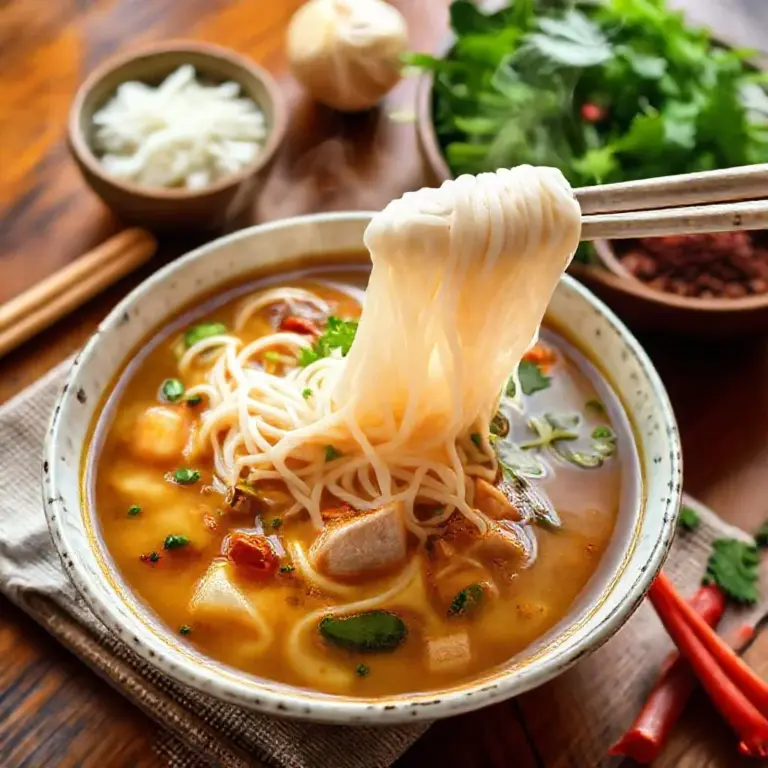
Khao Piak, literally translating to “wet rice” or “rice slurry,” refers to the unique texture of the noodles themselves, which are made from rice flour and water, often resulting in a slightly thicker, stickier, and cloudier broth compared to clear noodle soups found elsewhere in Southeast Asia. The magic lies in how the starch releases into the cooking liquid, creating a velvety mouthfeel that coats the tongue.
The Signature Components of Authentic Khao Piak
While variations exist across regions, the core components remain constant, showcasing the Lao philosophy of balancing fresh, herbaceous flavors with deep savoriness:
- The Broth (Nam Sup): This is the soul of the dish. Typically slow-simmered for hours, the base is usually pork bones, chicken, or sometimes beef. Key aromatics include galangal, lemongrass, star anise, and sometimes dried shrimp, giving it a distinctive, slightly pungent fragrance.
- The Noodles: Handmade or freshly pressed, these noodles are soft and slightly chewy. They absorb the broth beautifully, making each slurp satisfying.
- The Protein: Most commonly, you will find tender pieces of chicken (Khao Piak Gai) or slow-cooked pork ribs/mince (Khao Piak Moo).
- The Garnish & Condiments: Crucial for customization! Fresh herbs like cilantro, spring onions, fried garlic chips, chili oil, fresh lime wedges, and Lao chili flakes (Padek-based chili paste) are essential for the diner to tailor the flavor profile.
Seasonal Occasions: When is Khao Piak Eaten in Laos?
Unlike dishes tied strictly to festivals, **Khao Piak (Rice Noodle Soup)** is a year-round staple, but its role shifts slightly depending on the season, reflecting the agricultural calendar and climate.
The Morning Ritual: A Comforting Start
In Laos, Khao Piak is overwhelmingly the preferred breakfast. In the cooler mornings, particularly during the dry season (October to April), the hot, herbaceous broth is the perfect way to warm the body and provide sustained energy for the day’s work. You will see street vendors opening their stalls before dawn, serving steaming bowls to commuters and laborers.
The Rainy Season Remedy
During the monsoon season, when humidity is high and sickness can spread, Khao Piak takes on a restorative quality. The steaming broth, combined with the pungent aromatics like ginger and lemongrass, is believed to have healing properties, making it the go-to comfort food when one feels under the weather. It’s the ultimate traditional Lao remedy for a cold or flu.
Home-Style vs. Restaurant Khao Piak: A Culinary Comparison
The experience of eating Khao Piak can vary dramatically depending on where you sit down to enjoy it. The preparation methods reflect the access to time, ingredients, and specialized equipment.
The Intimacy of Home-Style Preparation
Home-style Khao Piak prioritizes deep, slow cooking. Families often use the bones from a whole chicken or pork, simmering them for half a day or more. The noodles might be made by hand daily, resulting in a more irregular texture. The flavor profile is often less aggressively seasoned with commercial sauces, relying instead on the pure essence of the slow-cooked meat and herbs. It’s a dish made with patience and love.
The Efficiency of Restaurant Versions
Restaurants, especially those catering to high turnover or tourist traffic, prioritize consistency and speed. Broth bases might be richer or more concentrated, relying on pre-made stock reductions. While still delicious, restaurant versions often feature cleaner, more uniform noodles (sometimes commercially produced) and may include more garnishes like fried wonton skins or extra sliced meats. They are often more intensely flavored to appeal to a broader palate.
| Feature | Home-Style | Restaurant Version |
|---|---|---|
| Noodle Texture | Irregular, softer, more starch release | Uniform, firmer, commercially consistent |
| Broth Depth | Subtle, long-simmered purity | More intense, sometimes richer/thicker |
| Preparation Time | All day | Minutes (assembly time) |
Mastering the Art: A Simplified Khao Piak Gai (Chicken Noodle Soup) Guide
To truly appreciate this dish, experiencing its creation is key. While complex recipes exist, this simplified approach captures the essence for travelers looking to recreate the taste of Laos at home. Khao Piak (Rice Noodle Soup) relies on layering flavors.
Step 1: Creating the Aromatic Base
Lightly sauté minced ginger, galangal, and a few stalks of bruised lemongrass in a little oil until fragrant. Add chicken pieces (bone-in preferred) and brown slightly. Cover with water and bring to a boil, skimming impurities.
Step 2: The Simmer and Starch Release
Reduce heat and simmer for at least 1.5 hours. Season the broth lightly with fish sauce and a pinch of sugar. Meanwhile, prepare your noodles. For an authentic texture, mix rice flour with water until it forms a thick slurry (the ‘khao piak’). Slowly drizzle this slurry into the simmering broth while constantly stirring until the broth thickens to a light gravy consistency.
Experiencing the process firsthand is invaluable for any cultural tourist. Here is a visual guide to the preparation:
Step 3: Assembly and Serving
Place cooked, fresh noodles into a deep bowl. Ladle the hot, starchy broth and tender chicken over the top. Garnish generously with fresh cilantro, finely chopped spring onions, and a shower of crispy fried garlic. Serve immediately with a side dish of lime, sugar, and Lao chili flakes so each diner can adjust the final flavor balance.
Finding the Best Khao Piak in Vientiane
While every town has its beloved spot, Vientiane, the capital, offers excellent opportunities to compare styles. For a truly local experience, venture into the morning markets.
If you find yourself near the bustling city center, consider visiting one of the well-known street vendors who have perfected their recipes over decades. The best way to experience Lao food culture is by exploring these local hubs. You can use local mapping tools to find highly-rated street food locations specializing in noodle soups near your accommodation.
คำถามที่พบบ่อย (FAQ)
References
For deeper culinary context on Lao cooking techniques, consult established Southeast Asian food guides and culinary anthropology resources.