How to prepare respectfully — appropriate clothing, behavior, and what (and what not) to offer when giving alms
- How to prepare respectfully — appropriate clothing, behavior, and what (and what not) to offer when giving alms
The daily ritual of alms giving, known as ‘Sai Bat’, is a deeply spiritual and ancient tradition in Laos, particularly in the UNESCO World Heritage town of Luang Prabang. For travelers, witnessing or participating in this ceremony is a profound way to connect with Lao culture. However, because it is a sacred religious practice, it is essential to approach alms giving in Laos with the utmost respect and preparation. This guide will walk you through the nuances of appropriate attire, behavior, and the types of offerings that are considered meritorious.
Understanding the Significance of Alms Giving in Laos
Before participating, it is important to understand that this is not a tourist attraction, but a living religious ceremony. Every morning at sunrise, a procession of monks and novices walks through the streets to collect food offerings from the local community. This practice allows the laypeople to gain merit and provides the monks with their daily sustenance.
Appropriate Clothing: Dressing for the Occasion
Modesty is the golden rule when it comes to clothing in Laos, especially during religious ceremonies. Both men and women should ensure their shoulders, chests, and knees are covered. Avoid tight-fitting or revealing clothes.
- Women: It is highly recommended to wear a traditional Lao skirt (Sinh). If not, long trousers or a long dress are acceptable. A scarf (Sbai) worn across the chest is a sign of deep respect.
- Men: Long trousers and a shirt with sleeves are required. Avoid shorts and tank tops.
- Footwear: You should remove your shoes if you are sitting or kneeling on a mat to give alms.
Behavior and Etiquette During the Ceremony
Your behavior should reflect the solemnity of the event. Maintain silence and avoid any actions that might disrupt the monks’ meditation or the flow of the procession.
- Maintain Distance: If you are just observing, keep a respectful distance. Do not block the path of the monks.
- Height Matters: Your head should always be lower than the monks’. If you are giving alms, it is customary to kneel or sit on a low stool.
- Physical Contact: Never touch a monk or their robes. This is particularly strict for women.
- Photography: If you must take photos, do so from a distance and without using a flash. Do not get in the way of the procession for a ‘selfie’.
What to Offer (and What Not to Offer)
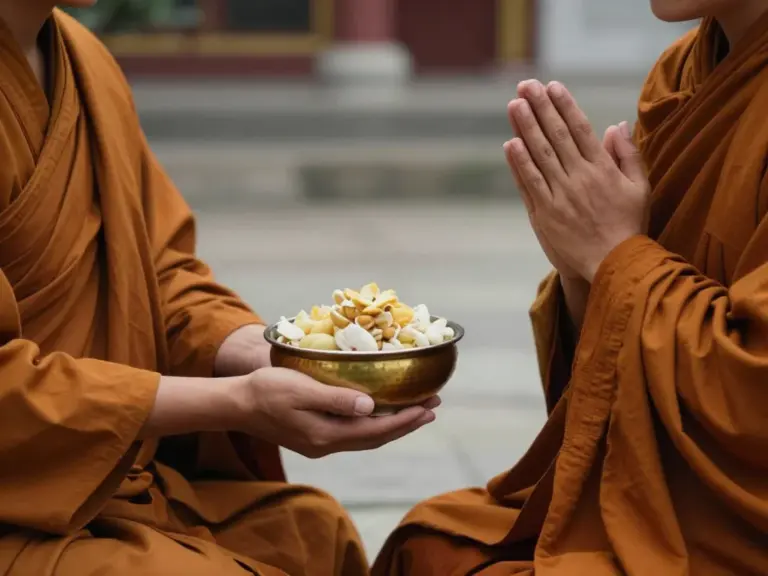
The quality of your offering is a reflection of your intent. It is always better to prepare your own food or buy from reputable local vendors rather than street hawkers who may sell low-quality items.
| Offer These Items | Avoid These Items |
|---|---|
| Freshly cooked sticky rice | Leftover food |
| Fresh fruits (bananas, oranges) | Alcohol or meat with bones |
| Traditional Lao sweets | Money (give to temple boxes instead) |
| Packaged biscuits or crackers | Items past their expiry date |
When placing rice into the bowls, use a spoon or your hands (ensure they are clean). Try to pace yourself so you have enough for the entire line of monks.
Conclusion
Participating in alms giving in Laos is a beautiful, meditative experience that rewards the soul. By dressing modestly, behaving quietly, and offering quality food, you show respect for the Lao people and their cherished traditions. Remember, the goal is to give with a pure heart and a peaceful mind.
คำถามที่พบบ่อย (FAQ)
Can tourists participate in the alms giving ceremony?
Yes, tourists are welcome to participate as long as they follow the local etiquette, dress respectfully, and approach the ritual with sincerity.
What time does the alms giving start?
The ceremony begins every morning at sunrise, usually around 5:30 AM to 6:30 AM depending on the time of year.
Is it okay to take photos during the ceremony?
Yes, but you must be very respectful. Keep your distance, do not use a flash, and do not interrupt the monks’ path to get a photo.
Where is the best place to see alms giving in Laos?
Luang Prabang is the most famous location, specifically along the main street (Sisavangvong Road), but the ritual happens in every village across the country.
References
Official Laos Tourism Website
UNESCO: Town of Luang Prabang
- Alms Giving in Luang Prabang: Respectful Participation Tips for Visitors and Photographers
- Why alms giving matters in Luang Prabang — cultural significance, Buddhist beliefs, and best times to observe for authentic experience
- Watching and joining the procession — step-by-step etiquette, where to stand, how to move, and guidelines for family or group participation