Local Transport in Cities and Towns: Tuk-tuks, Motorbike Rentals, Taxis, and Safety Tips
Navigating the charming streets of Laos is an adventure in itself. Whether you are wandering through the colonial alleys of Luang Prabang or the bustling avenues of Vientiane, understanding Local Transport in Cities and Towns is essential for any traveler. Laos offers a unique blend of traditional charm and modern convenience, ranging from the iconic three-wheeled tuk-tuks to the rise of electric ride-hailing services. This guide will walk you through everything you need to know about getting around safely and efficiently.
Understanding Local Transport in Cities and Towns: The Tuk-Tuk Experience
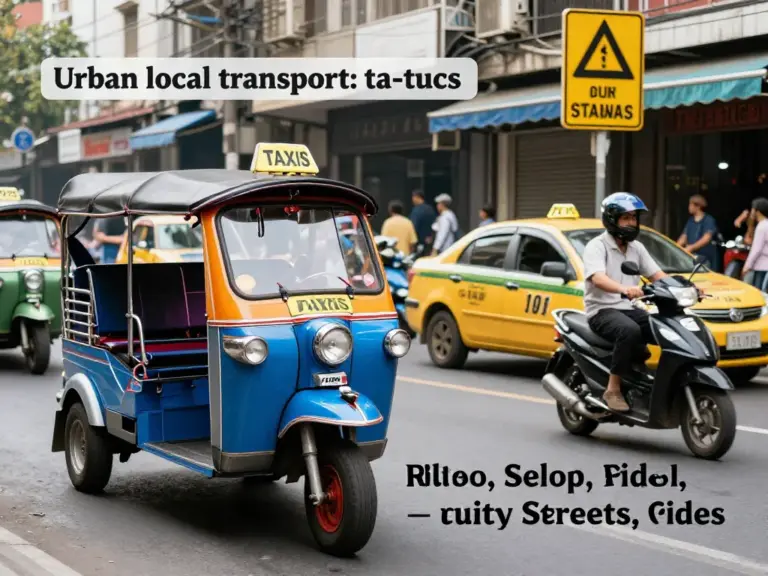
The tuk-tuk is perhaps the most recognizable symbol of Southeast Asian transport. In Laos, these vehicles come in various forms, from the smaller three-wheeled versions to larger ‘jumbos’ that can carry up to six or eight passengers. They are perfect for short distances within city limits. However, because they lack meters, the price is always subject to negotiation. It is standard practice to agree on a fare before you hop in. For a short 2-3 kilometer trip, expect to pay between 30,000 to 50,000 LAK, depending on your bargaining skills and the city.
Motorbike Rentals: Freedom on Two Wheels
For those seeking ultimate flexibility, motorbike rentals are a popular choice in hubs like Vang Vieng and Thakhek. Renting a scooter allows you to explore hidden waterfalls and remote villages at your own pace. Prices typically range from 120,000 to 200,000 LAK per day. While it offers freedom, it also requires caution. Ensure you have an International Driving Permit (IDP) and always wear a helmet—not just for safety, but to avoid fines from local police.
| Transport Type | Best For | Estimated Cost (LAK) |
|---|---|---|
| Tuk-tuk | Short city trips | 30,000 – 80,000 |
| Motorbike Rental | Full-day exploration | 120,000 – 200,000 |
| Ride-Hailing (LOCA) | Comfort & Fixed Price | Varies by distance |
The Rise of Modern Taxis and Ride-Hailing Apps
In recent years, the landscape of Local Transport in Cities and Towns in Laos has been transformed by technology. Traditional taxis exist but are often confined to airports and major hotels. The real game-changer has been LOCA and Xanh SM. LOCA is the local equivalent of Grab or Uber, providing transparent pricing and English-speaking support. Xanh SM has recently introduced a fleet of bright blue electric taxis, offering a clean, quiet, and eco-friendly way to navigate Vientiane and Vang Vieng. These apps eliminate the stress of haggling and ensure you are charged a fair, metered rate.
Public Buses and Songthaews
For the budget-conscious traveler, public buses and songthaews (converted pickup trucks with benches) are the way to go. In Vientiane, the green and white city buses are surprisingly efficient and air-conditioned, connecting the city center to the Friendship Bridge and the Buddha Park. Songthaews usually operate on fixed routes between towns and are a great way to experience how the locals travel, though they can be quite crowded.
Safety should always be your top priority when using Local Transport in Cities and Towns. Here are a few critical tips:
- Check the Vehicle: Before renting a motorbike, take photos of any existing damage and check the brakes and lights.
- Avoid Night Riding: Roads in Laos can be poorly lit and may have unexpected potholes or wandering livestock. It is best to avoid long rides after dark.
- Secure Your Belongings: When riding in an open-air tuk-tuk, keep your bags away from the edge to prevent “snatch and grab” thefts, which, while rare, can happen in busy areas.
- Stay Hydrated: The Lao sun is intense. If you are walking or taking non-AC transport, keep water handy.
คำถามที่พบบ่อย (FAQ)
Q1: Is there a ride-sharing app in Laos?
Yes, LOCA is the primary ride-sharing app in Laos, followed by Xanh SM which provides electric taxi services. Both are highly recommended for transparent pricing.
Q2: Do I need a license to rent a scooter in Laos?
Legally, you need an International Driving Permit (IDP) along with your home country’s motorcycle license. Many shops will rent to you without checking, but you risk being fined by police or having insurance claims denied in case of an accident.
Q3: How do I negotiate tuk-tuk prices?
Always ask the price first. If it seems high, politely offer a lower amount (usually 20-30% less). If you are with a group, clarify if the price is per person or for the whole vehicle.
Q4: Are taxis safe at night in Vientiane?
Generally, yes. However, using a ride-hailing app like LOCA is safer as the driver’s details and the route are tracked via GPS.