H2: How to Visit Wat Phu Champasak: Location, Opening Hours, Tickets, and Practical Tips
When planning your itinerary for Southern Laos, learning How to Visit Wat Phu Champasak is essential for any history buff or cultural traveler. This breathtaking Khmer temple complex, a UNESCO World Heritage site, offers a window into an ancient civilization that predates Angkor Wat. Nestled at the base of Mount Phou Kao, this sanctuary is not just an archaeological marvel but a place of profound spiritual significance that continues to be a pilgrimage site for locals today.
Understanding the Significance of Wat Phu Champasak
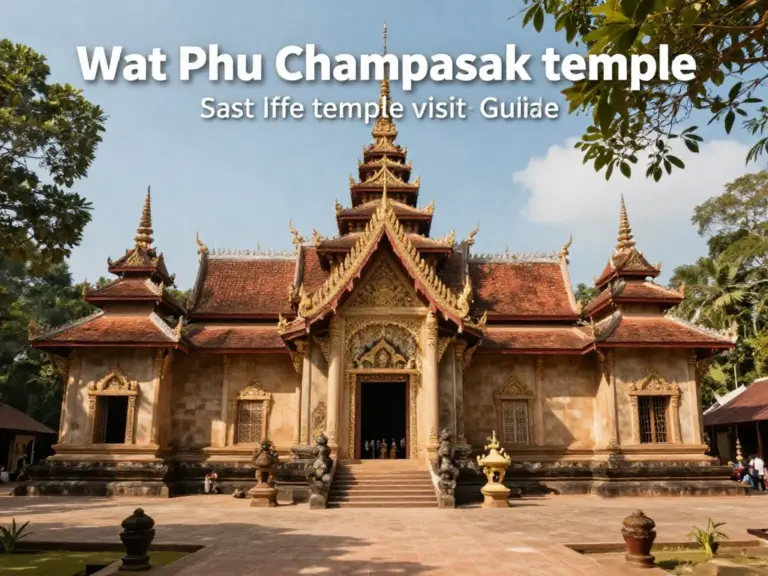
Wat Phu, or “Temple Mountain,” is a ruined Khmer Hindu temple complex that showcases the architectural genius of the Chenla Kingdom and the later Khmer Empire. Unlike many other Khmer sites, Wat Phu is uniquely integrated into the landscape, with its structures climbing the hillside toward a natural spring. The site is divided into two main areas: the lower terrace, featuring two palaces and a reservoir, and the upper terrace, which houses the main sanctuary. Exploring this site is like stepping back in time to the 5th to 15th centuries.
Location and Getting There
Wat Phu is located in the Champasak Province of Southern Laos, about 40 kilometers south of Pakse. Most travelers arrive in Pakse first, which acts as the gateway to the southern region. From Pakse, you can reach Champasak town by bus, songthaew, or a rented motorbike. Once in Champasak town, the temple is approximately 10 kilometers away. Many visitors choose to rent a bicycle or a tuk-tuk for the final stretch to enjoy the scenic countryside along the Mekong River.
Opening Hours and Best Time to Visit
The best time of day to visit is early morning or late afternoon to avoid the intense tropical heat. If you are planning your trip, consider visiting between November and February, when the weather is cooler and drier. Be sure to check local calendars for the annual Wat Phu Festival, which usually takes place during the full moon in February. It is a vibrant event filled with traditional music, dance, and religious ceremonies, though it can get very crowded.
Tickets and Entry Fees
| Ticket Type | Approximate Price (LAK) |
|---|---|
| Entry Fee | 50,000 – 60,000 LAK |
| Electric Tram (from gate to site) | Included or small extra fee |
Ticket prices are subject to change, so always carry a bit of extra cash. The ticket usually includes a shuttle service that transports you from the visitor center/museum area to the start of the temple path. The museum, located near the entrance, is definitely worth a quick stop before you head up the mountain to understand the historical context of the artifacts on display.
Practical Tips for Your Visit
- Dress Code: As this is a sacred site, please dress modestly. Cover your shoulders and knees.
- Hydration: Bring plenty of water. The walk up to the upper sanctuary involves climbing stairs and can be strenuous in the heat.
- Photography: You are welcome to take photos, but avoid climbing on the ruins or touching fragile carvings.
- Footwear: Wear comfortable walking shoes with good grip, as the ancient stone steps can be uneven and slippery, especially if it has rained.
คำถามที่พบบ่อย (FAQ)
While not mandatory, hiring a local guide is highly recommended if you want to understand the intricate history, mythology, and architectural details of the site, which are not always fully explained by signage.
Most visitors spend between 2 to 3 hours at the site, which allows enough time to walk through the lower grounds, visit the museum, and climb up to the main sanctuary.
There are small stalls near the parking area selling drinks and snacks, but it is best to have a full meal in Champasak town before or after your visit.