How a Baci Ceremony Happens: Ritual Steps, Blessings, and Community Participation
The Baci ceremony, also known as the Sou Khuan, is one of the most profound and heartwarming traditions you can experience while traveling in Laos. It is a spiritual ritual rooted in animist beliefs and Buddhist practices, designed to call back the 32 spirits or ‘kwan’ that are believed to reside in the human body. When these spirits wander, it is thought to cause illness or misfortune; the Baci ceremony acts as a communal act of restoration, blessing, and welcoming.
Understanding the Significance of the Baci Ceremony
In the context of Laos tourism, witnessing or participating in a Baci ceremony is a unique privilege. It is not just a performance for tourists; it is a genuine expression of community care. Whether for a wedding, a birth, a welcome for a traveler, or a recovery from illness, the Baci ceremony serves as a social glue that binds the community together through shared blessings and well-wishes.
The Ritual Steps: How the Ceremony Unfolds
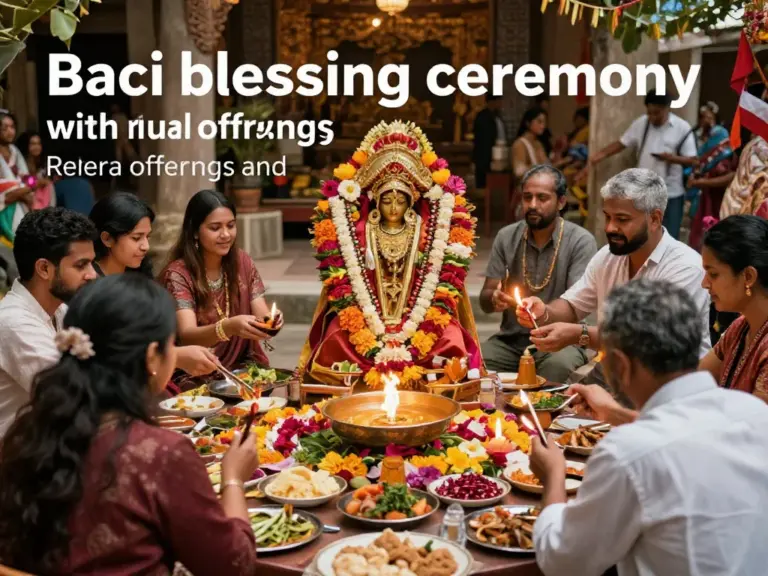
The ceremony centers around the Pha Khuan, a beautiful, tiered centerpiece made of banana leaves, flowers, and candles. Here is the typical flow of the ritual:
- Preparation of the Pha Khuan: Elders or the Mor Phon (ceremony master) arrange the centerpiece, which is adorned with white cotton threads, symbolic of purity and connection.
- Chanting and Invocation: The Mor Phon chants, calling upon spirits to return to the body of the person being honored.
- The Tying of Threads: This is the most iconic part of the Baci ceremony. Participants take white cotton threads from the Pha Khuan and tie them around the wrists of the person being honored, offering a silent or spoken blessing as they do so.
Community Participation and Blessings
The true heart of the Baci ceremony lies in the community. It is a collective act of love. Everyone present participates, creating an atmosphere of warmth and unity. The threads on your wrists should ideally be worn for at least three days to ensure the blessings are fully ‘sealed’ into your spirit. It is a powerful reminder of the hospitality and spiritual depth that define the Laotian people.
คำถามที่พบบ่อย (FAQ)
Yes, absolutely. Many Laotian hotels or cultural tours organize Baci ceremonies for guests. It is considered a sign of respect and welcome.
It is traditional to keep the white cotton threads on your wrist for at least three days after the ceremony to maintain the spiritual blessings.
Usually, nothing is required, but a small donation or a respectful attitude is always appreciated. If you are a guest in a home, small gifts like fruit are often welcome.