Baci Ceremony Explained: Meaning, Etiquette, and How to Experience This Lao Tradition
If you are planning a journey to the heart of Southeast Asia, you will likely encounter the profound spiritual culture of Laos. Among its many customs, the Baci Ceremony (also known as the Sou Khuan) stands out as one of the most significant and heartwarming traditions. Whether you are visiting for a wedding, a welcome reception, or a cultural tour, understanding this ritual offers a unique window into the Lao soul.
The Meaning Behind the Baci Ceremony
The term Baci is derived from Sanskrit, meaning to call upon or invite. In the Lao belief system, the human body is home to 32 organs, each possessing a khuan, or spirit. It is believed that these spirits can wander away from the body, leading to illness, bad luck, or emotional distress. The Baci Ceremony is performed to call these spirits back to the body, restoring harmony and balance to the individual.
This ritual is performed for various life events: weddings, births, before a long journey, after recovering from an illness, or simply to welcome a guest of honor. It is a communal act of blessing, where the community gathers to offer well-wishes and positive energy to the recipient.
How the Ceremony Unfolds
At the center of the room, you will find the Pha Khuan—a beautiful, tiered centerpiece made of banana leaves, flowers, and candles. This structure serves as the altar for the ceremony. The participants sit in a circle around the Pha Khuan, creating an atmosphere of unity and support.
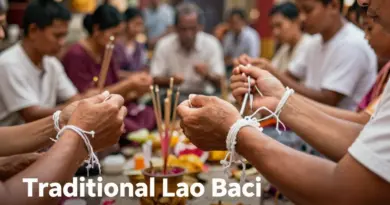
A village elder or a master of ceremonies, often referred to as an Mor Phon, leads the chanting. As the prayers are recited, the participants are invited to hold onto white cotton threads that are connected to the central Pha Khuan. This physical connection symbolizes the collective energy being directed toward the person or people being honored.
Etiquette and Participation
If you are invited to participate in a Baci Ceremony, you are being extended a great honor. It is important to approach the event with respect and mindfulness. Here are a few etiquette tips to keep in mind:
- Dress Modestly: As with most spiritual events in Laos, dress conservatively. Cover your shoulders and knees.
- Remove Your Shoes: You will almost certainly be entering a home or a temple space; always remove your shoes before entering.
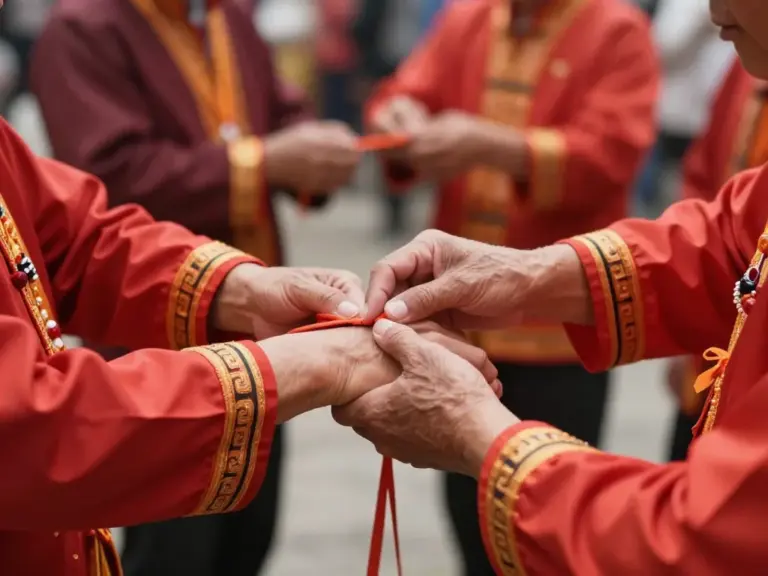
- Follow the Lead: Watch the locals. When it is time to tie the white strings (the highlight of the ceremony) around the wrists of the honoree, wait for the elders to begin.
- The Tying Ritual: You will be given white strings to tie around the wrists of the person being honored. As you tie the knot, it is customary to whisper a silent blessing or wish for their health, happiness, and prosperity.
Once the strings are tied, it is polite to leave them on for at least three days to allow the blessings to settle into your spirit. After three days, you may remove them, but do not cut them; untie them gently if possible.
How to Experience a Baci Ceremony as a Tourist
While the Baci is deeply personal, many cultural hotels and tour operators in Luang Prabang and Vientiane offer authentic Baci experiences for visitors. These sessions are conducted with the guidance of local experts who explain the significance of every step, ensuring the ceremony remains respectful and meaningful.
Engaging in this tradition is more than just a photo opportunity; it is an act of cultural immersion. By participating, you are acknowledging the Lao belief in the interconnectedness of spirits and community. It is a moment of peace and reflection that often becomes the highlight of a traveler’s visit to this serene nation.