What is the alms giving ceremony in Luang Prabang and why is it important for visitors to understand its cultural and religious context
- What is the alms giving ceremony in Luang Prabang and why is it important for visitors to understand its cultural and religious context
The ancient town of Luang Prabang, a UNESCO World Heritage site nestled in the heart of Laos, is renowned not just for its stunning natural beauty and well-preserved architecture, but also for its profound spiritual traditions. Among these, the daily alms giving ceremony in Luang Prabang, locally known as Tak Bat or Sai Bat, stands out as a deeply moving and culturally significant ritual. This serene procession, unfolding just as dawn breaks, offers visitors a unique window into the symbiotic relationship between the monastic community and the laypeople of Laos. Understanding its cultural and religious context is not merely about observing a spectacle, but about engaging with a living tradition that embodies the spiritual essence of the nation. [5, 6, 13, 14]
The Daily Ritual of Tak Bat: An Introduction
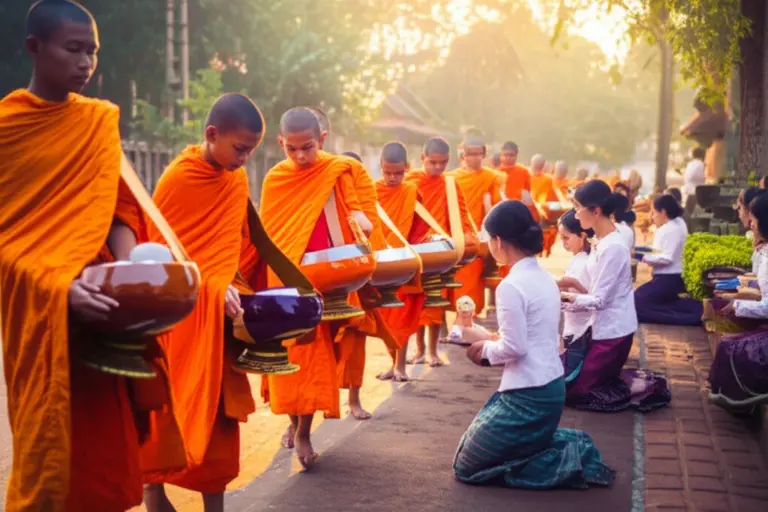
Every morning, as the first light touches the gilded roofs of the wats (temples), hundreds of saffron-robed Buddhist monks and novices emerge from their monasteries. They walk barefoot in a silent, single-file procession through the main streets and quieter side alleys of Luang Prabang, carrying their alms bowls. Along their route, devout locals and respectful visitors kneel or sit humbly, ready to offer food. The primary offering is typically sticky rice, which locals prepare meticulously before dawn, but fruits, sweets, and other necessities are also given. This act of giving is not seen as charity, but as an opportunity for the laypeople to make merit, contributing to their spiritual well-being and positive karma. For the monks, receiving these offerings is their only meal for the day, sustaining their monastic life and allowing them to focus on their spiritual practice and studies. [6, 7, 8, 12, 14, 18, 22]
Origins and Significance
The tradition of alms giving in Luang Prabang is deeply rooted in Theravada Buddhism, which became the predominant religion in Laos around the 14th century. The ceremony symbolizes a reciprocal relationship: the community supports the monks materially, and in return, the monks offer spiritual guidance and a path to merit-making for the laypeople. This ancient practice is not unique to Luang Prabang but is observed across Laos and other Theravada Buddhist countries. However, Luang Prabang’s large number of active monasteries and its well-preserved cultural landscape make it an exceptionally poignant place to witness this daily ritual. [6, 8, 9, 12, 14, 25]
The Role of Monks and Laypeople
For the monks, the act of receiving alms is a display of humility and detachment from material possessions. It reinforces their dependence on the community and allows them to dedicate their lives to spiritual development. For the laypeople, it is a profound expression of faith, generosity, and the pursuit of ‘boon’ (merit). Many locals wake up hours before dawn to cook fresh sticky rice, ensuring their offering is warm and ready for the passing monks. This daily interaction fosters a strong bond between the monastic order (Sangha) and the wider community, central to Buddhist philosophy. [5, 6, 8, 12, 14, 22]
Participating Respectfully: Guidelines for Visitors
While the alms giving ceremony is a significant draw for tourists, it is first and foremost a sacred religious practice. Responsible tourism demands that visitors approach this ritual with the utmost respect and cultural sensitivity. Unfortunately, instances of disrespectful behavior by tourists have, at times, threatened the authenticity and sanctity of the ceremony. [11, 17, 25]
Observing from a Distance
If you choose to observe rather than participate, it is crucial to do so from an appropriate distance. Stand across the street from the procession, or find a quiet side street to avoid disrupting the monks or the local participants. Do not follow the procession, move around excessively, or block the path of the monks or those giving alms. Maintain silence throughout the ceremony and keep your phone on silent. [6, 7, 10, 11, 15, 18]
Appropriate Attire and Demeanor
Dress modestly, ensuring your shoulders, chest, and legs are covered as a sign of respect, similar to visiting a temple. If participating, remove your shoes and socks and sit or kneel on the ground, keeping your head lower than the monks. Avoid making eye contact, talking, or any physical contact with the monks. This is a moment of quiet meditation and reverence for both the givers and receivers. [5, 7, 10, 11, 18, 24, 25]
Offering Alms: What to Bring and How to Offer
If you wish to participate, it is recommended to prepare your offerings in advance, ideally buying sticky rice from your hotel or a local market, rather than from street vendors who may sell inappropriate or low-quality food. When offering, place a small portion of food into each monk’s alms bowl as they pass by. Do not hand anything directly to a monk; place it into their bowl. Remember, women must not touch monks under any circumstances. [5, 6, 7, 10, 11, 18, 25]
Avoiding Disruptions and Scams
A common issue is tourists using flash photography. This is highly disruptive and disrespectful. If you must take photos, do so from a distance, without flash, and ensure you are not impeding the ceremony. Also, be wary of aggressive street vendors who might pressure you into buying offerings or participating inappropriately. It’s best to source your offerings responsibly and arrive early to find a respectful spot before the ceremony begins. [5, 6, 7, 10, 11, 15, 18]
The Cultural and Religious Context
The alms giving ceremony is more than just a daily food collection; it is a profound expression of Lao Buddhist culture and values. It highlights the deeply intertwined nature of daily life, spirituality, and community in Luang Prabang. For centuries, this ritual has shaped the social fabric and spiritual landscape of the city. [12, 14, 22]
Buddhism in Laos and Luang Prabang
Laos is a predominantly Buddhist country, with Theravada Buddhism being the state religion. Luang Prabang, with its numerous ancient temples and monasteries, serves as a significant spiritual center. The daily lives of its inhabitants are often guided by Buddhist principles, including compassion, generosity, and the accumulation of merit. The alms giving ceremony is a daily manifestation of these principles, providing a tangible way for people to practice their faith. [22, 23, 24, 26]
The Concept of Merit-Making (Boon)
Central to the alms giving ceremony is the Buddhist concept of ‘boon’ or merit-making. Laypeople believe that by offering sustenance to the monks, they accumulate positive karma that will benefit them in this life and future lives. This spiritual exchange is deeply ingrained in the culture, making the ceremony a fundamental aspect of religious devotion rather than a mere obligation. [5, 6, 8, 12, 14]
Preserving a Sacred Tradition
The increasing popularity of Luang Prabang as a tourist destination has put pressure on the alms giving ceremony. While tourism brings economic benefits, it also poses challenges to the preservation of such sensitive cultural practices. By understanding and adhering to the etiquette, visitors play a crucial role in safeguarding the authenticity and spiritual integrity of Tak Bat for future generations. It ensures that the ceremony remains a deeply meaningful religious act rather than devolving into a tourist performance. [11, 17, 25]
To further illustrate the beauty and solemnity of this ceremony, here is a relevant video:
Beyond the Ceremony: Embracing Luang Prabang’s Spiritual Side
Experiencing the alms giving ceremony in Luang Prabang is often a highlight for many visitors to Laos. However, the town offers numerous other opportunities to connect with its rich spiritual and cultural heritage. Exploring the serene temples like Wat Xieng Thong or climbing Mount Phousi for panoramic views and a visit to its golden stupa can deepen one’s appreciation for the city’s spiritual ambiance. Engaging with locals, visiting the morning market where offerings are prepared, and learning about the monastic life further enrich the travel experience, moving beyond mere sightseeing to genuine cultural immersion. [23, 24]
คำถามที่พบบ่อย (FAQ)
References
- How To Experience Alms Giving Ceremony In Luang Prabang – Nishi V
- Alms – Giving Ceremony: all things to know – Laos Travel
- How to do it right: Alms giving in Luang Prabang – Escape With Annual Leave
- Everything about the Alms Giving Ceremony at Luang Prabang – Victoria Hotels & Resorts
- Laos: Luang Prabang – Tak Bat morning alms ceremony – Hoblets On The Go
- Don’t be Flashy! Guidelines for Luang Prabang’s Alms Giving Ceremony – 4 Worn Passports
- A Responsible Traveller’s Guide to Alms Giving in Luang Prabang – Wanderlust Movement
- Tak Bat Almsgiving Ceremony in Luang Prabang – Asia King Travel
- Experience Tak Bat – Alms Giving Ceremony in Luang Prabang, Laos – Mekong River
- A Guide To The Tak Bat Morning Alms Giving Ceremony In Luang Prabang, Laos
- Morning Alms (Sai Bat) – Official Website for Tourism Luang Prabang
- Almsgiving Ceremony in Luang Prabang – YouTube
- ALMS GIVING CEREMONY LAOS | Surreal experience & rude tourists – YouTube
- Alms Giving Ceremony in Luang Prabang – Tour in Vientiane, Laos
- Luang Prabang Morning Alms Giving, Laos – YouTube
- Buddhism at Luang Prabang – Luangprabang-laos.com
- Traditional Buddhist culture in Luang Prabang, Laos | Artisans of Leisure | Luxury Travel Blog
- French charm with Buddhist traditions, Luang Prabang, Laos | by Travelustme – Medium
- Alms giving in Luang Prabang, Laos | Encounters Travel
- Buddhist Temples in Luang Prabang Laos – The Namkhan
- The Alms Giving Ceremony in Luang Prabang: A Respectful Visitor’s Guide to History, Etiquette, and Best Practices
- How to prepare for participating: best times, what to wear, what to bring, and local dos and don’ts for respectful conduct
- Step-by-step guide to attending the procession: where to go, how to position yourself, how to offer alms correctly, and photography etiquette