The Bolaven Plateau: The Ultimate Guide to Waterfalls, Best Routes, and Practical Travel Tips
- The Bolaven Plateau: The Ultimate Guide to Waterfalls, Best Routes, and Practical Travel Tips
- Discovering the Bolaven Plateau Loop: An Overview
- The Magnificent Waterfalls of the Plateau
- Navigating the Best Routes (The “Loop”)
- Practical Travel Tips for the Bolaven Plateau
- คำถามที่พบบ่อย (FAQ)
- Q: What is the best way to travel the Bolaven Plateau loop?
- Q: How many days should I allocate for the Bolaven Plateau loop?
- Q: When is the best time of year to visit the Bolaven Plateau?
- Q: Where does the Bolaven Plateau loop start?
- Q: Is the Bolaven Plateau known for anything other than waterfalls?
- References
Welcome to the Bolaven Plateau, a mesmerizing, elevated region in Southern Laos that is an absolute must-see for any traveler seeking adventure and natural beauty. This comprehensive guide will walk you through everything you need to know about navigating the famous Bolaven Plateau loop, from the thunderous waterfalls to the best routes and essential travel tips. Starting from the charming hub of Pakse, the loop is a journey into the heart of Lao culture, renowned for its rich volcanic soil that yields some of the world’s finest coffee. Prepare for an unforgettable exploration.
Discovering the Bolaven Plateau Loop: An Overview
The Bolaven Plateau is an ancient volcanic area, with elevations ranging from 1,000 to 1,350 meters above sea level. This unique geography creates a cooler climate and abundant rainfall, making it the perfect environment for vast coffee plantations and dramatic, high-volume waterfalls. The ‘loop’ refers to a popular motorbike route that circles the plateau, offering travelers a self-guided tour of the region’s highlights.
Why the Bolaven Plateau? (Geography, Culture, Coffee)
- Geography: High-altitude terrain with lush jungles and deep gorges, perfect for dramatic waterfalls.
- Coffee: The volcanic soil supports the majority of Laos’ coffee production. Stop at local farms like Mr. Vieng’s for a tour and tasting.
- Culture: The region is home to numerous ethnic minority groups, including the Laven, Alak, and Katu, offering authentic cultural experiences.
The Magnificent Waterfalls of the Plateau
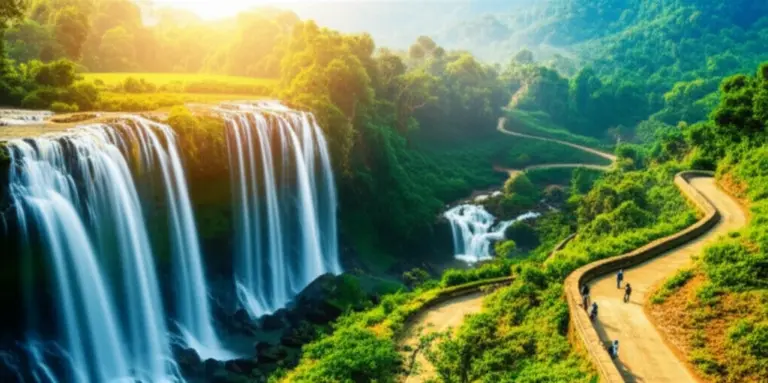
The waterfalls are undoubtedly the main attraction of the Bolaven Plateau loop. Each one offers a unique spectacle, from towering twin plumes to serene, swimmable pools. Be sure to check entrance fees and opening times, as they can vary.
| Waterfall | Highlight | Accessibility |
|---|---|---|
| Tad Fane | Twin 120-meter plumes in a deep gorge (Highest in Laos). | Viewpoint access only (Zip-lining available). |
| Tad Yuang | Beautiful cascade with a large, accessible pool for swimming. | Easy walk down well-maintained steps. |
| Tad Lo | A series of three falls near a relaxed village, perfect for overnight stay. | Very accessible, often located near guesthouses. |
| Tad Pha Suam | A horseshoe-shaped waterfall set within a national park and resort. | Easy access via wooden bridges. |
The loop offers flexibility, largely divided into two main options: the Small Loop and the Big Loop. Both start and finish in Pakse, but the Big Loop ventures deeper into the plateau’s less-traveled eastern side.
The Small Loop (2-3 Days)
This route covers approximately 200 kilometers and is ideal for those with limited time or less riding experience. It focuses on the most famous waterfalls—Tad Fane, Tad Yuang, and Tad Pha Suam—before heading to the relaxed village of Tad Lo for an overnight stay. The roads are generally in good condition, primarily paved Highway 16 and 20.
The Big Loop (4+ Days)
The Big Loop extends the journey to over 300 kilometers, pushing further east toward the Sekong and Attapeu provinces. This route is for the more adventurous traveler, offering a genuine off-the-beaten-path experience. It includes more remote waterfalls and deeper immersion into coffee country. Be aware that sections of the road (Highway 23) can be unpaved, dusty, or muddy, requiring a confident rider and a reliable bike.
Transportation: Motorbike or Guided Tour?
The freedom of the motorbike is the classic Bolaven Plateau experience. Rental shops in Pakse, such as Miss Noi’s, are highly reputable. A semi-automatic bike is recommended due to the steep and sometimes rough terrain. Alternatively, guided tours are available, offering a safer, less stressful option that includes accommodation and transportation, though at a higher cost.
Practical Travel Tips for the Bolaven Plateau
Where to Stay (Pakse, Tad Lo, and Paksong)
- Pakse: The best place to start and end, with a wide range of hotels and guesthouses.
- Tad Lo: A popular first-night stop on the Small Loop, known for its relaxed riverside guesthouses and easy access to local culture.
- Paksong: Located in the heart of coffee country, Paksong offers cooler temperatures and unique stays on coffee plantations.
When to Go (Best Season)
The ideal time for the Bolaven Plateau loop is during the dry season (October to April), when the roads are in their best condition. However, the waterfalls are at their most spectacular and powerful during the rainy season (May to September), though riding can be more challenging.
Essential Packing List
- Waterproof Gear: A rain jacket and waterproof bag covers are essential, regardless of the season.
- Warm Layers: The high elevation means temperatures, especially at night in Paksong, can drop significantly.
- Cash (Lao Kip): ATMs are rare outside of Pakse and Paksong; carry enough cash for guesthouses and entrance fees.
- Sun Protection: Sunscreen, sunglasses, and a hat for when you’re off the bike.
- First Aid Kit: Basic supplies for minor cuts and scrapes from riding.
The Bolaven Plateau offers a perfect blend of adventure and tranquility. Whether you are a seasoned rider tackling the Big Loop or a casual traveler enjoying the Small Loop, the combination of powerful waterfalls, authentic coffee culture, and welcoming locals makes this one of the premier experiences in Laos tourism. Plan your route, pack your bags, and get ready to explore the hidden gems of Southern Laos.
คำถามที่พบบ่อย (FAQ)
Here are some of the most frequently asked questions about traveling the Bolaven Plateau loop.
Q: What is the best way to travel the Bolaven Plateau loop?
A: The most popular and recommended way is by renting a semi-automatic motorbike from Pakse. This offers the most freedom and flexibility to explore the remote areas and smaller waterfalls.
Q: How many days should I allocate for the Bolaven Plateau loop?
A: Travelers typically take 2-3 days for the Small Loop and 4-5 days for the Big Loop, depending on how much time they want to spend at the waterfalls and coffee plantations.
Q: When is the best time of year to visit the Bolaven Plateau?
A: The dry season (October to April) is generally considered the best time for riding, but the waterfalls are most powerful and impressive during the wet season (May to September).
Q: Where does the Bolaven Plateau loop start?
A: The loop traditionally starts and ends in Pakse, the capital of the Champasak Province in Southern Laos.
Q: Is the Bolaven Plateau known for anything other than waterfalls?
A: Yes, it is world-renowned for its high-quality coffee, as the volcanic soil and high elevation create ideal growing conditions for both Arabica and Robusta beans.
References
- 4 Days on the Pakse Loop | A Journey Through Laos’ Hidden Gems (Source for video embedding)
- Laos Tourism Official Website (Placeholder)
- Motorbike Rental Information for Pakse (Placeholder)
- Where is the Bolaven Plateau and why is it the best region in Laos for waterfall exploration? (location, climate, and accessibility)
- Top waterfalls on the Bolaven Plateau: descriptions, must-see highlights, and the best time to visit each (Tad Fane, Tad Yuang, Tad Lo, Tad Tung)
- Planning your route: suggested itineraries, transportation options, accommodation, and day-trip vs multi-day considerations