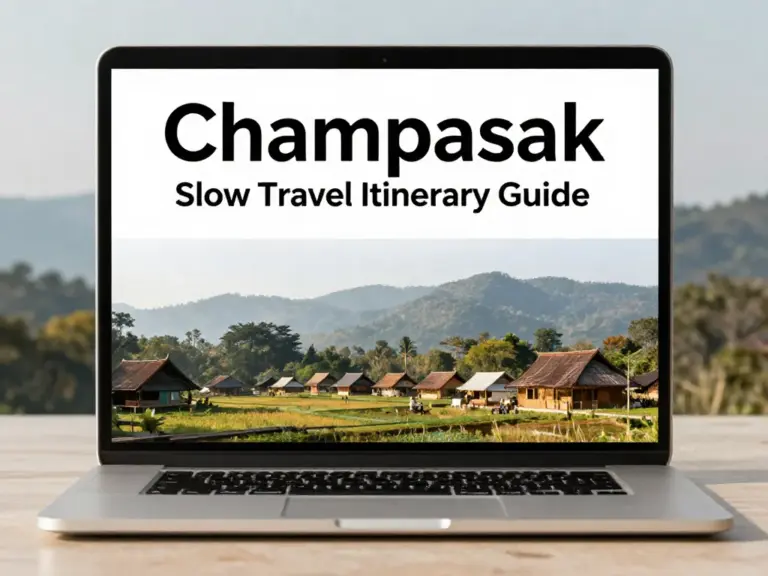
Champasak Travel Guide: The Ultimate Slow Travel Itinerary
If you are seeking a destination that forces you to slow down, breathe, and appreciate the layers of history and river life, this Champasak travel guide is your roadmap to one of Laos’ most serene provinces. Unlike the bustling streets of Luang Prabang, Champasak offers a quieter, contemplative experience centered around the mighty Mekong River and the ancient ruins of a Khmer empire. This itinerary focuses on slow travel—meaning fewer destination-checking and more deep cultural immersion.
Champasak travel guide: The Essence of Slow Travel in Champasak
Slow travel is not just about moving slowly; it is about intentionality. In Champasak, this means waking up to the mist rising off the Mekong, cycling through sleepy villages, and spending hours at a single archaeological site rather than rushing through a checklist. The province is defined by its agricultural heritage, French colonial remnants, and the sacred Wat Phou temple complex. Embracing this pace allows you to connect with the local community in a way that typical whirlwind tours simply cannot.
Top Experiences for Your Itinerary
To maximize your experience, we have curated a list of essential activities that anchor a slow-paced trip to this region.
- Wat Phou Exploration: Dedicate at least half a day to this UNESCO World Heritage site. Arrive early to beat the heat and the crowds, allowing time to sit and admire the intricate carvings.
- Don Daeng Island Cycling: Rent a bicycle and cross the river to Don Daeng. This island offers a glimpse into authentic rural Lao life with zero motorized traffic.
- Colonial Architecture Walk: Champasak town itself is a living museum. Wander the quiet streets to see well-preserved French colonial houses that line the riverfront.
- Mekong Sunset Watching: There is nothing quite like a Mekong sunset. Find a riverside café, order a Beerlao, and watch the sky change colors over the water.
Comparing Your Travel Options
Planning your logistics is key to a stress-free trip. Below is a comparison of how you might navigate the region to maintain that “slow travel” vibe.
| Mode of Transport | Best Used For | Vibe/Experience |
|---|---|---|
| Bicycle | Island hopping (Don Daeng) | High immersion, eco-friendly, quiet |
| Longtail Boat | River crossings and sunset cruises | Authentic, scenic, classic Mekong |
| Tuk-Tuk/Songthaew | Longer distances (e.g., to Wat Phou) | Local interaction, convenient, shared |
| Private Car | Airport transfers or remote exploration | Comfort, efficiency, less interaction |
Practical Checklist for Your Visit
- Pack Light: You will likely be hopping on and off boats and bikes; keep your luggage manageable.
- Dress Modestly: Remember that Wat Phou is a sacred site. Ensure your shoulders and knees are covered.
- Stay Hydrated & Protected: The sun in southern Laos is intense. Bring a high-quality sunscreen, a hat, and a reusable water bottle.
- Learn Basic Phrases: Knowing simple greetings like “Sabaidee” (Hello) and “Khop chai” (Thank you) goes a long way in connecting with locals.
- Respect the Environment: The Mekong ecosystem is fragile. Avoid single-use plastics whenever possible.
Conclusion
Champasak is a destination that rewards those who take their time. By following this guide, you are not just ticking boxes; you are engaging with the history, the river, and the people of southern Laos. Whether you find peace in the quiet corridors of an ancient temple or the gentle flow of the Mekong, Champasak offers a rare opportunity to disconnect from the modern rush and reconnect with a simpler, more meaningful way of traveling.
Frequently Asked Questions (FAQ)
A: The cool, dry season from November to February is generally considered the best time for comfortable weather, though the shoulder months of October and March offer fewer crowds.
A: To truly embrace the slow travel philosophy, we recommend at least 3 to 4 days. This allows for day trips, relaxation, and time to explore the river islands.
A: While you can certainly explore it on your own, hiring a local guide can provide invaluable context regarding the Khmer history and the specific architectural details of the site.
References
UNESCO World Heritage Centre: Vat Phou and Associated Ancient Settlements
Official Tourism Laos Website