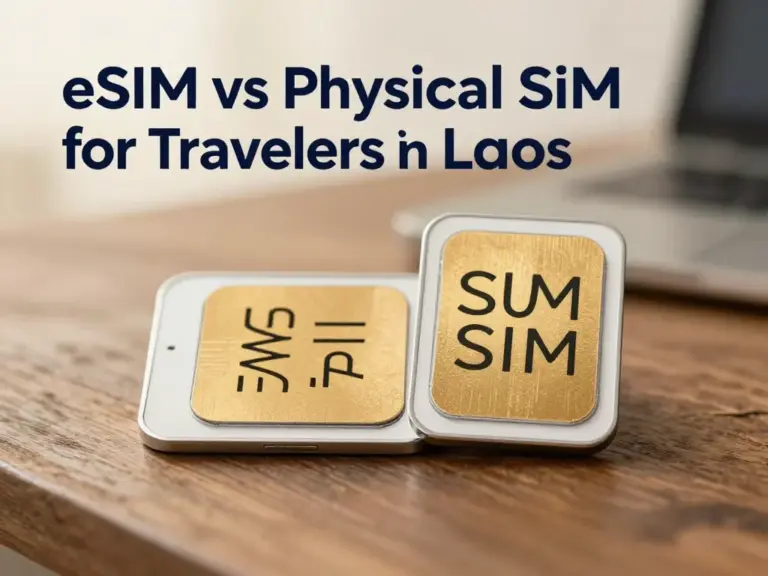
eSIM vs Physical SIM in Laos: Which Option Is Better for Travelers?
Planning a trip to the serene landscapes of Laos—from the waterfalls of Luang Prabang to the bustling streets of Vientiane—requires staying connected. As digital connectivity becomes essential for navigation, booking local transport, and sharing memories, travelers are often faced with a critical decision: should you rely on an eSIM vs Physical SIM in Laos? This guide breaks down everything you need to know to make the best choice for your journey.
Understanding the Basics: What is an eSIM?
An eSIM (embedded SIM) is a digital version of the traditional plastic SIM card. It is built directly into your smartphone’s hardware. Instead of physically swapping out a chip, you simply download a profile via a QR code or an app. This technology has revolutionized travel, allowing users to switch carriers without the hassle of fumbling with tiny plastic cards or worrying about losing their original home SIM.
Physical SIM Cards in Laos: The Traditional Route
For years, purchasing a local physical SIM card has been the gold standard for international travelers. In Laos, major providers like Unitel, Lao Telecom, and ETL offer kiosks at major airports (like Wattay International Airport) and shops throughout city centers. The benefit of a physical SIM is reliability and ubiquity; almost every phone supports it, and coverage in rural areas can be quite extensive depending on the carrier you choose.
| Feature | Physical SIM | eSIM |
|---|---|---|
| Convenience | Low (requires shop visit) | High (instant setup) |
| Installation | Physical swap | Digital QR Code |
| Availability | Local stores/Airports | Online/Apps |
| Risk of Loss | High (tiny chip) | None |
Why eSIMs Are Gaining Popularity for Laos Tourism
The comparison of eSIM vs Physical SIM in Laos increasingly favors the eSIM for modern travelers who value convenience. With an eSIM, you can purchase a data package before your plane even lands. There is no need to queue at airport kiosks or communicate in a language you might not speak fluently to get a plan activated. You simply scan a QR code, and you are online. Furthermore, you can keep your home SIM active simultaneously to receive important SMS codes (like two-factor authentication) while using your eSIM for data.
Laos offers beautiful terrain, but this can sometimes impact mobile signal strength in remote mountainous regions. Whether you choose a physical card or an eSIM, the underlying network infrastructure remains the same. The key is to select a provider with the widest coverage. Unitel is widely considered the largest provider in Laos with the most comprehensive coverage in rural areas. When buying an eSIM via global travel apps, check which local network they partner with to ensure you are getting the best service possible.
Which Option Should You Choose?
If you are a tech-savvy traveler who wants to step off the plane and immediately have a working map, ride-sharing app, and translation tool, an eSIM is the superior choice. It eliminates the stress of finding a shop and the risk of losing your home SIM card. However, if you have an older smartphone that does not support eSIM, or if you prefer to have a local phone number for making traditional voice calls to local businesses or guesthouses, a physical SIM remains a practical and highly reliable option.
คำถามที่พบบ่อย (FAQ)
1. Can I use my home SIM and an eSIM at the same time in Laos?
Yes, most modern smartphones that support dual-SIM functionality allow you to keep your primary SIM active for calls/SMS while using the eSIM for cellular data.
2. Is eSIM coverage in Laos as good as a physical SIM?
Yes. An eSIM uses the exact same local network towers as a physical SIM. Coverage depends on the provider you choose, not the technology format.
3. Where can I buy a physical SIM card in Laos if I change my mind?
Physical SIM cards are readily available at Unitel, Lao Telecom, and ETL service centers at major airports and city centers.