Day 1 — Exploring the Plain of Jars: Site Routes, Local Guides, Entrance Fees, and Photography Spots
Welcome to Xieng Khouang, a province steeped in mystery and ancient history. Your first day in this high-altitude plateau is dedicated to the enigmatic Plain of Jars, a UNESCO World Heritage site featuring thousands of stone jars scattered across the landscape. This guide provides everything you need to navigate the main sites efficiently while capturing the best memories.
Understanding the Plain of Jars: An Overview
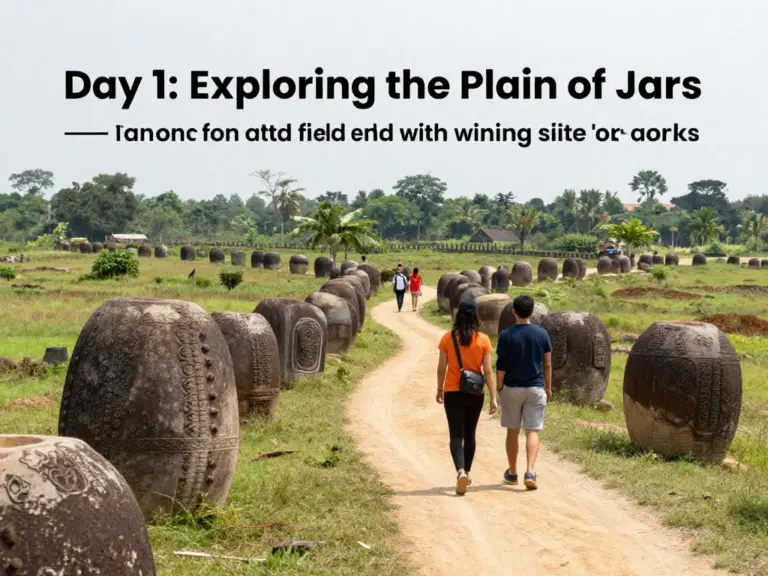
The Plain of Jars consists of over 90 sites, but only a few are cleared of Unexploded Ordnance (UXO) and safe for tourists. These megalithic jars date back to the Iron Age (500 BC to 500 AD) and are believed to have been used for ancient burial practices. As you walk through these fields, you are stepping into one of the most significant and mysterious archaeological landscapes in Southeast Asia.
For your first day, focus on the ‘Big Three’ sites located near the town of Phonsavan. These sites offer the best infrastructure and the most impressive jar clusters.
- Site 1 (Thong Hai Hin): The most popular and largest site. It features the only decorated jar and a large limestone cave used as a crematorium. It is located just 8km from Phonsavan.
- Site 2 (Hai Hin Phou Salato): Situated on two forested hills, this site offers a more atmospheric experience with jars nestled under the shade of ancient trees.
- Site 3 (Hai Hin Lat Khai): A peaceful site reached by a scenic walk through rice paddies and a small bridge. It contains over 150 jars and offers a glimpse into local village life.
Entrance Fees and Local Guides
To maintain these historic sites, entrance fees are collected at each location. As of 2024, the standard fee is approximately 30,000 Kip per person per site. While you can explore independently, hiring a local guide is highly recommended. Guides provide invaluable context regarding the history of the jars and the tragic impact of the Secret War on this region.
| Site | Distance from Town | Highlight |
|---|---|---|
| Site 1 | 8 km | The ‘King’ Jar & Cave |
| Site 2 | 20 km | Hilltop Views |
| Site 3 | 25 km | Rice Paddy Walk |
Top Photography Spots
The Plain of Jars is a photographer’s dream. For the best shots, head to the ridge at Site 2 during the ‘Golden Hour’ before sunset. The way the light hits the weathered stone against the rolling green hills creates a dramatic and timeless scene. At Site 1, use a wide-angle lens to capture the sheer scale of the jar fields with the vast sky in the background.
คำถามที่พบบ่อย (FAQ)
Is it safe to walk around the Plain of Jars?
Yes, as long as you stay within the marked paths. The sites open to the public have been rigorously cleared of UXOs (Unexploded Ordnance) by organizations like MAG (Mines Advisory Group).
What is the best way to get between the sites?
The most flexible way is to rent a motorbike or hire a private tuk-tuk for the day. For more comfort, many travelers book a minivan tour through agencies in Phonsavan.
What should I wear when visiting?
Wear comfortable walking shoes and modest clothing. While there isn’t a strict dress code like in temples, respecting local culture by covering shoulders and knees is appreciated. Bring a hat and sunscreen as the sites are very exposed.
Can I touch the jars?
While there are no physical barriers at most sites, visitors are encouraged not to climb on or sit inside the jars to help preserve these ancient artifacts for future generations.
References
UNESCO World Heritage: Megalithic Jar Sites in Xiengkhuang
- Offbeat Laos Weekend: Ultimate Phonsavan & Plain of Jars 2-Day Itinerary for History, Culture, and Adventure
- How to Get to Phonsavan — Transportation Options, Best Times to Travel, and Practical Tips for a Smooth Weekend Trip
- Day 2 — Cultural Immersion in Phonsavan Town: Markets, Museums, Hmong Villages, Food Recommendations, and Responsible Tourism