Why travelers choose the overland Huay Xai–Pakse route: search intent, timing, and what to expect on this multi-day journey
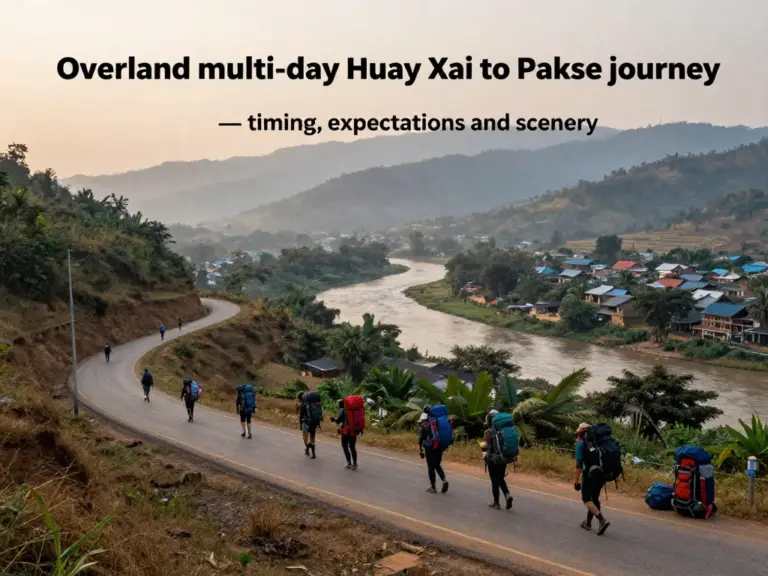
Traversing the length of Laos from the northern gateway of Huay Xai to the southern hub of Pakse is more than just a transit; it is a rite of passage for many adventurers. The Huay Xai–Pakse route offers a profound immersion into the shifting landscapes, cultures, and rhythms of one of Southeast Asia’s most enigmatic nations. While domestic flights exist, the overland journey remains the preferred choice for those seeking to understand the true soul of Laos.
Understanding Search Intent: Why Travelers Choose the Huay Xai–Pakse Route
When travelers research the Huay Xai–Pakse route, their intent is rarely just about getting from point A to point B. The search intent is primarily informational and experiential. Travelers are looking for a “slow travel” experience that contrasts with the frantic pace of neighboring Thailand or Vietnam. They choose this route to witness the transition from the rugged, misty mountains of the north to the fertile, coffee-growing Bolaven Plateau in the south.
Timing Your Journey: When to Hit the Road
Timing is critical for the Huay Xai–Pakse route. The dry season (November to February) is widely considered the best time to visit. During these months, temperatures are cooler, and road conditions are at their most reliable. Traveling during the shoulder season (March to May) can be extremely hot, while the wet season (June to October) brings lush green scenery but also the risk of road delays due to landslides in the northern mountainous regions.
| Season | Months | Pros | Cons |
|---|---|---|---|
| Cool Dry | Nov – Feb | Perfect weather, clear skies | Peak tourist prices |
| Hot Dry | Mar – May | Fewer crowds | Intense heat, hazy air |
| Wet | Jun – Oct | Lush landscapes, waterfalls | Potential road mud/delays |
What to Expect on This Multi-Day Journey
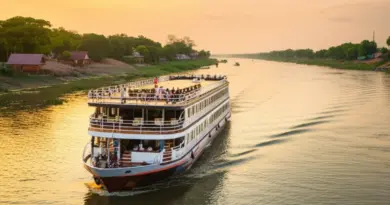
The journey typically begins in Huay Xai, the border town with Thailand. Most travelers opt for the legendary 2-day slow boat to Luang Prabang as the first leg. From Luang Prabang, the route continues southward via the newly developed Laos-China Railway or traditional bus routes through Vang Vieng and Vientiane, finally reaching Pakse.
Key Highlights Along the Route
- The Slow Boat: A meditative drift down the Mekong River.
- Luang Prabang: A UNESCO World Heritage site known for its stunning temples and night markets.
- Vang Vieng: The adventure capital, famous for limestone karsts and blue lagoons.
- Thakhek Loop: A popular side-trip for motorcycling enthusiasts.
- Pakse & The Bolaven Plateau: The gateway to waterfalls and high-quality Lao coffee.
Preparing for the Logistics
Infrastructure in Laos is improving rapidly. The introduction of the high-speed rail has significantly cut travel times between northern cities. However, reaching Pakse from Vientiane still largely relies on sleeper buses or domestic flights. When planning your Huay Xai–Pakse route, ensure you have local currency (Lao Kip), as smaller villages along the way may not accept cards or foreign currency.
คำถามที่พบบ่อย (FAQ)
Q: How long does the Huay Xai–Pakse route take?
A: While it can be done in 4-5 days if rushing, most travelers take 7 to 10 days to enjoy the major stops like Luang Prabang and Vientiane.
Q: Is the route safe for solo travelers?
A: Yes, Laos is generally very safe for solo travelers. The people are friendly, and the established backpacker trail makes it easy to meet others.
Q: Do I need a visa for this journey?
A: Most nationalities require a visa for Laos, which can be obtained as an e-Visa or on arrival at the Huay Xai border.
References
- Backpacking Laos by Bus: Complete Budget Route Guide from Huay Xai to Pakse (Stops, Schedules, and Cost-Saving Tips)
- Step-by-step itinerary and recommended overnight stops: border crossings, towns, and must-see detours between Huay Xai and Pakse
- Bus types, ticketing, schedules, and realistic travel times: how to book, when to ride, and avoiding common delays