Architectural Styles and Symbolism: Traditional Lao Design, French Colonial Influences, Materials, and Restoration Practices
Laos, a landlocked nation in Southeast Asia, offers a mesmerizing tapestry of cultural heritage, much of which is profoundly expressed through its unique architectural landscape. For those embarking on Laos tourism, understanding the intricate blend of traditional Lao design and the enduring French Colonial influences provides a deeper appreciation of the country’s past and present. This article delves into the distinctive characteristics, the symbolism embedded within the structures, the materials that shape them, and the crucial restoration practices ensuring their survival for future generations.
The Roots of Traditional Lao Architecture
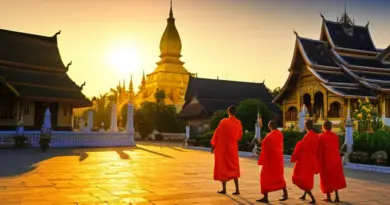
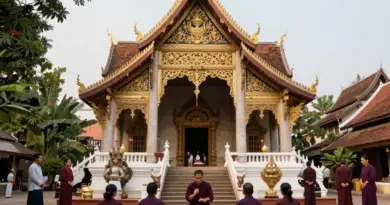
Traditional Lao architecture is deeply intertwined with Theravada Buddhism, which has profoundly shaped the country’s cultural identity. Temples, known as ‘wats’, are the quintessential examples of this style, characterized by their multi-tiered, sweeping roofs that often mimic the graceful curve of a bird’s wings or the flow of a river. These roofs are not merely aesthetic; their steep pitches are designed to shed heavy monsoon rains efficiently. The most iconic feature is often the richly decorated gable end, adorned with intricate wood carvings, gold leaf, and vibrant mosaics depicting Buddhist jataka tales or mythical creatures.
Beyond religious structures, traditional Lao houses, particularly those found in rural areas, are typically built on stilts, providing ventilation in the humid climate, protection from floods and wild animals, and space for livestock or storage underneath. These homes are primarily constructed from local, natural materials such as wood (often teak or rosewood), bamboo, and thatch. The simplicity and functionality of these designs reflect a harmonious relationship with the natural environment and a community-oriented way of life. The use of wooden hinges instead of metal nails in older constructions showcases an ingenious traditional craftsmanship.
French Colonial Influences: A Blended Heritage
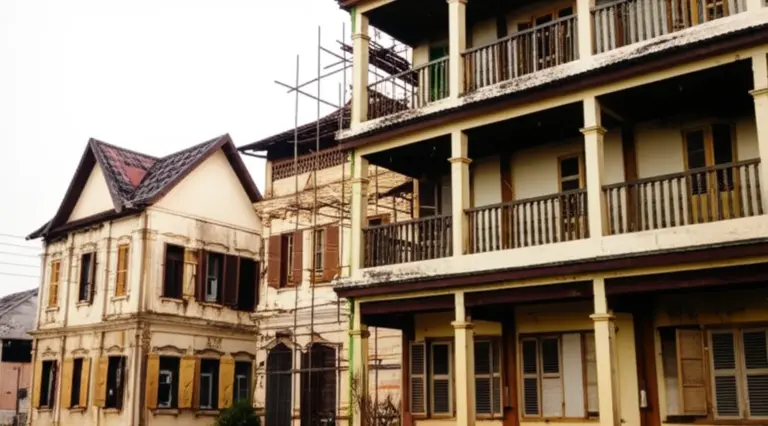
The late 19th and early 20th centuries brought significant French colonial presence to Laos, particularly influencing the urban centers like Vientiane and Luang Prabang. The French introduced new architectural styles, construction techniques, and materials, leading to a fascinating fusion with existing Lao traditions. Colonial buildings often feature elements such as wide verandas, louvred shutters, high ceilings, and neoclassical facades, designed to adapt European styles to the tropical climate. They utilized materials like brick, stucco, and concrete, which were less common in traditional Lao construction.
Luang Prabang, a UNESCO World Heritage site, is perhaps the best example of this architectural blend, making it a prime destination for Laos tourism focused on heritage. Here, traditional Lao temples stand harmoniously alongside elegant French colonial villas and shophouses. The Royal Palace Museum, originally built for the Lao monarchy by the French, exemplifies this synthesis, incorporating both French Beaux-Arts elements and traditional Lao motifs in its design. This unique urban landscape tells a compelling story of cultural exchange and adaptation.
Materials and Construction Techniques
The choice of materials in Lao architecture has historically been dictated by availability and climate. Traditional structures predominantly used wood, especially hardwoods like teak, known for their durability and resistance to insects. Bamboo was also widely used for walls, flooring, and lighter structures due to its flexibility and rapid growth. Thatch, derived from local grasses, provided excellent insulation for roofs. These natural materials created buildings that were inherently sustainable and well-suited to the local environment.
With the arrival of the French, new materials and techniques became prevalent. Brick and stucco were widely adopted for walls, offering greater structural integrity and fire resistance. Terracotta tiles replaced thatch on many roofs, and reinforced concrete began to be used for foundations and structural elements, particularly in larger public buildings and more elaborate villas. The blend of these materials created a diverse architectural palette that defines many of Laos’s historic towns today.
Symbolism Embedded in Design
Symbolism is a cornerstone of traditional Lao architecture, particularly in religious buildings. The multi-tiered roofs of temples, for instance, often symbolize the levels of the Buddhist cosmos, leading the eye upwards towards enlightenment. The mythical Naga, a serpent-like deity, frequently adorns temple staircases and roof finials, serving as a guardian and a symbol of water and fertility. The ornate carvings and murals inside wats depict scenes from the Jataka tales, illustrating the previous lives of Buddha and imparting moral lessons.
Even the orientation of buildings and the arrangement of spaces within a traditional Lao home hold symbolic meaning, often guided by animistic beliefs and principles of harmony with nature. The elevated living quarters protect inhabitants from the earthly realm, while the open spaces beneath facilitate social interaction and daily activities. This deep-rooted connection between design and spiritual belief makes Lao architecture not just visually appealing but also profoundly meaningful.
Restoration Practices and Preservation Efforts
The preservation of Laos’s architectural heritage is a critical endeavor, especially in places like Luang Prabang, where the rapid increase in Laos tourism and modern development pose significant challenges. Organizations like UNESCO, in collaboration with the Lao government and international partners, have been instrumental in establishing conservation guidelines and providing technical assistance for restoration projects. The aim is to maintain the authenticity and integrity of historic structures while allowing for their adaptive reuse.
Restoration practices often involve meticulous research into original construction methods and materials. For traditional wooden structures, this might mean sourcing appropriate timber and employing traditional joinery techniques. For colonial buildings, it involves careful repair of stucco, preservation of original facades, and sensitive integration of modern amenities. Training local artisans in traditional crafts and conservation techniques is also a vital part of these efforts, ensuring that the knowledge and skills are passed down through generations. The goal is to safeguard these architectural treasures, not just as relics of the past, but as living testaments to Laos’s rich cultural narrative.
Discovering Luang Prabang’s Architectural Heritage
To truly appreciate the architectural richness of Laos, a visit to Luang Prabang is indispensable. This charming town, nestled at the confluence of the Mekong and Nam Khan rivers, offers a living museum of traditional Lao and French colonial buildings. Walking its streets, visitors can observe the intricate details of temple roofs, the elegant lines of colonial villas, and the harmonious coexistence of these distinct styles. Many of these historic buildings have been lovingly restored and now serve as boutique hotels, guesthouses, and restaurants, allowing visitors to immerse themselves fully in the unique ambiance.
Conclusion
The architectural styles of Laos, from the spiritual grandeur of traditional wats to the elegant remnants of French colonialism, offer a captivating narrative of the nation’s history, beliefs, and artistic prowess. This unique blend not only enriches the landscape but also provides a compelling draw for Laos tourism, inviting travelers to explore a heritage that is both distinctively Lao and universally appealing. Through ongoing preservation and restoration efforts, these invaluable structures continue to stand as proud symbols of a resilient culture, inviting discovery and admiration for generations to come.
คำถามที่พบบ่อย (FAQ)
| What are the main characteristics of traditional Lao architecture? | Traditional Lao architecture, especially in temples (wats), is characterized by multi-tiered, sweeping roofs, intricate wood carvings, gold leaf decorations, and often features mythical Naga guardians. Traditional houses are typically built on stilts using natural materials like wood and bamboo. |
| How did French colonialism influence Lao architecture? | French colonialism introduced European architectural elements such as wide verandas, louvred shutters, high ceilings, neoclassical facades, and new materials like brick, stucco, and concrete. This led to a unique fusion style, particularly evident in urban centers like Luang Prabang and Vientiane. |
| What materials are commonly used in Lao architectural restoration? | Restoration practices prioritize using original materials and techniques where possible, including traditional hardwoods (like teak), bamboo, and thatch for traditional structures. For colonial buildings, materials such as brick, stucco, and terracotta tiles are carefully repaired or replicated to maintain authenticity. |
| What is the significance of Luang Prabang’s architecture for Laos tourism? | Luang Prabang is a UNESCO World Heritage site renowned for its remarkably preserved blend of traditional Lao temples and French colonial buildings. This unique architectural landscape makes it a major draw for Laos tourism, offering visitors a profound insight into the country’s historical and cultural evolution. |
References
- UNESCO World Heritage Centre: Town of Luang Prabang
- YouTube: Luang Prabang’s Architecture (WKWSCI WeeVo)
- Lonely Planet: Laos Architecture
- Luang Prabang’s UNESCO World Heritage: A Complete Guide to Its Temples, Architecture, and Cultural Significance
- Why Luang Prabang Earned UNESCO Status: History, Preservation Efforts, and What Makes Its Temples Unique
- An Overview of the City’s Major Temples: Wat Xieng Thong, Wat Mai, Wat Visoun — Architecture, Artworks, and Visitor Tips