Why Season Matters: Understanding Laos Weather Patterns and How Dry vs Rainy Seasons Affect What You Pack (Laos climate, travel seasons, timing)
- Why Season Matters: Understanding Laos Weather Patterns and How Dry vs Rainy Seasons Affect What You Pack (Laos climate, travel seasons, timing)
Understanding the Laos climate is the first step toward planning an unforgettable journey through this landlocked gem of Southeast Asia. Unlike many Western countries with four distinct seasons, Laos operates on a tropical monsoon cycle, primarily divided into the dry season and the rainy season. Each period offers a vastly different experience, from the dusty, sun-drenched streets of Vientiane in February to the lush, emerald-green landscapes of Luang Prabang in August. Choosing when to go isn’t just about avoiding a puddle; it dictates the activities you can enjoy, the accessibility of remote villages, and, most importantly, what needs to go into your suitcase.
The Two Faces of Laos: Dry vs. Rainy Season
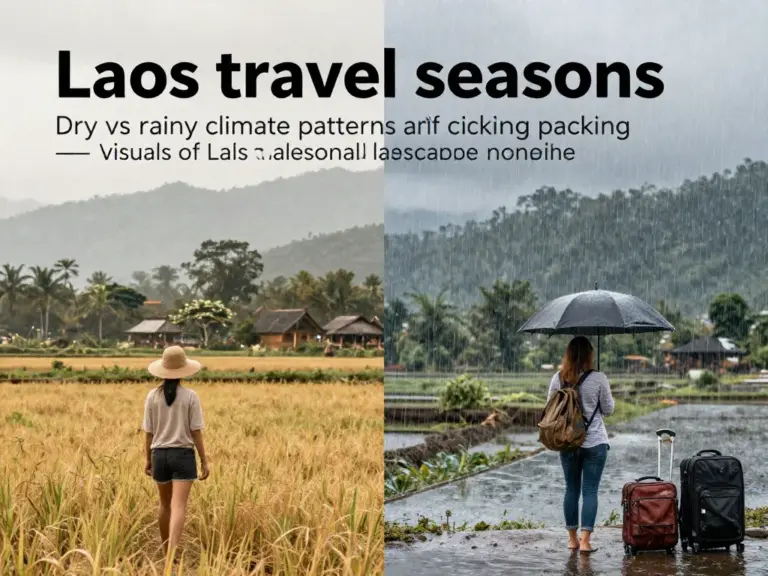
The Laos climate is dominated by the North-East and South-West monsoons. To plan effectively, you must distinguish between the two primary phases: the Dry Season (November to April) and the Rainy Season (May to October). Within the dry season, there is a further sub-division between the ‘cool dry’ and ‘hot dry’ periods, which significantly impacts traveler comfort levels.
1. The Dry Season (November – April)
This is the peak tourist season for a reason. From November to February, the weather is exceptionally pleasant. Temperatures are mild, and the humidity is at its lowest. This is the ideal time for trekking in the northern highlands or exploring the 4,000 Islands in the south. However, as March approaches, the ‘hot dry’ season begins. Temperatures can soar above 35°C (95°F), and the air quality may decrease due to traditional agricultural ‘slash and burn’ practices in the north.
2. The Rainy Season (May – October)
Often referred to as the ‘Green Season,’ this period brings life back to the dusty plains. While the word ‘monsoon’ might sound intimidating, rain usually falls in short, intense bursts in the late afternoon or night, leaving the mornings clear for exploration. The landscapes become vibrant green, and the waterfalls, like Kuang Si, are at their most powerful. The downside? Some rural roads can become impassable mud tracks, and boat travel on the Mekong can be affected by rising water levels.
Regional Variations in Laos Climate
Geography plays a massive role in how you experience the Laos climate. The northern regions, including Luang Prabang and Phongsali, are mountainous and can get surprisingly cold. During the cool dry season (December/January), nighttime temperatures in the mountains can drop to near freezing. Conversely, the southern plains near Pakse and Savannakhet remain warm to hot year-round, with higher humidity levels even during the dry months. Always check the specific forecast for your destination rather than relying on a national average.
| Month | Season | Avg Temp (°C) | Packing Priority |
|---|---|---|---|
| Nov – Feb | Cool Dry | 15 – 28 | Layers & Light Jacket |
| Mar – May | Hot Dry | 25 – 38 | Breathable Cotton & Sunscreen |
| Jun – Oct | Rainy | 24 – 32 | Rain Gear & Waterproof Bags |
Packing for the Dry Season: Sunshine and Dust
If you are visiting during the peak dry months, your packing list should focus on sun protection and layering.
- Lightweight Layers: Even if it’s hot during the day, the mornings and evenings can be chilly, especially in the north. A light fleece or a denim jacket is essential.
- Breathable Fabrics: Stick to linen and cotton. Avoid heavy synthetics that trap sweat.
- Sun Protection: A wide-brimmed hat, high-SPF sunscreen, and polarized sunglasses are non-negotiable.
- Dust Protection: If you plan on riding a motorbike or taking a slow boat, a buff or scarf will protect your lungs and face from road dust.
Packing for the Rainy Season: Humidity and Mud
Traveling during the monsoon requires a more technical approach to packing. The goal is to stay dry and manage the high humidity.
- Quick-Dry Clothing: Moisture-wicking fabrics are your best friend. Cotton takes forever to dry in 90% humidity.
- Waterproof Gear: A high-quality, breathable rain poncho is often better than a heavy raincoat. Don’t forget a waterproof cover for your backpack.
- Footwear: Waterproof hiking sandals (like Chacos or Tevas) are often better than boots, as they dry quickly and provide grip on slippery surfaces.
- Dry Bags: Use small dry bags for your electronics and passport to prevent moisture damage from the humid air.
Cultural Considerations: Packing with Respect
Regardless of the Laos climate, cultural norms remain constant. Laos is a conservative Buddhist country. When visiting temples or rural villages, you must cover your shoulders and knees.
- The Sarong: A versatile piece of cloth that can be used as a skirt for temple entry, a towel, or a light blanket.
- Modest Swimwear: In many rural areas, locals swim fully clothed. It is respectful to wear a T-shirt over your bikini when swimming in public waterfalls.
คำถามที่พบบ่อย (FAQ)
Q: When is the absolute best time to visit Laos?
A: For most travelers, November to February offers the most comfortable weather with clear skies and mild temperatures.
Q: Does it actually get cold in Laos?
A: Yes! In Northern Laos (Luang Namtha, Phongsali), temperatures can drop to 5-10°C at night during December and January. Always bring a warm layer.
Q: Is the rainy season a bad time to travel?
A: Not at all. It is the ‘Green Season.’ Prices are lower, there are fewer tourists, and the waterfalls are spectacular. Just be prepared for occasional travel delays.
Q: What is the ‘Burning Season’?
A: Usually occurring from March to April, farmers clear land using fire. This can lead to smoky air and reduced visibility in Northern Laos.
References
- Official Laos Tourism Portal
- World Weather Online: Vientiane Averages
- Lonely Planet Laos: When to Go
- Packing List for Laos: What to Pack for the Dry vs Rainy Season (Essentials, Clothing, Gear, and Packing Tips)
- Clothing and Footwear Essentials for Dry Season vs Rainy Season (breathable fabrics, sun protection, waterproof footwear, quick-dry clothing)
- Gear, Gadgets, and Health Items to Bring for Each Season (rain gear, mosquito protection, water purification, portable charger, first-aid)