Understanding Currency and Exchange Rates in Laos: Kip vs. Baht vs. USD and Best Places to Exchange
Navigating the financial landscape of the ‘Land of a Million Elephants’ can be a unique experience for travelers. Unlike many of its neighbors, Laos operates on a multi-currency system where the local Lao Kip (LAK) coexists with the Thai Baht (THB) and the United States Dollar (USD). Understanding Currency and Exchange Rates in Laos is essential for any visitor looking to ensure a smooth, cost-effective journey through this beautiful landlocked nation.
The Triple-Currency System: Kip, Baht, and USD
While the official currency is the Lao Kip, you will quickly notice that prices for larger items—such as hotel stays, high-end meals, or organized tours—are often quoted in USD or Thai Baht. The Kip is primarily used for everyday transactions like street food, local markets, and tuk-tuk rides.
The Lao Kip is a non-convertible currency, meaning it cannot be easily exchanged outside of Laos. Therefore, it is vital to manage your cash flow and ensure you don’t leave the country with a large amount of Kip, as you will likely find it worthless once you cross the border.
Current Exchange Rate Trends in Laos
In recent years, the Lao Kip has experienced significant volatility. Inflation has led to a widening gap between the official government exchange rates and the ‘market’ or ‘parallel’ rates found at private money changers. For travelers, this means that while ATMs provide the official rate (minus fees), private exchange booths in cities like Vientiane or Luang Prabang might offer significantly more Kip for your Dollars or Baht.
| Currency Pair | Typical Usage | Acceptance Level |
|---|---|---|
| USD/LAK | Hotels, Tours, Flights | High (Major Cities) |
| THB/LAK | Border areas, Markets | Very High |
| LAK Only | Street Food, Local Transport | Mandatory |
Best Places to Exchange Currency in Laos
Finding the best Currency and Exchange Rates in Laos requires knowing where to look. Generally, you have three main options:
- Banks (BCEL, LDB): These are the safest options and offer the official government rate. They are reliable but may have shorter operating hours.
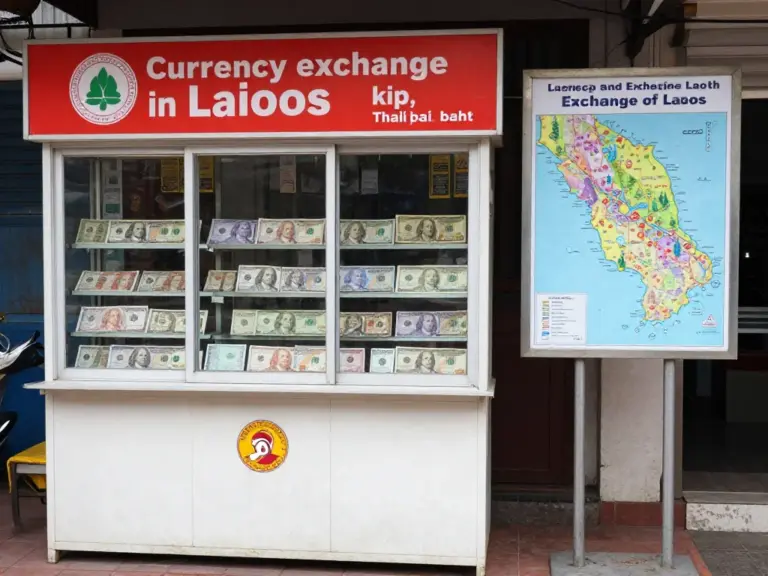
- Private Money Changers: Often found near markets or in tourist hubs. They frequently offer better rates than banks, especially during periods of high Kip volatility. Look for booths with clearly displayed rates.
- ATMs: Widely available in major towns. They dispense Lao Kip. Be aware of transaction limits (often 2,000,000 LAK per withdrawal) and international bank fees.
Practical Money Tips for Laos Tourism
1. Carry Crisp Bills: If you are bringing USD, ensure the bills are new, clean, and untorn. Many places in Laos will refuse older ‘small head’ bills or notes with any markings or tears.
2. Calculate Before You Pay: If a vendor offers to take your USD for a Kip-priced item, do a quick mental calculation to ensure the rate isn’t predatory.
3. The ‘Small Change’ Rule: Always keep a stash of small Kip denominations (10,000, 20,000) for small purchases. Vendors often struggle to give change for 100,000 LAK notes.
คำถามที่พบบ่อย (FAQ)
Q: Can I use credit cards in Laos?
A: Credit cards (Visa/Mastercard) are accepted in high-end hotels and some restaurants in Vientiane and Luang Prabang, but a 3% surcharge is common. For most of the country, cash is king.
Q: Is it better to bring Thai Baht or USD to Laos?
A: Both are excellent. Thai Baht is very easy to use in the border regions and Vientiane, while USD is preferred for larger payments like visas-on-arrival and hotel bills.
Q: Where can I get the best exchange rate for Kip?
A: Usually, private exchange booths in the city centers of Vientiane and Luang Prabang offer better rates than the airport or official bank branches.
References
Banque Pour Le Commerce Exterieur Lao (BCEL) Official Rates
Official Laos Tourism Portal