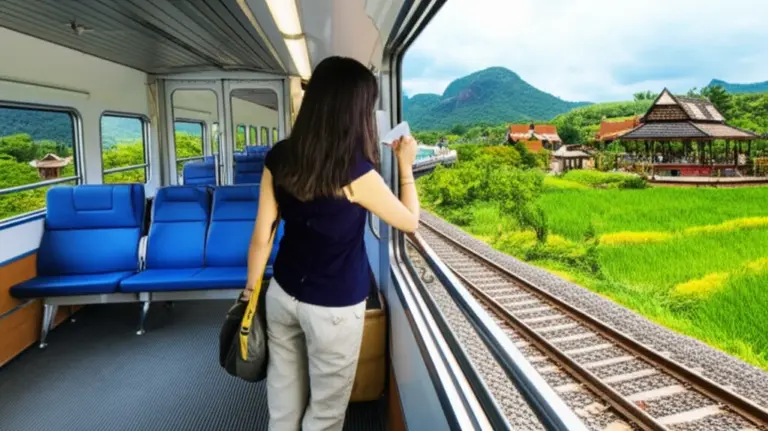
Best time to travel, rail routes, and how to plan a 7-day Laos trip by train from Luang Prabang to Vang Vieng and Vientiane
This guide provides expert advice on securing your tickets, determining the ideal travel window, and crafting a detailed itinerary to maximize your time while exploring the key destinations of Luang Prabang, Vang Vieng, and Vientiane.
Best Time to Visit Laos for a Rail Journey
The climate in Laos significantly impacts the travel experience, especially concerning visibility and outdoor activities in places like Vang Vieng. Choosing the right season ensures comfortable temperatures and optimal conditions for sightseeing.
The Dry Season (November to February)
This period is universally considered the best time to visit Laos. Temperatures are mild (averaging 20°C to 25°C), humidity is low, and rainfall is minimal. This is perfect for exploring the temples of Luang Prabang and enjoying the limestone karst scenery near Vang Vieng. However, this is also peak tourist season, meaning train tickets require booking well in advance.
The Shoulder Seasons (March, April, and October)
Traveling during the shoulder seasons offers a balance of pleasant weather and fewer crowds. March and April can be extremely hot, sometimes exceeding 35°C, especially in Vientiane. October, immediately following the wet season, sees lush, green landscapes and rivers running high, which is ideal for photography and river activities.
Planning Your 7-Day Laos Trip by Train
The Laos-China Railway features high-speed (C-Class) and standard (K-Class) services. For efficiency on a tight 7-day schedule, the high-speed options are essential. The route requires two main segments: Luang Prabang to Vang Vieng, and Vang Vieng to Vientiane.
Route Breakdown: Luang Prabang to Vientiane
- Segment 1: Luang Prabang to Vang Vieng. This journey covers approximately 180 km and takes about 1 hour via the high-speed train. The scenery is spectacular, passing through numerous tunnels and bridges built across the mountainous terrain.
- Segment 2: Vang Vieng to Vientiane (Vientiane Capital Station). This segment is slightly longer, covering around 140 km, and takes approximately 1 hour and 15 minutes.
Essential Logistics: Tickets and Timing
Train tickets cannot be purchased online directly from the official operator (LCR) using international payment methods. Travelers must book through authorized agents (often charging a small commission) or directly at the station up to three days in advance. Given the popularity of the rail link, securing tickets early is paramount for a smooth 7-day Laos trip by train.
Be aware that the train stations (Luang Prabang Station, Vang Vieng Station, and Vientiane Capital Station) are often located several kilometers outside the main city centers. Budget for 15-30 minutes of travel time and a 50,000–100,000 LAK taxi/tuktuk ride to reach your accommodation.
Itinerary: A 7-Day Laos Rail Adventure
This itinerary balances cultural immersion with adventure, ensuring you see the highlights of Northern Laos efficiently using the high-speed rail network.
| Day(s) | Location | Focus/Activity |
|---|---|---|
| 1–3 | Luang Prabang | Cultural immersion, Alms Giving Ceremony, Kuang Si Falls, Mount Phousi sunset. |
| 4 | Travel Day | Morning train (1 hour) to Vang Vieng. Check-in and explore the town center. |
| 5 | Vang Vieng | Adventure activities: Blue Lagoon, Tham Pha Daeng Cave, kayaking on the Nam Song River. |
| 6 | Travel/Vientiane | Morning train (1.25 hours) to Vientiane. Afternoon: Visit Patuxai and Pha That Luang. |
| 7 | Vientiane | Morning: Wat Si Saket and COPE Visitor Centre. Departure. |
Days 1-3: Luang Prabang (Culture and Departure)
Luang Prabang, a UNESCO World Heritage site, demands at least three full days. Key experiences include participating in the early morning Tak Bat (Alms Giving Ceremony), visiting the Royal Palace Museum, and taking a day trip to the stunning tiered waterfalls of Kuang Si. On Day 4, ensure you allocate enough time to get from the town center to the Luang Prabang Railway Station (LPS).
Days 4-5: Vang Vieng (Adventure Stop)
Vang Vieng, nestled amongst dramatic karst peaks, is the adventure hub of this trip. With the train making the journey so fast, you gain almost an entire extra day compared to bus travel. Spend your time caving, rock climbing, or enjoying tubing (if the river conditions are right). The sunset views over the rice fields are unmissable.
Days 6-7: Vientiane (Capital Conclusion)
Vientiane, the capital, is generally more relaxed than other Southeast Asian capitals. Key sites are the golden stupa of Pha That Luang and the monumental Patuxai (Victory Gate). Also crucial is a visit to the COPE Visitor Centre, which provides vital context regarding the country’s history and the impact of unexploded ordnance. Your 7-day Laos trip by train concludes here, offering easy access to the international airport or the Thai border.
Tips for Riding the Laos-China Railway
- Arrive Early: Security checks and ticket processing are meticulous. Aim to be at the station 90 minutes before departure, as gates close 20 minutes prior.
- Baggage Limits: High-speed trains have strict limits (20kg per person). If you exceed this, you may need to pay an excess fee or have your luggage sent separately via freight.
- Payment: While the trains are modern, ticket purchases often require cash (LAK) if buying directly at the station.
Watch a quick guide on navigating the new Laos-China Railway system.
คำถามที่พบบ่อย (FAQ)
References
- Seat 61: Train travel in Laos (Detailed Route Information)
- Lonely Planet: Guide to booking Laos-China Railway tickets
- 7-Day Laos Highlights by Rail: Ultimate Luang Prabang, Vang Vieng & Vientiane Itinerary for First-Time Travelers
- Day-by-day rail itinerary: detailed schedule, must-see attractions, transfers, and travel times for Luang Prabang, Vang Vieng, and Vientiane
- Where to stay, eat, and book rail tickets: recommended hotels, guesthouses, local dishes, restaurants, and reliable train/ticket vendors