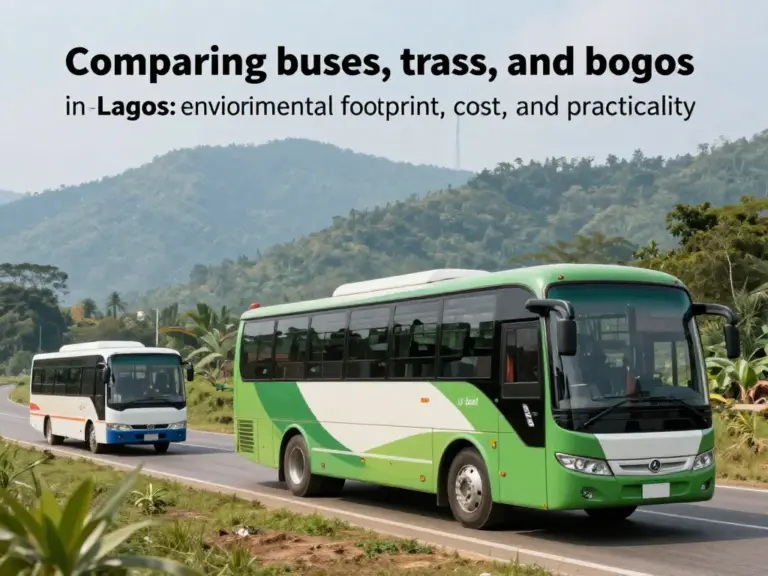
Comparing Modes: Environmental Footprint, Cost, and Practicality of Buses vs Trains vs Boats in Laos
- Comparing Modes: Environmental Footprint, Cost, and Practicality of Buses vs Trains vs Boats in Laos
When planning a journey through the ‘Land of a Million Elephants,’ travelers are faced with a diverse array of transportation choices. Choosing between Buses vs Trains vs Boats in Laos isn’t just about getting from point A to point B; it’s about balancing your budget, managing your time, and considering your impact on the pristine Laotian environment. As Laos modernizes, particularly with the introduction of high-speed rail, the dynamics of travel are shifting rapidly, offering tourists more variety than ever before .
The Environmental Footprint: Traveling Green in Laos
Sustainability is a growing priority for Laos tourism. When we look at the environmental impact of Buses vs Trains vs Boats in Laos, the results are varied. The Laos-China Railway (LCR) is the most energy-efficient per passenger, utilizing electricity which, in Laos, is largely generated via hydroelectric power. This makes the train the ‘greenest’ choice for long-distance travel between Vientiane, Vang Vieng, and Luang Prabang.
Buses and minivans, while flexible, rely on fossil fuels and contribute more to local air pollution and road congestion. Traditional slow boats, particularly those used on the Mekong, offer a lower-speed alternative. While they do use diesel engines, their slow pace and high passenger capacity often result in a lower carbon footprint per kilometer compared to a private car or a half-empty bus.
Cost Comparison: Budgeting Your Laotian Adventure
For many, the choice between Buses vs Trains vs Boats in Laos comes down to the wallet. Historically, buses were the undisputed champions of budget travel. However, the train has introduced a mid-tier pricing structure that competes heavily with ‘VIP’ bus services.
| Mode | Route Example | Estimated Cost (USD) | Best For |
|---|---|---|---|
| Train (LCR) | Vientiane to Luang Prabang | $15 – $25 | Speed & Comfort |
| Bus / Minivan | Vientiane to Luang Prabang | $10 – $18 | Budget Travelers |
| Slow Boat | Huay Xai to Luang Prabang | $25 – $40 (2 days) | Scenic Experience |
While the bus remains slightly cheaper, the train saves hours of travel time, which many tourists find worth the extra few dollars. Boats are generally the most expensive option because they are often viewed as a multi-day ‘experience’ rather than just a transfer.
Practicality and Accessibility: The Logistics of Travel
Practicality is where the debate over Buses vs Trains vs Boats in Laos gets interesting. The train is incredibly fast—turning a 10-hour bus ride into a 2-hour breeze—but it requires booking in advance (often via apps like LCR Ticket) and involves strict security checks similar to airports. Furthermore, train stations are often located several kilometers outside of the city centers.
Buses offer the most flexibility. They reach remote villages where tracks don’t lay and rivers don’t flow. If you are heading to the Bolaven Plateau or the far south (Si Phan Don), buses are your primary lifeline. Boats, specifically the slow boat from the Thai border to Luang Prabang, are a ‘bucket list’ item. They are not practical for someone in a hurry, but they are the most relaxing way to see the rural heart of the country .
Which Should You Choose?
The “best” mode depends on your itinerary:
- Choose the Train: If you are traveling between major hubs (Vientiane, Vang Vieng, Luang Prabang) and value your time.
- Choose the Bus: If you are on a tight budget or visiting off-the-beaten-path locations like Phonsavan or Thakhek.
- Choose the Boat: If the journey itself is the destination, specifically for the iconic Mekong crossing.
คำถามที่พ่อยบ่อย (FAQ)
1. Is it easy to buy train tickets in Laos?
Tickets can be purchased at the station or through the official LCR Ticket app. It is recommended to book 2-3 days in advance as they often sell out.
2. Are buses in Laos safe?
Generally yes, but mountain roads can be winding and narrow. Using reputable ‘VIP’ or ‘Express’ bus companies is recommended for better safety standards.
3. How long does the slow boat take from Huay Xai to Luang Prabang?
The journey typically takes two days, with an overnight stop in the village of Pakbeng.
4. Which is the most eco-friendly way to travel in Laos?
The high-speed train is currently the most eco-friendly option due to its electric power source and high passenger efficiency.
References
- Lao National Tourism Administration
- Laos-China Railway Official Site
- World Bank – Laos Economic Monitor & Infrastructure