Water splashing traditions: customs, etiquette, and the role of community celebrations
- Water splashing traditions: customs, etiquette, and the role of community celebrations
For travelers seeking profound cultural immersion in Southeast Asia, few events rival the sheer joy and spiritual depth of the New Year water festivals. Central to this celebration, particularly when focusing on Laos water splashing traditions, is the annual observance of Pi Mai Lao. More than just a chance to cool off, this festival is a powerful, multi-day event symbolizing purification, renewal, and the strengthening of community bonds. As a dedicated resource for Laos Tourism, this guide delves into the customs, the unspoken rules of etiquette, and the vital role these celebrations play in Lao society.
The Heart of the Celebration: Pi Mai Lao in Laos
Pi Mai Lao, or the Lao New Year, typically takes place in mid-April, marking the transition from the old lunar year to the new. Unlike the more globally recognized Thai Songkran, the Lao version often places a greater emphasis on quiet reverence and deep-seated Buddhist ritual, though the spirited water throwing remains a core component of the public merriment.
Understanding the Lao New Year Calendar
The festival usually spans three days, each carrying distinct significance. The first day is dedicated to preparing the home and visiting temples. The second day is often the most intense for public water throwing, while the third day is reserved for returning to the temples to offer thanks and participate in final blessing ceremonies. Understanding this timeline allows visitors to engage respectfully with the flow of the celebration.
The Spiritual Significance of Water
In Lao belief, water is not merely for cooling; it is a sacred medium. The act of sprinkling or gently pouring water over elders, monks, and Buddha images is a profound gesture of cleansing. It washes away the bad luck, sins, and misfortunes accumulated over the previous year, ensuring a clean slate for prosperity and good fortune in the coming twelve months. This purification ritual is the foundation upon which all other joyous activities are built.
Core Customs and Rituals Beyond the Splash
Temple Visits and Merit Making (Baci Ceremony Context)
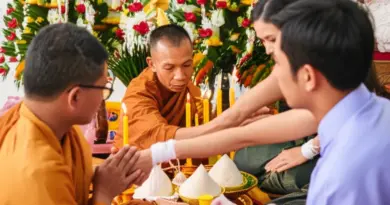
Merit-making, or tham bun, is paramount during Pi Mai Lao. Families flock to local wats (temples) to offer food to the monks and participate in blessings. In some communities, the sacred Baci ceremony—a ritual meant to call the spirits (kwan) back to the body—is performed to ensure the well-being of family members entering the New Year.
Decorating Buddha Statues (Bathing the Buddha)
A key ritual involves bathing revered Buddha statues. Devotees carefully pour perfumed water (often mixed with flowers or herbs) over the statues. This act is believed to bestow blessings upon the individual performing the rite. Tourists are often welcome to participate, provided they do so with utmost respect and gentleness.
Mastering Water Splashing Etiquette for Travelers
To truly enjoy the fun while honoring local customs, understanding the etiquette surrounding the more boisterous public splashing is crucial. Navigating the **Laos water splashing traditions** requires a balance between participation and respect.
Respectful Play: Who, When, and How Much Water
In traditional settings, water is meant to be gently sprinkled or dabbed onto the skin using a small bowl or silver vessel. This is a blessing. Avoid high-pressure water guns or hoses aimed directly at faces, especially when interacting with monks, the elderly, or young children. If you are in a designated tourist zone (like Vientiane or Luang Prabang main streets), the atmosphere is more forgiving, but courtesy always prevails. Never splash people who are clearly not participating or who appear to be traveling to or from a religious site.
Dressing Appropriately and Protecting Valuables
When venturing out during the festival days, opt for light, quick-drying clothing that covers the shoulders and knees when possible, especially near temples. Assume everything you carry will get soaked. Secure passports, electronics, and wallets in high-quality dry bags. Plastic bags are your best friend during Pi Mai Lao!
The Role of Community and Celebration
The festival serves as a powerful social glue, temporarily suspending usual hierarchies in favor of communal celebration. It is a vital moment for reconnecting family members who may live far apart to return home for the New Year rites.
Unifying the Village: Social Cohesion
In smaller towns and villages, the water is often carried in communal buckets, requiring neighbors to work together. Sharing the water, whether in blessing or play, reinforces interdependence. This shared, joyous chaos is a mechanism for releasing tension and reaffirming social structures for the year ahead.
Food, Music, and Traditional Games
Beyond the water, Pi Mai Lao is a feast. Streets are filled with temporary stalls selling traditional Lao snacks and festive drinks. Traditional Lao music plays loudly, and various sporting events and games—such as tug-of-war or traditional Lao chess—are organized by local neighborhoods to foster friendly competition and community spirit.
Essential Travel Tips for Experiencing Laos Water Splashing Traditions
To fully appreciate the depth and fun of this event, planning ahead is essential. We highly recommend watching videos to get a visual sense of the atmosphere before you arrive. This clip offers an excellent overview of the high-energy celebration you can expect in major Lao cities:
Always book accommodation and internal travel well in advance, as this is peak travel time across the region. Remember that while the energy is high, the underlying respect for Buddhist traditions should always guide your actions. Enjoy the cleansing, embrace the fun, and welcome the Lao New Year with an open heart.
คำถามที่พบบ่อย (FAQ)
When is Pi Mai Lao typically celebrated?
Pi Mai Lao usually spans three days, traditionally falling in mid-April, marking the transition into the Lao New Year.
Is the water throwing aggressive during these traditions?
Traditionally, water is meant to be sprinkled gently as a blessing. While tourist areas can be boisterous, respectful play that avoids faces and religious figures is highly encouraged.
What is the spiritual purpose of splashing water in Laos?
The water symbolizes purification. It is believed to wash away the misfortunes, bad luck, and sins of the previous year, paving the way for a prosperous and fortunate new year.
Should I bring gifts to temples during Pi Mai Lao?
Yes, offering food or small donations to the monks (tham bun) is a significant part of the merit-making process during the New Year period.
References
- Cultural Guide to Lao Festivals and Traditions
- Understanding Buddhist New Year Celebrations in Southeast Asia