What to Expect During the Rice Farming Experience: From Seed Planting to Traditional Harvesting
Laos is a land where time seems to slow down, and nowhere is this more evident than in its verdant, sprawling rice paddies. For travelers seeking a deeper connection with the local culture, participating in a Rice Farming Experience is not just an activity—it is a lesson in patience, community, and the ancient rhythms of life. Whether you are in the lush valleys of Luang Prabang or the rural landscapes of Vang Vieng, engaging in the cycle of rice cultivation offers a transformative perspective on the staple food that feeds billions.
The Importance of the Rice Cycle in Laos
Rice is more than just a commodity in Laos; it is the heartbeat of the nation. In Lao culture, rice farming is a communal effort that binds villages together. Engaging in a Rice Farming Experience allows you to witness firsthand the labor-intensive, beautiful process that has remained largely unchanged for centuries. You will learn about the “Sticky Rice” (Khao Niew) variety, which is the cultural identity of the Lao people.
Phase 1: Seed Planting and Nursery Preparation
The journey begins in the nursery, where farmers meticulously prepare the soil. You will observe how seeds are soaked and then sown into small, nutrient-rich beds. During your visit, you might be invited to help prepare these beds or assist in the initial planting stages. It is a tactile experience where you get to feel the mud between your toes—a humbling reminder of the direct connection between human effort and the food on our plates.
Phase 2: Transplanting Seedlings
Once the seedlings are strong enough, they are moved to the main paddies. This phase is physically demanding and requires a rhythmic, back-breaking pace. You will watch farmers wade into the water, expertly spacing the seedlings in perfect rows. Trying your hand at this is a fantastic way to appreciate the skill involved. It is not just about placing plants; it is about geometry, balance, and working in harmony with the water levels.
Phase 3: The Traditional Harvesting Process
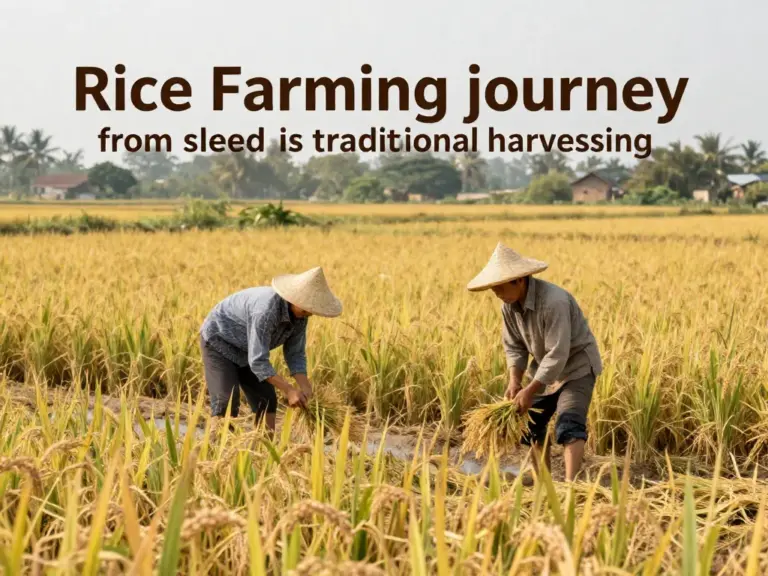
If your visit coincides with the harvest season (usually between October and December), you are in for a treat. The golden fields are a sight to behold. Harvesting is a celebration. You will learn to use traditional sickles to cut the rice stalks, bundle them, and thresh them to separate the grain from the chaff. The atmosphere during the harvest is often one of joy and community, frequently accompanied by traditional music and shared meals in the fields.
Why This Experience Matters for Sustainable Tourism
By choosing to participate in these community-led farming tours, you are directly supporting local livelihoods. Many of these programs are run by village cooperatives, ensuring that the income generated stays within the community. It promotes sustainable tourism in Laos, preserving agricultural heritage while providing visitors with an authentic, educational, and deeply memorable experience.
คำถามที่พบบ่อย (FAQ)
Q: What is the best time of year to participate in a rice farming experience?
A: The best time depends on the phase you want to see. Planting usually happens in the rainy season (June-July), while the golden harvest takes place from October to December.
Q: Do I need to be physically fit to join these activities?
A: While the work is manual, most tours are designed for tourists and are not overly strenuous. You can participate as much or as little as you feel comfortable with.
Q: Is it appropriate to take photos of the farmers?
A: Always ask for permission first. Most local farmers are friendly and welcoming, but it is respectful to seek consent before taking close-up portraits of them while they work.