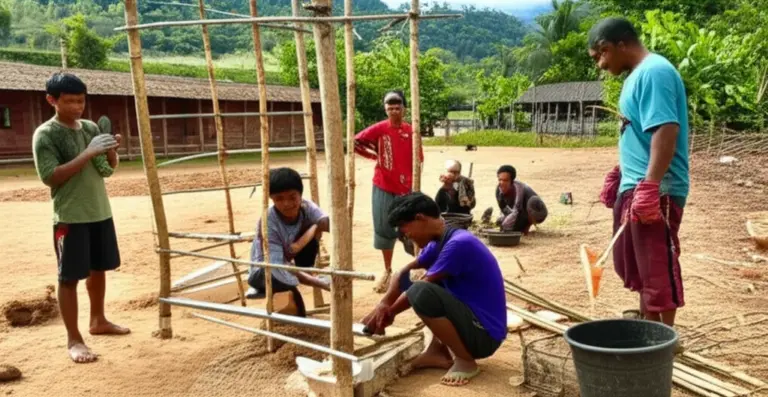
Why Volunteer in Laos? Understanding Impact, Local Needs, and Responsible Travel
Laos, the ‘Land of a Million Elephants,’ captivates visitors with its serene Buddhist culture, stunning karst landscapes, and warm hospitality. For many travelers, the desire to give back goes hand-in-hand with exploring. However, the decision to Volunteer in Laos requires careful consideration. Ethical volunteering is not just about goodwill; it’s about understanding the complex local needs, avoiding harm, and ensuring your contribution leads to sustainable, long-term impact. This guide explores the motivations, ethical pitfalls, and responsible practices necessary to make your volunteer experience truly meaningful.
The Call to Action: Why Laos Needs Ethical Volunteers
Despite recent economic growth, Laos remains one of Southeast Asia’s least developed nations, facing significant challenges that require thoughtful, expert assistance. Understanding these challenges is the first step toward responsible engagement.
Key Socio-Economic Challenges
- Education Gaps: While primary education is improving, access to quality secondary and vocational training, especially in rural areas, remains limited. Volunteers with teaching expertise (especially English, IT, and specialized vocational skills) are highly valuable.
- Healthcare Access: Infrastructure and trained personnel are scarce outside major urban centers. Medical professionals who can conduct training or specialized services are often needed.
- Sustainable Agriculture and Environment: Laos relies heavily on agriculture. Projects focused on sustainable farming techniques, environmental conservation, and UXO (unexploded ordnance) awareness and clearance are vital.
The Importance of Sustainable Development
The most effective volunteer projects prioritize local ownership. They don’t replace local labor; they build capacity. If you are painting a school or laying bricks, ask yourself: couldn’t a local worker be paid to do this, thereby injecting money directly into the community? True sustainable development involves knowledge transfer, ensuring the project continues long after you leave.
Maximizing Your Impact: Responsible Volunteering Practices
To truly make a positive impact when you Volunteer in Laos, you must shift your mindset from ‘helping’ to ‘contributing.’ This means matching your skills to genuine needs.
Skills-Based Contribution vs. General Labor (The ‘Orphanage Tourism’ Warning)
The rise of voluntourism has unfortunately led to harmful practices, particularly in child care settings. The consensus among ethical travel organizations is clear: **avoid volunteering in orphanages.** These institutions often exploit children for profit, and the constant cycle of short-term volunteers disrupts the child’s attachment and security.
If you lack professional skills (e.g., certified teacher, nurse, engineer), look for roles focused on administration, fundraising, or manual labor that hires local staff, rather than direct interaction with vulnerable populations.
Choosing Vetted, Local Organizations
The best organizations are those founded and run by Lao nationals, ensuring projects are culturally appropriate and address priorities set by the community itself. Research thoroughly:
| Criteria | What to Look For |
|---|---|
| Transparency | Detailed breakdown of how program fees are spent (e.g., local staff salaries, project materials). |
| Ethical Policy | Clear policies on child protection and local staff training. |
| Sustainability | Evidence that the project goal is to eventually operate without foreign volunteers. |
Beyond the Project: Embracing Responsible Travel
Being a responsible traveler is an extension of being a responsible volunteer. Your daily choices contribute significantly to the local environment and economy.
Cultural Sensitivity and Respect
Laos is a deeply traditional and Buddhist country. Respectful behavior includes dressing modestly, especially when visiting temples or rural villages. Learning a few simple Lao phrases goes a long way in building rapport and showing respect for the culture you are immersed in.
Supporting Local Economies
Choose guesthouses, restaurants, and tour operators that are locally owned. Buying crafts directly from artisans or markets rather than large tourist shops ensures that your money stays within the community. This economic support is often as valuable as, if not more than, the time spent volunteering.
Watch: Understanding Community Impact in Laos
A look into sustainable development efforts across Laos.
Personal Growth and the Lao Experience
Beyond the ethical considerations, volunteering in Laos offers unparalleled personal growth. The pace of life, the resilience of the people, and the deep connection to tradition provide a perspective rarely found in rapid-paced Western life. You will develop patience, cross-cultural communication skills, and a deeper appreciation for global inequality.
If approached with humility, respect, and a commitment to genuine local needs, the decision to Volunteer in Laos can be an enriching experience that benefits both you and the Lao community.
คำถามที่พบบ่อย (FAQ)
A: While some organizations charge fees to cover accommodation, food, and administrative costs, be cautious of high fees that seem disproportionate. Ethical organizations use these funds transparently to support local staff salaries and project materials. Always verify where the money goes.
A: High-priority needs include English language instruction (especially for tourism and commerce), IT literacy training, sustainable agriculture techniques, and specialized medical training or public health initiatives.
A: No. Ethical tourism guidelines strongly advise against volunteering in orphanages due to the risk of contributing to child exploitation and the psychological harm caused by the constant rotation of caregivers. Seek projects focused on community education or environmental protection instead.
A: The longer the better. Short-term placements (under two weeks) rarely provide enough time for genuine knowledge transfer or integration. Commitments of 1-3 months are generally preferred by organizations focusing on skills-based development.