Best Silk Weaving Villages to Visit Near Luang Prabang: Maps, Travel Times, and Recommended Tours
Luang Prabang, a UNESCO World Heritage site, is not only famous for its golden temples and morning alms but also as the heart of Laos’ exquisite textile heritage. For centuries, silk weaving villages surrounding the city have preserved intricate techniques passed down through generations. Visiting these villages offers a profound look into the artistry, patience, and cultural identity of the Lao people. This guide explores the premier destinations for textile enthusiasts, providing logistical details and tour insights for your next journey.
Ban Phanom: The Historic Royal Weaving Village
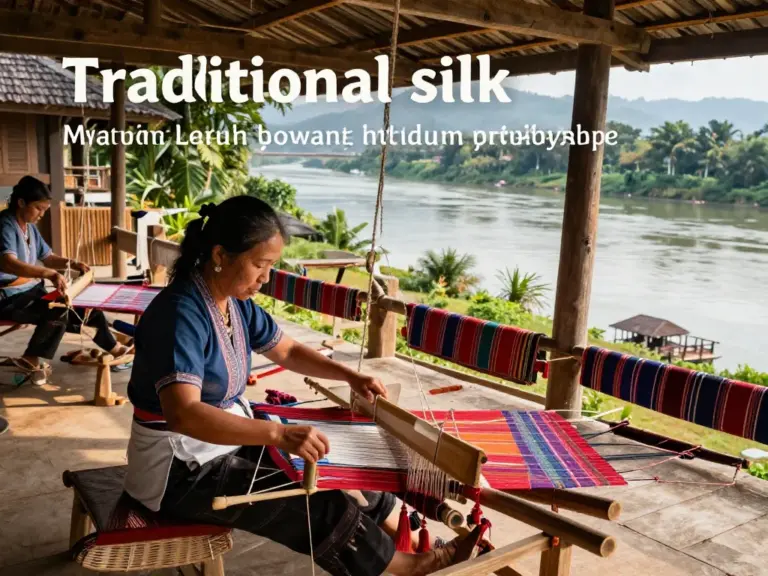
Located just a short distance from the city center, Ban Phanom is perhaps the most famous of the silk weaving villages. Historically, the weavers here provided textiles for the Lao royal family. The village is inhabited by the Tai Lue people, who are renowned for their supplementary weft techniques. While it has become more commercialized with a dedicated textile market, you can still find authentic hand-loomed pieces and observe local women working at their looms under their stilted houses.
Distance: 4 km east of the city.
Ban Xang Khong: The Village of Silk and Saa Paper
Ban Xang Khong is a versatile artisan hub. While it is widely known for Saa paper (mulberry bark paper) production, it houses several high-quality silk weaving workshops. This village offers a more educational experience where visitors can see the entire process: from boiling cocoons and dyeing silk with natural pigments like indigo and jackfruit wood, to the complex weaving process. It is an excellent place to purchase high-end scarves and wall hangings directly from the artisans.
Distance: 3 km northeast of the city.
Ock Pop Tok Living Crafts Centre: A Modern Cultural Hub
While technically a social enterprise rather than a traditional village, the Ock Pop Tok Living Crafts Centre is an essential stop for anyone interested in silk weaving villages. Located on the banks of the Mekong, it brings together weavers from various ethnic groups across Laos. They offer immersive workshops where you can try your hand at natural dyeing or weaving. Their mission focuses on empowering local women and preserving traditional techniques through fair trade practices.
Ban Nayang: The Indigo Specialist (Day Trip)
For those willing to travel further, Ban Nayang is a stunning Tai Lue village famous for its traditional wooden architecture and deep blue indigo-dyed cotton and silk. Unlike the villages closer to town, Ban Nayang feels like a step back in time. The entire community is involved in the textile process, and you will see indigo pots lining the streets. It is best visited as part of a guided day trip combined with the Nong Khiaw region.
Distance: 120 km north of Luang Prabang.
Recommended Tours and Experiences
To get the most out of your visit to these silk weaving villages, consider these curated experiences:
- Biking the Crafts Loop: A self-guided or guided bike tour covering Ban Phanom and Ban Xang Khong.
- Custom Textile Tours: Specialized agencies in Luang Prabang offer deep-dive tours into ethnic minority weaving styles.
- Hands-on Workshops: Spend a day at Ock Pop Tok to learn the ‘Master Weaver’ secrets.
คำถามที่พบบ่อย (FAQ)
Q: What is the best time of day to visit the weaving villages?
A: Morning is best (8:30 AM – 11:00 AM) when the weather is cooler and weavers are most active at their looms.
Q: Is it okay to take photos of the weavers?
A: Most weavers are happy to be photographed, but always ask for permission first. If you buy a small item, it is a great way to show appreciation.
Q: How can I tell if the silk is genuinely handmade?
A: Look for slight irregularities in the weave. Machine-made silk is perfectly uniform, whereas hand-loomed silk has a unique texture and depth of color from natural dyes.
References
Official Laos Tourism Portal
Ock Pop Tok Living Crafts Centre
UNESCO World Heritage – Town of Luang Prabang
- Silk Weaving Villages Near Luang Prabang: Where to Visit, What to Learn, and How to Support Local Weavers
- What to Expect at Workshops and Co‑ops: Demonstrations, Hands‑On Classes, and Cultural Etiquette
- Traditional Techniques and Materials: From Mulberry Silk Farming to Ikat and Lao Motifs Explained