Traditional Techniques and Materials: From Mulberry Silk Farming to Ikat and Lao Motifs Explained
- Traditional Techniques and Materials: From Mulberry Silk Farming to Ikat and Lao Motifs Explained
The intricate beauty of Lao textiles is not merely a product of labor but a profound expression of cultural identity and spiritual heritage. For travelers exploring Laos, understanding the Traditional Techniques and Materials used in silk production offers a window into the soul of the nation. From the rhythmic clicking of the wooden loom to the delicate handling of silkworms, every thread tells a story of patience, skill, and ancestral wisdom that has been passed down through generations.
The Genesis of Silk: Mulberry Silk Farming (Sericulture)
At the heart of Lao weaving lies Sericulture, the art of raising silkworms. This process begins with the cultivation of mulberry trees (Morus alba). The leaves of these trees are the sole food source for the Bombyx mori silkworm. In rural Lao villages, this cycle is a domestic mainstay. Women carefully tend to the worms, ensuring they are fed fresh leaves in a clean, temperature-controlled environment.
Once the silkworms spin their cocoons, the ‘reeling’ process begins. The cocoons are soaked in hot water to soften the sericin (silk gum), allowing the delicate filaments to be unwound. Traditional Lao silk is known for its slightly ‘raw’ or textured feel, as it often retains some of the natural proteins, giving it a unique luster and durability that mass-produced silk lacks.
The Mastery of Ikat: The Matmii Technique
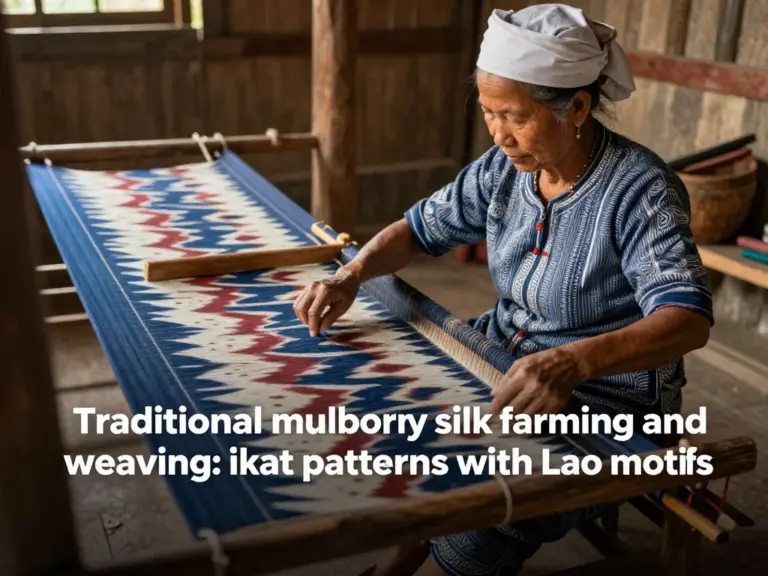
One of the most complex Traditional Techniques and Materials used in Southeast Asia is Ikat, known locally in Laos as Matmii. Unlike other methods where patterns are printed or embroidered, Ikat involves dyeing the pattern directly into the threads before they are even placed on the loom.
- Tying: Artisans tie bundles of silk threads with plastic or raffia strings to resist the dye.
- Dyeing: The threads are submerged in natural dye baths. The tied areas remain white.
- Alignment: The true skill lies in the weaving, where the weaver must perfectly align the dyed segments to reveal the intended motif.
Decoding Lao Motifs: Symbols of Life and Spirit
Lao textiles are a visual language. The motifs woven into the fabric are rarely just decorative; they are symbolic representations of the natural and supernatural world. Common motifs include:
| Motif Name | Symbolism | Visual Description |
|---|---|---|
| Naga (Phaya Nak) | Protection & Water | Serpentine dragons believed to live in the Mekong River. |
| Siho | Strength & Wisdom | A mythical creature that is half-lion and half-elephant. |
| Dok Phikoun | Good Health & Luck | A small, star-shaped flower often used in borders. |
| The Crab | Abundance | Represents the fertility of the rice fields. |
Natural Dyes: The Colors of the Lao Landscape
The vibrant palettes of traditional Lao textiles are derived from nature. Indigo (Hom) provides the deep blues, while the heartwood of the Jackfruit tree yields warm yellows. Sticklac, a resin secreted by tiny insects, is used to create rich reds and pinks. These natural dyes are not only eco-friendly but also possess a ‘living’ quality, aging beautifully over time and maintaining a harmony with the environment.
Where to Experience Traditional Weaving
For those interested in seeing these processes firsthand, Luang Prabang is the premier destination. Centers like Ock Pop Tok provide immersive workshops where visitors can try their hand at spinning silk or dyeing with indigo.
คำถามที่พบบ่อย (FAQ)
References
- Official Laos Tourism Portal
- Ock Pop Tok Living Crafts Centre – Textile Education
- UNESCO: Intangible Cultural Heritage of Laos
- Silk Weaving Villages Near Luang Prabang: Where to Visit, What to Learn, and How to Support Local Weavers
- Best Silk Weaving Villages to Visit Near Luang Prabang: Maps, Travel Times, and Recommended Tours
- What to Expect at Workshops and Co‑ops: Demonstrations, Hands‑On Classes, and Cultural Etiquette