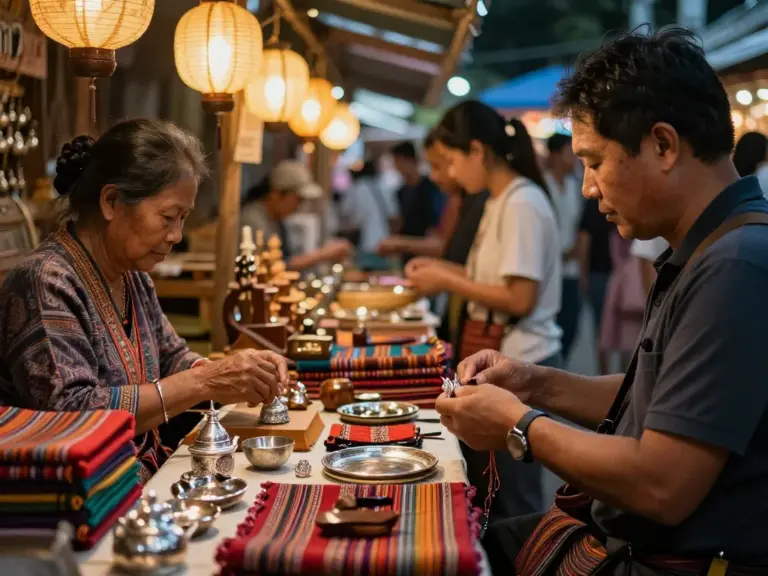
How to Identify Authentic Handicrafts and Fair Sellers at Lao Night Markets
Stepping into the vibrant atmosphere of Lao Night Markets is a highlight for any traveler exploring Laos tourism. The air is filled with the scent of street food, and the stalls are a kaleidoscope of colors. However, for the conscious traveler, a critical question arises: how do you distinguish between genuine, artisan-made treasures and mass-produced imports? Identifying authentic handicrafts is not just about quality; it’s about ensuring your money supports local communities and preserves traditional heritage.
The Cultural Significance of Lao Handicrafts
Handicrafts in Laos are deeply intertwined with the country’s diverse ethnic identities. From the intricate silk weaving of the Tai Lue to the Hmong embroidery and the silverwork of the northern tribes, every piece tells a story. When you shop at Lao Night Markets, you are participating in a living history. Authentic items are usually handmade using techniques passed down through generations, often taking weeks or even months to complete.
How to Spot Authentic Textiles and Weavings
Textiles are the stars of Lao Night Markets. To identify the real deal, look closely at the patterns and the underside of the fabric. Authentic hand-woven textiles will have a complex reverse side where the threads are visible, showing the manual labor involved. Mass-produced items often use printed patterns or synthetic fibers that feel overly slippery or shiny.
- Check the Material: Real Lao silk and cotton feel substantial and breathable.
- Inspect the Edges: Hand-finished edges are rarely as “perfect” as machine-surged ones.
- Smell the Fabric: Natural dyes sometimes carry a faint earthy or vegetal scent.
Identifying Fair Sellers and Ethical Stalls
Finding a fair seller is just as important as finding an authentic product. A fair seller is transparent about where their goods come from. In places like the Luang Prabang Night Market, look for stalls that display the “Handmade in Luang Prabang” seal or those that can name the specific village or ethnic group that produced the item. Fair sellers are usually happy to explain the process and don’t pressure you into a quick sale.
| Feature | Authentic/Fair Seller | Mass-Produced/Reseller |
|---|---|---|
| Knowledge | Can explain the technique and origin | Vague or claims everything is “handmade” |
| Price | Reflects days of labor (higher) | Suspiciously cheap |
| Inventory | Unique, non-identical items | Stacks of identical designs and colors |
The Art of Fair Bargaining in Laos
Bargaining is expected at Lao Night Markets, but it should always be done with a smile and a sense of respect. Remember that for many artisans, this is their primary livelihood. A “fair” price is one that makes both the buyer and the seller happy. If a price seems too high, it might be because the item took a month to weave. If it’s too low, it’s likely not authentic or the artisan wasn’t paid fairly.
Top Locations for Authentic Shopping
While night markets are popular, some specific locations are renowned for authenticity. The Luang Prabang Night Market is famous, but for the most direct impact, consider visiting social enterprises like Ock Pop Tok or the Traditional Arts and Ethnology Centre (TAEC) shop, which also have presence or influence near the market areas.
คำถามที่พบบ่อย (FAQ)
How can I tell if silk is real or synthetic?
Real silk has a unique luster that changes color depending on the angle of light. You can also perform a ‘burn test’ (if allowed): real silk smells like burning hair and leaves a brittle ash, while synthetic fibers smell like plastic and melt into a hard bead.
Are all items at the Luang Prabang Night Market handmade?
No. While many items are handmade, there is an increasing amount of mass-produced goods from neighboring countries. Look for the ‘Handmade’ signs and engage with the sellers to verify the origin.
What is a fair tip for bargaining?
Generally, aiming for a 10-20% discount is reasonable. However, if the price is already low (e.g., under $5), consider paying the asking price to support the local economy directly.
References
- Traditional Arts and Ethnology Centre (TAEC)
- Ock Pop Tok Living Crafts Centre
- Official Laos Tourism Portal