Supporting Lao Handicrafts: Ethical Shopping at Night Markets — A Guide for Responsible Travelers
Laos is a land of breathtaking landscapes and profound cultural heritage, but perhaps its most tangible soul resides in its traditional arts. For the responsible traveler, the vibrant night markets of Luang Prabang and Vientiane offer more than just a shopping opportunity; they represent a vital link to the country’s ethnic diversity and economic sustainability. Understanding how to choose authentic Lao handicrafts ensures that your journey leaves a positive footprint on the local communities you visit.
The Cultural Significance of Lao Handicrafts
In Laos, weaving is not merely a craft; it is a language. Every pattern, from the mythical naga (river serpent) to geometric representations of nature, tells a story of the weaver’s ethnic identity and spiritual beliefs. Supporting Lao handicrafts means preserving these ancient narratives. Whether it is the intricate silk of the Tai Daeng or the bold hemp embroidery of the Hmong, these items are repositories of Lao history. When you shop ethically, you are directly contributing to the preservation of this intangible heritage.
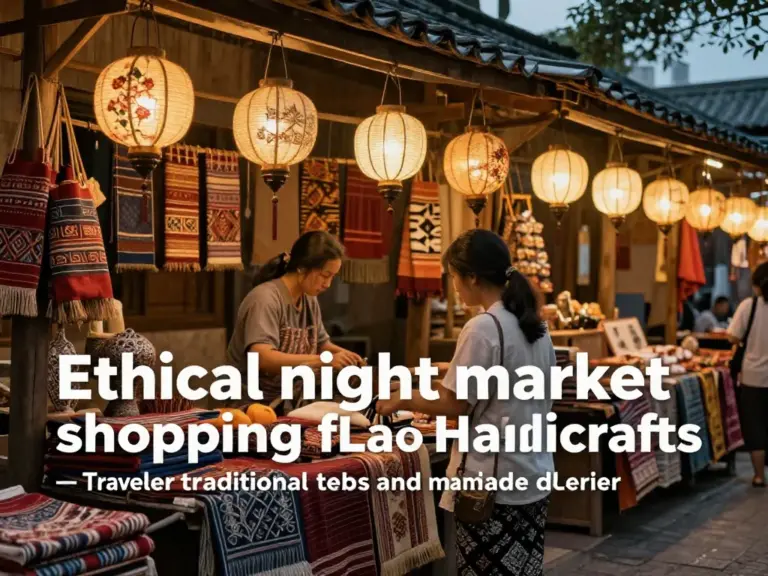
The Luang Prabang Night Market is world-famous for its atmosphere, but it can be overwhelming. To shop responsibly, look beyond the mass-produced trinkets. Seek out stalls that display signs of fair trade certification or those that can explain the origin of their goods.
| Handicraft Type | Primary Material | Region of Origin |
|---|---|---|
| Sinh (Traditional Skirt) | Silk or Cotton | Nationwide |
| Hemp Textiles | Organic Hemp | Northern Highlands (Hmong) |
| Bamboo Basketry | Rattan & Bamboo | Rural Villages |
| Silverwork | 92.5% Silver | Luang Prabang |
How to Spot Authentic Quality
Authentic Lao handicrafts possess unique characteristics that machine-made replicas lack. Look for slight irregularities in the weave—these are the hallmarks of human hands. Natural dyes, derived from indigo, jackfruit wood, and lac, produce earthy, soft hues that age beautifully, unlike the harsh chemical colors of synthetic fabrics. If a price seems too good to be true for a “silk” scarf, it is likely a polyester import. Paying a fair price ensures the artisan receives a living wage.
The Impact of Your Purchase
Ethical shopping at night markets creates a ripple effect. Many artisans are women who use the income from Lao handicrafts to fund their children’s education and improve village healthcare. By choosing locally made products, you reduce the carbon footprint associated with imported goods and empower rural communities to remain self-sufficient without having to migrate to urban centers for work.
Responsible Bargaining Etiquette
While bargaining is common in Lao markets, it should always be done with a smile and a sense of fairness. A few thousand Kip might mean very little to a tourist, but it could represent a meal for an artisan’s family. Aim for a price that is fair to both parties. Remember, the goal of a responsible traveler is to support the local economy, not to strip it of its profit margins.
คำถามที่พบบ่อย (FAQ)
Q: How can I tell if silk is real or synthetic?
A: Real silk has a natural luster and feels warm to the touch. You can also look for the “Lao Silk” certification marks in specialized boutiques, or observe the complexity of the weave which machines struggle to replicate.
Q: Where is the best place to buy ethical handicrafts in Laos?
A: The Luang Prabang Night Market is excellent, but for guaranteed ethical sourcing, visit social enterprises like Ock Pop Tok or the Traditional Arts and Ethnology Centre (TAEC).
Q: Why are naturally dyed products more expensive?
A: Natural dyeing is a labor-intensive process involving the foraging of plants and multiple fermentation stages. These dyes are also eco-friendly and safer for the artisans to handle.
References
Lao National Tourism Administration
Traditional Arts and Ethnology Centre (TAEC)
Ock Pop Tok Living Crafts Centre