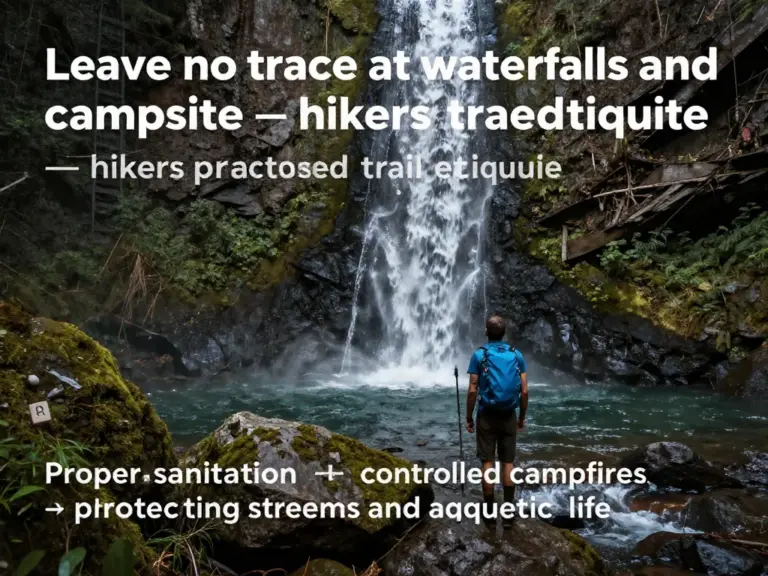
Minimizing Footprint at Waterfalls and Campsites — Trail Etiquette, Sanitation, Fire Safety, and Protecting Aquatic Ecosystems
Laos is a land defined by its emerald landscapes and cascading turquoise waters. From the iconic Kuang Si Falls in Luang Prabang to the rugged Bolaven Plateau, the nation’s natural beauty is its greatest treasure. However, as tourism increases, so does the pressure on these fragile environments. Minimizing Footprint at Waterfalls and Campsites is no longer just a recommendation; it is a necessity for anyone wishing to preserve the pristine nature of Laos for future generations. By adopting sustainable trail etiquette and rigorous sanitation standards, travelers can ensure that their presence leaves nothing but footprints and takes nothing but memories.
Understanding the Importance of Trail Etiquette in Laos
Trail etiquette is the foundation of responsible exploration. In the dense jungles of Laos, straying from established paths can lead to soil erosion and the destruction of rare flora. When visiting popular waterfalls, always stay on designated walkways. This prevents the ‘braided trail’ effect, which scars the landscape and disrupts local wildlife corridors. Furthermore, yield to uphill hikers and maintain a quiet demeanor to allow others to enjoy the natural soundscape of the forest.
Sanitation and Waste Management: Keeping Laos Pristine
Proper sanitation is critical when Minimizing Footprint at Waterfalls and Campsites. Human waste and graywater can introduce harmful bacteria into the very rivers that local communities rely on for drinking and fishing. If no toilets are available, ensure you are at least 60 meters (about 70 adult steps) away from any water source. Dig a ‘cat hole’ 15-20 cm deep and cover it completely. For trash, the rule is simple: Pack it in, pack it out. This includes organic waste like banana peels or eggshells, which can take a long time to decompose in specific microclimates and may attract unwanted wildlife to campsites.
| Waste Type | Disposal Method | Impact Level |
|---|---|---|
| Plastic Bottles | Pack out / Recycle | High |
| Food Scraps | Pack out | Medium |
| Human Waste | Cat hole (60m from water) | High |
Fire Safety: Protecting the Tropical Canopy
While a campfire is a staple of the camping experience, in the tropical dry season of Laos, a single spark can lead to devastating forest fires. To minimize your footprint, use a lightweight camping stove for cooking instead of building a fire. If a fire is permitted and necessary, use existing fire rings. Keep fires small and burn only small sticks that can be broken by hand. Most importantly, never leave a fire unattended and ensure it is ‘dead out’—cold to the touch—before leaving the site or going to sleep.
Protecting Aquatic Ecosystems and Water Quality
The waterfalls of Laos are complex ecosystems. Chemicals found in common sunscreens, bug sprays, and soaps can be toxic to aquatic life, including the fish and macroinvertebrates that keep the water clean. When swimming at sites like Tad Fane or Tad Yuang, opt for physical sun protection (like UV-rated swim shirts) or biodegradable, reef-safe sunscreens. Avoid using soap directly in the water; even ‘biodegradable’ soap requires soil to break down and should never be introduced directly into a stream or waterfall basin.
Summary of Best Practices for Eco-Tourists
To truly excel at Minimizing Footprint at Waterfalls and Campsites, follow the ‘Leave No Trace’ principles adapted for the Laotian context:
- Plan ahead and prepare for tropical weather.
- Travel and camp on durable surfaces.
- Dispose of waste properly (Pack it in, Pack it out).
- Leave what you find (rocks, plants, and artifacts).
- Minimize campfire impacts.
- Respect wildlife and local customs.
คำถามที่พบบ่อย (FAQ)
Q1: Can I use biodegradable soap in the waterfalls of Laos?
A1: No. Even biodegradable soap needs soil bacteria to break down. Using it directly in the water harms aquatic life. Wash yourself or your dishes at least 60 meters away from the water source.
Q2: What is the best way to handle trash if there are no bins?
A2: You must carry all your trash back to the nearest town or city where proper waste management facilities are available. Do not bury trash or leave it at the campsite.
Q3: Is it safe to build campfires in Laos?
A3: It depends on the season and local regulations. During the dry season (November to April), the risk of forest fires is high. It is always safer and more eco-friendly to use a portable camping stove.
Q4: Why should I stay on the trail at waterfalls?
A4: Staying on the trail prevents soil erosion, protects sensitive plants, and ensures that you do not accidentally wander into dangerous terrain or disturb wildlife habitats.
References
Leave No Trace Center for Outdoor Ethics: Seven Principles
Official Laos Tourism Board: Sustainable Travel Guide
- Leave No Trace in Laos: Essential Trekking and Waterfall Etiquette for Responsible Travelers
- Why Leave No Trace Matters in Laos — Understanding Ecological, Cultural, and Community Impacts of Trekking and Waterfall Visits
- Preparing for a Low-Impact Trek — Permits, Local Guides, Appropriate Gear, and Packing Out Waste in Lao Hiking Areas