How to Plan an Eco-Friendly Laos Trip: Best Times to Visit, Low-Impact Transportation, and Responsible Tour Operators
- How to Plan an Eco-Friendly Laos Trip: Best Times to Visit, Low-Impact Transportation, and Responsible Tour Operators
Laos, the land of a million elephants, remains one of the most pristine and culturally rich destinations in Southeast Asia. As tourism grows, the importance of planning an eco-friendly Laos trip becomes paramount to preserving its lush jungles, turquoise waterfalls, and ancient traditions. This guide provides a comprehensive roadmap for travelers who wish to explore this landlocked gem while minimizing their environmental footprint and maximizing positive impact on local communities.
Best Times to Visit for Sustainable Travel
Timing your visit is the first step in planning a responsible journey. Laos has two distinct seasons: the dry season (November to April) and the wet season (May to October). For those looking to support the local economy year-round and avoid the strain of over-tourism, visiting during the ‘green season’ (May to September) can be highly rewarding. During this time, the landscapes are vibrantly green, waterfalls are at their peak, and your tourism dollars support businesses during the leaner months.
However, if you prefer the dry season, aim for the shoulder months of November or March. This helps distribute the human impact on infrastructure and ensures a more authentic experience away from the peak December crowds.
Low-Impact Transportation: Moving Through Laos
Transportation is often the largest contributor to a traveler’s carbon footprint. In Laos, you have several excellent options for low-impact movement. The most revolutionary change in recent years is the Lao-China Railway. This high-speed electric train connects Vientiane, Vang Vieng, Luang Prabang, and Boten, significantly reducing the need for domestic flights or long, fuel-heavy bus rides through the mountains.
- The Railway: Use the electric train for long-distance travel between major hubs.
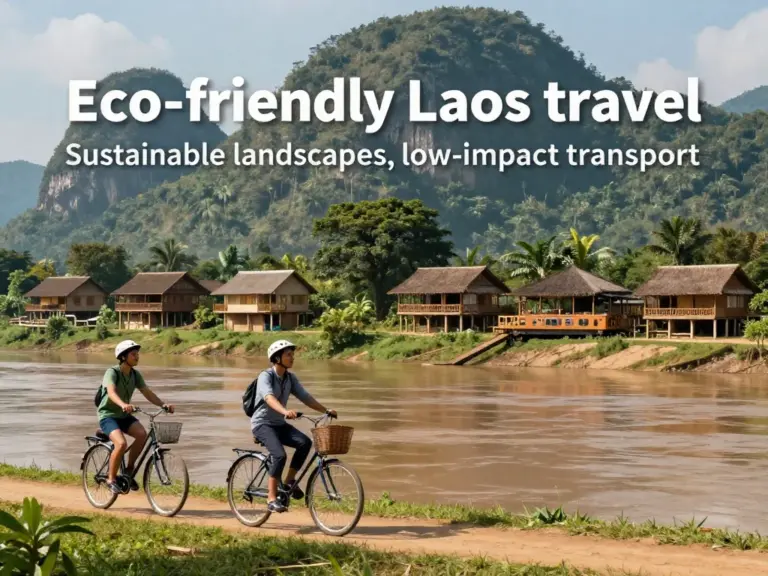
- Cycling: Luang Prabang and Vientiane are highly bike-friendly. Renting a bicycle is the ultimate zero-emission way to see the sights.
- Walking: Many town centers are compact. Exploring on foot allows for better engagement with local vendors.
- Slow Boats: Traveling from the Thai border to Luang Prabang via a traditional slow boat is a classic, low-energy way to witness the Mekong’s beauty.
Choosing Responsible Tour Operators
When booking excursions, look for operators that prioritize community-based tourism (CBT). These organizations ensure that the revenue generated stays within the local villages and funds conservation efforts. An eco-friendly Laos trip is incomplete without supporting these ethical businesses.
| Operator | Specialty | Sustainability Focus |
|---|---|---|
| Mandalao Elephant Conservation | Elephant Encounters | Non-riding, ethical sanctuary |
| Tiger Trail Travel | Trekking & Kayaking | Fair-trek funds for local villages |
| Green Discovery Laos | Adventure Sports | Eco-certified guides and equipment |
Always ask your tour provider about their waste management policies and how they compensate their local guides. Responsible operators will be transparent about their practices.
Eco-Friendly Accommodations and Dining
Where you sleep and eat matters. Opt for eco-lodges that utilize solar power, rain-water harvesting, and local building materials. In Luang Prabang and Vientiane, many boutique hotels are housed in restored heritage buildings, preserving the architectural soul of the city while providing modern comforts.
When dining, seek out ‘farm-to-table’ restaurants. Laos has a rich tradition of organic farming. By eating at establishments that source ingredients from nearby gardens, you reduce the carbon cost of food transport and enjoy the freshest flavors. Avoid single-use plastics by carrying a reusable water bottle; many cafes now offer ‘Refill Not Landfill’ stations.
Respecting Local Culture and Wildlife
Sustainability includes cultural preservation. Dress modestly when visiting temples (covering shoulders and knees), and always ask for permission before taking photos of people. Regarding wildlife, never support attractions that offer elephant riding or photo ops with captive wild animals. Instead, visit sanctuaries that focus on rehabilitation and education.
คำถามที่พบบ่อย (FAQ)
References
Lao National Tourism Administration Official Website
Green Discovery Laos – Eco-Tourism Leaders
Mandalao Elephant Conservation Project
- Sustainable Travel in Laos: Practical Tips to Minimize Your Environmental and Cultural Impact
- Respecting Local Communities and Culture: Ethical Behavior, Supporting Local Businesses, and Engaging with Indigenous Practices
- Protecting Laos’ Natural Ecosystems: Responsible Wildlife Viewing, Leave-No-Trace Principles, and Sustainable Accommodation Choices