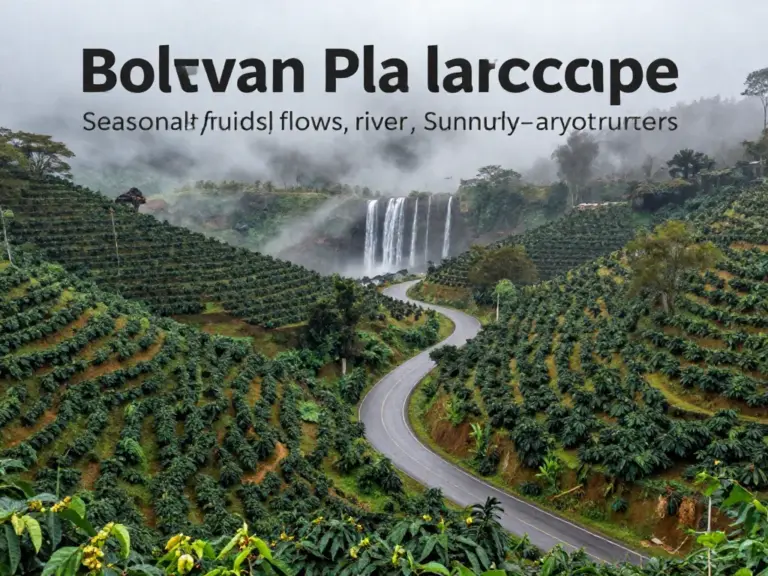
Best Time to Visit and What to Expect: Weather, Accessibility, and Seasonal Flows on the Bolaven Plateau
The Bolaven Plateau, located in Southern Laos, is a high-altitude region famous for its spectacular waterfalls, lush coffee plantations, and refreshing climate. Unlike the sweltering plains of the Mekong Valley, this plateau offers a unique microclimate that changes dramatically throughout the year. If you are planning a trip, determining the Best Time to Visit Bolaven Plateau is essential to ensure you experience the landscapes exactly how you imagined them, whether that means witnessing the raw power of Tad Fane or enjoying a sunny motorbike loop through the countryside.
Understanding the Climate: Dry vs. Wet Season
The weather on the Bolaven Plateau is divided into two primary seasons: the dry season (November to April) and the wet season (May to October). Because of its geography, the plateau receives more rainfall than almost anywhere else in Laos, which keeps the vegetation vibrant and the coffee crops flourishing.
| Season | Months | What to Expect |
|---|---|---|
| Cool Dry | Nov – Feb | Clear skies, chilly nights, perfect for trekking. |
| Hot Dry | Mar – Apr | Rising temperatures, haze, coffee blossoms. |
| Wet Season | May – Oct | Heavy rain, thunderous waterfalls, lush greenery. |
The Best Time to Visit Bolaven Plateau for Waterfalls
If your primary goal is to see the iconic twin falls of Tad Fane or the wide curtains of Tad Yuang, the transition months are ideal. Between **October and December**, the rains have just subsided, leaving the waterfalls at their maximum volume but the skies clear enough for photography and sightseeing. During the peak of the dry season (March-April), some smaller falls may dwindle to a trickle, though the major ones remain impressive year-round.
Accessibility and Seasonal Flows
Accessibility is a major factor for those attempting the “Bolaven Loop” on a motorbike. During the dry season, the roads are generally in good condition, though dusty. However, during the wet season (July – September), secondary dirt roads leading to remote villages or lesser-known falls can become muddy and treacherous. For Laos tourism enthusiasts, sticking to the paved main roads (Route 16 and Route 20) is advised if traveling during heavy rain.
The Coffee Harvest Experience
For coffee lovers, the **Best Time to Visit Bolaven Plateau** is between **November and January**. This is the peak harvest season for Arabica and Robusta beans. You can witness the locals drying beans in front of their houses and participate in coffee roasting workshops in Paksong. The aroma of fresh coffee fills the air, and the cooler temperatures make sitting in an outdoor cafe a delight.
What to Pack for Your Trip
Regardless of when you visit, the plateau requires specific gear. Even in the hot season, night temperatures can drop significantly.
- Light Jacket/Sweater: Essential for evenings between November and February.
- Rain Gear: A high-quality poncho if visiting between May and October.
- Sturdy Footwear: Waterproof hiking boots are best for slippery waterfall paths.
- Sun Protection: The high altitude means stronger UV rays even when it feels cool.
คำถามที่พบบ่อย (FAQ)
Q: Is it safe to drive the Bolaven Loop in the rainy season?
A: Yes, it is generally safe if you stay on the main paved roads. Avoid off-road tracks during heavy downpours as they become very slippery.
Q: What is the coldest month on the plateau?
A: January is typically the coldest month, with temperatures occasionally dropping below 10°C (50°F) at night in Paksong.
Q: Can I see the waterfalls in the peak dry season?
A: Yes, major falls like Tad Fane and Tad Yuang flow year-round, though they are less thunderous in March and April compared to the wet season.
References
For more information on Southern Laos, visit the Official Laos Tourism Board or check weather updates on the AccuWeather Paksong Page.