Sustainable Travel in Laos: Practical Tips to Minimize Your Environmental and Cultural Impact
- Sustainable Travel in Laos: Practical Tips to Minimize Your Environmental and Cultural Impact
Laos, the land of a million elephants, remains one of Southeast Asia’s most serene and culturally rich destinations. As global tourism evolves, the concept of Sustainable Travel in Laos has moved from a niche preference to a vital necessity. With its lush jungles, ancient temples, and vibrant ethnic communities, Laos offers a unique opportunity for travelers to engage in tourism that gives back as much as it takes. This guide provides actionable insights into how you can enjoy the beauty of Laos while ensuring its preservation for generations to come.
Why Sustainable Travel in Laos Matters
Laos is a landlocked nation heavily dependent on its natural resources. From the Mekong River to the limestone karsts of Vang Vieng, the environment is the backbone of the local economy and culture. However, rapid tourism growth can lead to waste management issues, cultural erosion, and environmental degradation. By prioritizing Sustainable Travel in Laos, you help protect biodiversity and ensure that tourism revenue directly benefits the local people rather than external corporations.
Practical Tips for Environmental Conservation
Minimizing your ecological footprint is the first step toward being a responsible traveler. Laos is currently developing its waste management infrastructure, so every piece of plastic you avoid makes a significant difference.
1. Eliminate Single-Use Plastics
Carry a reusable water bottle. Many guesthouses and cafes in Luang Prabang and Vientiane participate in programs like ‘Refill Not Landfill,’ offering free or low-cost water stations. Avoid plastic straws and bags by carrying a small cloth bag and a bamboo straw.
2. Choose Eco-Friendly Transportation
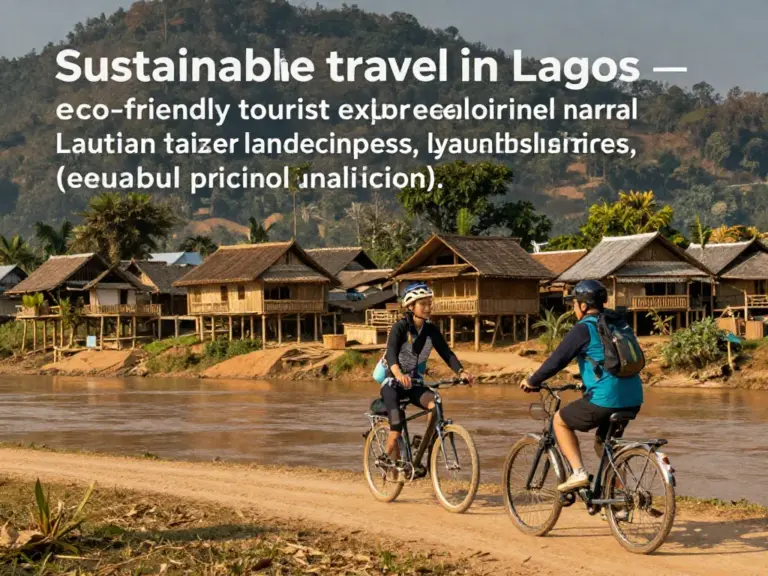
When moving between cities, consider the new high-speed rail, which is more carbon-efficient than short-haul flights. Within towns like Luang Prabang, renting a bicycle is not only eco-friendly but also the best way to soak in the UNESCO World Heritage atmosphere.
Respecting Cultural Heritage and Local Traditions
The Lao people are known for their gentleness and hospitality. Respecting their traditions is a cornerstone of Sustainable Travel in Laos. Cultural impact is often invisible, but its effects on community cohesion are profound.
Dress Modestly
When visiting temples (Wats) or rural villages, ensure your shoulders and knees are covered. The ‘Sinh’ (traditional Lao skirt) is a beautiful way for women to show respect. Always remove your shoes before entering a home or a temple building.
The Alms Giving Ceremony (Sai Bat)
If you participate in or observe the morning alms giving in Luang Prabang, do so quietly and from a distance. Avoid using flash photography, which is disruptive to the meditative process. Buy your sticky rice from local markets rather than street vendors targeting tourists to ensure the quality of food offered to monks.
Supporting the Local Economy Directly
To ensure your travel dollars stay in Laos, prioritize local businesses.
- Eat at local ‘mom-and-pop’ stalls and restaurants.
- Stay in locally-owned guesthouses or homestays.
- Purchase authentic handicrafts from social enterprises like Ock Pop Tok or the Traditional Arts and Ethnology Centre (TAEC).
Ethical Wildlife Encounters
Laos was once called ‘Lan Xang’ (Land of a Million Elephants), but today, their numbers are dwindling. Avoid any tours offering elephant riding or performances. Instead, visit ethical sanctuaries like the Elephant Conservation Center in Sayaboury, where the focus is on rehabilitation and conservation rather than entertainment.
Top Sustainable Destinations in Laos
| Destination | Sustainable Highlight | Activity |
|---|---|---|
| Luang Namtha | Nam Ha NPA | Trekking with local guides |
| Vang Vieng | Organic Farm | Learning about sustainable agriculture |
| Champasak | Don Kho Island | Community-based silk weaving tours |
คำถามที่พ่อย (FAQ)
Is it expensive to travel sustainably in Laos?
Not at all. In fact, eating at local markets, using public transport, and staying in guesthouses is often much cheaper than opting for luxury, imported experiences.
What is the best way to give to children in rural villages?
Avoid giving candy or money directly to children, as it encourages begging and can lead to dental issues. Instead, donate to local schools or reputable NGOs like Big Brother Mouse, which promotes literacy.
Can I drink tap water in Laos?
No, tap water is not safe to drink. To stay sustainable, use a water purifier bottle (like Grayl) or use the refill stations found in most eco-conscious cafes.
How do I identify an ethical elephant sanctuary?
Look for places that strictly forbid riding, bathing with elephants, or any form of forced interaction. The best sanctuaries allow elephants to live naturally while you observe from a distance.
References
Official Laos Tourism Portal
World Wildlife Fund (WWF) Laos
Traditional Arts and Ethnology Centre
- How to Plan an Eco-Friendly Laos Trip: Best Times to Visit, Low-Impact Transportation, and Responsible Tour Operators
- Respecting Local Communities and Culture: Ethical Behavior, Supporting Local Businesses, and Engaging with Indigenous Practices
- Protecting Laos’ Natural Ecosystems: Responsible Wildlife Viewing, Leave-No-Trace Principles, and Sustainable Accommodation Choices