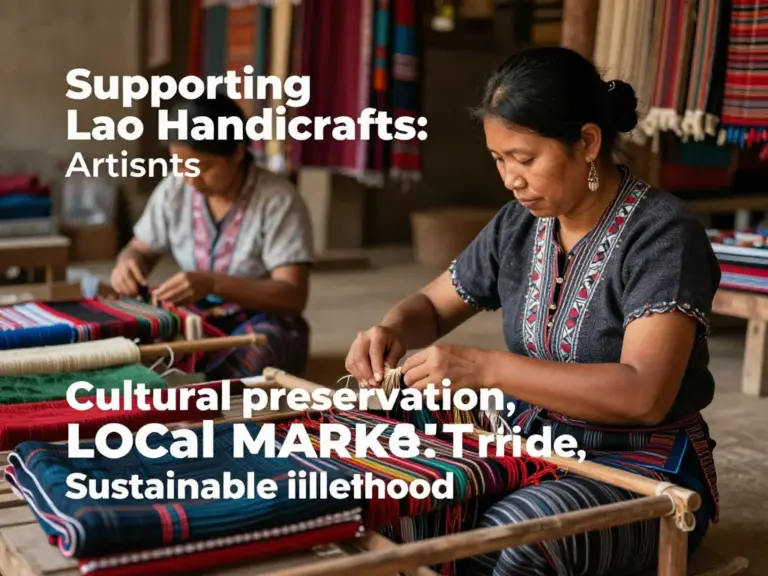
Why Supporting Lao Handicrafts Matters: Cultural Preservation, Economic Impact, and Ethical Considerations
- Why Supporting Lao Handicrafts Matters: Cultural Preservation, Economic Impact, and Ethical Considerations
- The Heart of Cultural Preservation
- Economic Impact: Empowering Local Communities
- Ethical Considerations and Sustainable Tourism
- Where to Find Authentic Lao Handicrafts
- คำถามที่พบบ่อย (FAQ)
- How can I tell if a Lao handicraft is authentic?
- Why are handmade Lao textiles more expensive than market imports?
- Does my purchase really help the local economy?
When traveling through the serene landscapes of Laos, one cannot help but be captivated by the vibrant colors and intricate patterns of local textiles, pottery, and basketry. However, supporting Lao handicrafts is far more than a simple act of souvenir shopping; it is a vital contribution to the survival of a rich cultural legacy. For the modern traveler engaged in Laos tourism, understanding the depth behind these handmade goods transforms a purchase into a meaningful gesture of global citizenship.
The Heart of Cultural Preservation
Lao handicrafts are a living library of the country’s diverse ethnic groups. From the complex silk weaving of the Tai Lue to the intricate silverwork of the Hmong, each piece tells a story of ancestral traditions passed down through generations. By supporting Lao handicrafts, you are providing the financial incentive for young artisans to learn these time-consuming skills from their elders. In a rapidly modernizing world, these traditional crafts are at risk of being replaced by mass-produced factory goods. Choosing handmade items ensures that the unique identity of Laos remains vibrant and visible.
Economic Impact: Empowering Local Communities
The economic significance of the handicraft sector in Laos cannot be overstated, particularly for rural women. For many families, weaving or bamboo crafting is a primary source of income that supplements subsistence farming. When you buy directly from artisans or fair-trade social enterprises, the money stays within the community. This income is often invested in education, healthcare, and improving village infrastructure. Supporting Lao handicrafts creates a sustainable economic cycle that reduces poverty without forcing villagers to migrate to urban centers for work.
Key Benefits of Ethical Purchasing
- Direct financial support to rural families.
- Promotion of gender equality through women’s empowerment.
- Reduction in rural-to-urban migration.
- Preservation of ancient skill sets.
Ethical Considerations and Sustainable Tourism
In the context of Laos tourism, ethical considerations play a major role in how we interact with local cultures. Supporting Lao handicrafts through fair-trade channels ensures that artisans work in safe conditions and receive a fair wage for their labor. Furthermore, traditional Lao crafts often utilize natural, locally sourced materials—such as wild silk, organic cotton, and natural dyes derived from plants and minerals. This eco-friendly approach contrasts sharply with the environmental footprint of industrial manufacturing, making your purchase a win for both the people and the planet.
Where to Find Authentic Lao Handicrafts
To ensure your contribution is impactful, look for social enterprises and cooperatives. In Luang Prabang and Vientiane, organizations like Ock Pop Tok and Traditional Arts and Ethnology Centre (TAEC) provide transparent platforms for artisans. These centers not only sell high-quality goods but also educate visitors on the techniques and cultural significance behind each craft.