Lao New Year (Pi Mai) in Luang Prabang: Water Rituals, Parades, and How to Experience Them Authentically
Lao New Year, known locally as Pi Mai Lao, is the most anticipated festival in the Lao calendar. While celebrated nationwide, nowhere is the spirit of this festival more palpable than in the UNESCO World Heritage town of Luang Prabang. Occurring annually in mid-April, the festival marks the passage of the sun into the sign of Aries, signaling a time of renewal, purification, and vibrant community celebration. For travelers seeking an authentic cultural immersion, Lao New Year (Pi Mai) in Luang Prabang offers a unique blend of solemn religious tradition and exuberant street festivities.
The Significance of Water Rituals
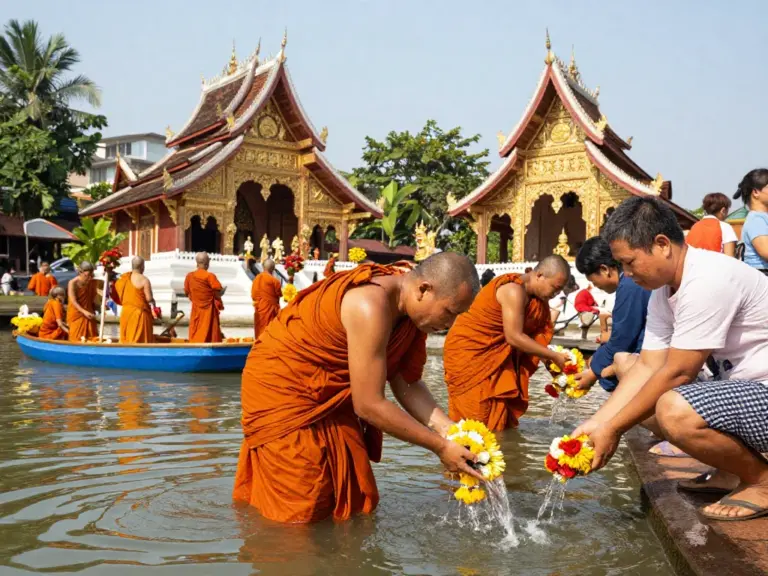
Water is the central element of Pi Mai, symbolizing the washing away of bad luck and sins from the past year to start fresh. In Luang Prabang, this ritual begins at the temples (Wats). Locals visit monasteries to wash Buddha images with scented water—a mixture of water, perfumes, and flower petals. This ‘Lustral water’ is then collected and taken home to pour over the hands of elders to seek their blessings.
On the streets, the symbolism evolves into a massive, city-wide water fight. Unlike the commercialized chaos found in some other regions, Luang Prabang maintains a sense of communal joy. Expect to be drenched by smiling locals with buckets, hoses, and water guns. It is a gesture of goodwill; being soaked is considered a blessing for health and prosperity in the coming year.
Spectacular Parades and the Prabang Image
One of the highlights of Lao New Year (Pi Mai) in Luang Prabang is the Hae Vor parade. This grand procession features monks, government officials, and locals dressed in traditional silk ethnic costumes. A key figure in the parade is Nang Sang Khan (Miss New Year), the winner of a local beauty pageant representing one of the seven daughters of King Kabinlaphom from Buddhist mythology.
The most sacred event is the procession of the Prabang, the city’s namesake gold Buddha image. It is moved from the Royal Palace Museum to Wat Mai. Along the route, thousands of people line the streets to respectfully sprinkle water on the statue as it passes, a rare opportunity to witness one of the nation’s most holy relics in public.
Authentic Experiences: Sand Stupas and Baci Ceremonies
To experience the festival authentically, head to the sandbanks of the Mekong River. Here, families gather to build Stupas of Sand. These mounds are decorated with flowers and flags to prevent riverbanks from eroding and to gain spiritual merit. It is a peaceful, picturesque activity that contrasts with the high-energy water fights in the town center.
You may also be invited to a Baci Ceremony. This traditional Lao ritual involves tying white cotton strings around a person’s wrist to keep the ‘kwan’ (spirits) within the body. During Pi Mai, Baci ceremonies are held to welcome the New Year, honor guests, and wish for good fortune. Participating in a Baci is a profound way to connect with the Lao people’s hospitality and spiritual depth.
Practical Tips for Travelers
| Aspect | Recommendation |
|---|---|
| Clothing | Wear quick-drying clothes and traditional Lao sarongs (Sinh) for temples. |
| Electronics | Keep phones and cameras in high-quality waterproof dry bags. |
| Accommodation | Book months in advance as Luang Prabang reaches full capacity. |
| Respect | Do not throw water at monks, elders, or people in formal attire. |
If you need to navigate the city, most festivities are centered around the Main Street (Sisavangvong Road) and the riverfront.
คำถามที่พบบ่อย (FAQ)
Q: When is the best time to arrive in Luang Prabang for Pi Mai?
A: It is best to arrive at least 2 days before April 14th to settle in and see the preparations, as transportation becomes difficult once the water throwing starts.
Q: Is it safe for solo travelers?
A: Yes, Luang Prabang is very safe. The festival is inclusive and joyful, though solo travelers should be prepared to be the primary target for water splashes!
Q: Can I take photos during the festival?
A: Yes, but ensure your equipment is fully waterproof. People will not stop throwing water just because you have a camera.
References
Official Laos Tourism Website
UNESCO World Heritage – Town of Luang Prabang