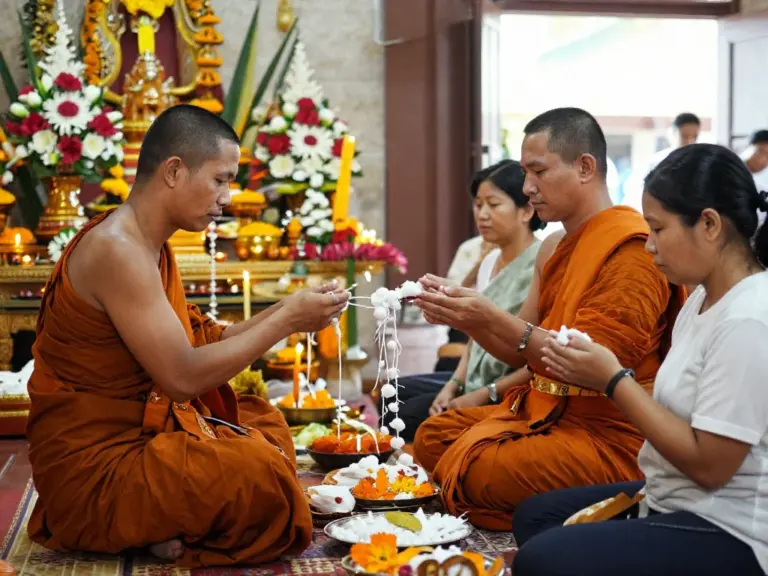
What to expect at a Baci ceremony: rituals, key participants, and symbolic elements explained
- What to expect at a Baci ceremony: rituals, key participants, and symbolic elements explained
The Baci ceremony, also known as Soukhuan, is one of the most profound and beautiful traditions in Laos. Deeply rooted in the national identity, this ritual is performed to celebrate important life events such as weddings, births, homecomings, or even to welcome honored guests. For travelers visiting Laos, being invited to a Baci is a rare privilege that offers an intimate look into the spiritual heart of the ‘Land of a Million Elephants.’
The Spiritual Essence of the Baci Ceremony
At its core, the Baci ceremony is based on the ancient Lao belief that the human being is a union of 32 organs, each protected by a spirit known as a kwan. These spirits are thought to occasionally wander away from the body, leading to illness, bad luck, or emotional instability. The ritual is designed to ‘call’ these spirits back and bind them to the individual, ensuring harmony, health, and prosperity. Unlike many other religious practices in the region, the Baci is an animist tradition that coexists harmoniously with Theravada Buddhism.
Key Participants: Who Makes the Ritual Happen?
A traditional Baci ceremony involves several key figures, each playing a vital role in the spiritual orchestration of the event. Understanding these roles helps visitors appreciate the social hierarchy and community spirit inherent in Lao culture.
| Participant | Role & Responsibility |
|---|---|
| Mor Phon | The ‘Master of Ceremony.’ Usually a former monk or a respected elder who leads the chanting and invitations to the spirits. |
| The Recipients | The individuals for whom the ceremony is being held (e.g., a newborn, a couple, or a traveler). |
| The Elders | Respected community members who are the first to tie the symbolic strings. |
| The Guests | Community members and friends who participate by touching the Pha Khuan and tying strings to offer blessings. |
Symbolic Elements: The Pha Khuan and Beyond
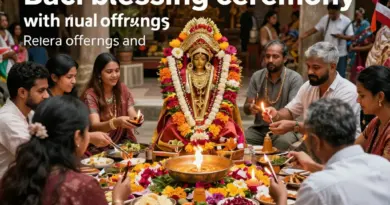
The visual centerpiece of every Baci ceremony is the Pha Khuan. This is an elaborate, handmade pyramid-shaped arrangement made of banana leaves and flowers, usually marigolds (representing longevity) and dok champa (the national flower of Laos). Around the base of the Pha Khuan, you will find various offerings that carry deep symbolic meanings:
- Sticky Rice: Symbolizes unity and the ‘sticking’ of the community together.
- Boiled Eggs: Represent fertility and the beginning of a new cycle of life.
- Lao-Lao (Rice Whiskey): Used to purify the space and offer a libation to the spirits.
- White Cotton Strings: The most iconic element, used to bind the spirits to the recipient’s wrists.
Step-by-Step: The Ritual Process
The ceremony begins with the participants sitting on the floor around the Pha Khuan. The Mor Phon starts by chanting in Pali and Lao, calling upon the 32 kwan to return to the body. During this time, guests often touch the base of the Pha Khuan or the person next to them to form a physical connection, symbolizing communal energy. Once the chanting concludes, the ‘tying’ begins. The Mor Phon ties the first white string on the recipient’s wrist, followed by the elders and then the other guests. While tying the string, it is customary to whisper a blessing or a wish for good health and happiness.
Etiquette for International Visitors
If you are invited to a Baci, remember to keep your head lower than the elders and the Mor Phon when moving around. Always sit with your feet tucked behind you (never pointing your feet toward the Pha Khuan or other people). When someone ties a string on your wrist, it is polite to hold your other hand up in a ‘Nopp’ (prayer-like gesture) as a sign of respect. Most importantly, do not remove the strings for at least three days after the ceremony to ensure the blessings take hold.