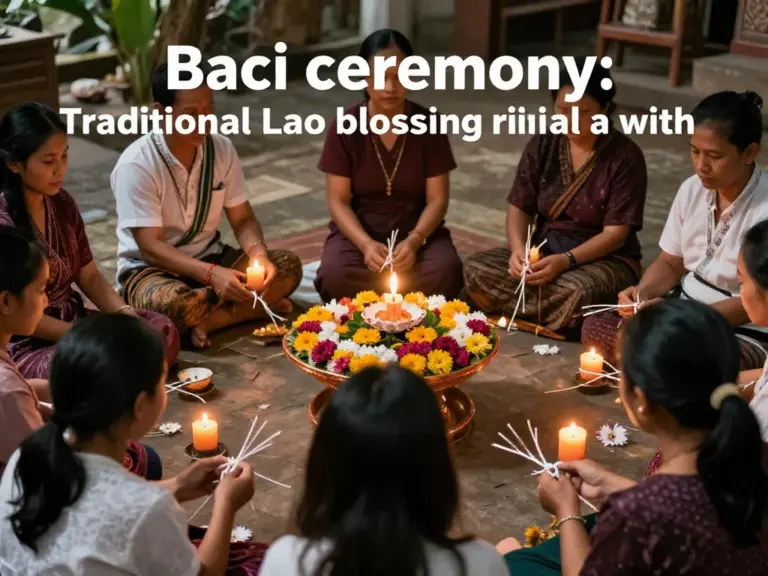
The Baci Ceremony: Understanding and Experiencing a Traditional Lao Blessing
In the heart of Southeast Asia, amidst the saffron-robed monks and golden temples of Laos, lies a tradition so deeply ingrained in the local soul that no significant life event is complete without it. The Baci Ceremony, also known as ‘Soukhwan’ (calling of the soul), is a quintessential Lao ritual used to celebrate marriages, births, homecomings, and even the recovery from illness. To witness or participate in a Baci is to touch the very essence of Lao hospitality and spiritual belief.
What is the Baci Ceremony?
The Baci Ceremony is a fusion of Animist and Buddhist beliefs that predates the arrival of Buddhism in Laos. The core concept revolves around the ‘Kwan.’ According to Lao ancient belief, the human being is a union of 32 organs, and each has a ‘Kwan’ (spirit or soul) to protect them. These spirits often wander away from the body, leading to illness, bad luck, or mental imbalance. The Baci ritual is performed to call these 32 spirits back to the body, re-establishing equilibrium and bestowing blessings upon the participants.
The Phakeuan: The Sacred Centerpiece
The focal point of any Baci is the Phakeuan. This is an elaborate, handmade centerpiece usually crafted from banana leaves and decorated with fresh flowers, typically marigolds (representing gold and prosperity). Around the base of the Phakeuan, you will find various symbolic offerings:
- Sticky rice and sweets for abundance.
- Rice wine (Lao-Lao) for spirit.
- Boiled chicken and eggs symbolizing fertility.
- White cotton strings (Sai Sin) which are the main tool for the blessing.
The Ritual Process: Tying the Strings
The ceremony is usually led by a Mor Phon (an elder or ex-monk who is respected for his wisdom). The Mor Phon begins by chanting in Pali or Lao, calling upon the spirits to return and witness the occasion. Participants sit on the floor around the Phakeuan, often touching it or each other’s elbows to form a spiritual chain.
Once the chanting concludes, the tying of the white cotton strings begins. Elders and guests take a piece of string and tie it around the wrists of the person being honored (and often each other). While tying the knot, they whisper blessings of health, happiness, and prosperity. The white color of the string symbolizes purity and the ‘binding’ of the soul to the body.
| Occasion | Purpose of the Baci |
|---|---|
| Weddings | To unite the souls of the couple and wish for fertility. |
| New Year (Pi Mai) | To cleanse the spirits for the upcoming year. |
| Travelers | To ensure a safe journey and a safe return home. |
| Newborns | To welcome the new soul into the community. |
Etiquette for Travelers
If you are visiting Luang Prabang or Vientiane and are invited to a Baci, keep these cultural tips in mind:
- Dress Modestly: Cover your shoulders and knees. A traditional Lao ‘Sinh’ (skirt) for women is highly appreciated.
- Remove Shoes: Always leave your shoes at the entrance of the home.
- The Strings: It is tradition to keep the strings on your wrist for at least three days. To remove them, you should untie them rather than cut them, as cutting is thought to break the blessing.
- Sitting Position: Avoid pointing your feet toward the Phakeuan or other people. Tuck them behind you or sit cross-legged.
คำถามที่พบบ่อย (FAQ)
Q1: Is the Baci ceremony a Buddhist ritual?
A1: While it incorporates Buddhist elements and Pali chanting, the Baci is primarily rooted in ancient Animist beliefs regarding the human soul (Kwan).
Q2: How long does a Baci ceremony last?
A2: The formal chanting and string-tying usually last about 30 to 60 minutes, followed by a communal feast with food and Lao-Lao rice wine.
Q3: Can tourists participate in a Baci?
A3: Yes! Many boutique hotels and local tour operators in Laos can arrange a Baci ceremony for visitors to experience this beautiful tradition firsthand.
Q4: Why white strings?
A4: White represents peace, purity, and good fortune in Lao culture. It is the most common color, though sometimes yellow or orange strings are used.
References
Official Laos Tourism Portal
UNESCO Intangible Cultural Heritage Insights