What to expect on a tasting and processing demonstration — cupping, roast profiles, processing methods, and how to taste like a pro
Embarking on a coffee journey in Laos is more than just a caffeine fix; it is a deep dive into the soul of the Bolaven Plateau. A tasting and processing demonstration offers travelers a unique window into the meticulous journey from cherry to cup. Whether you are a casual drinker or a seasoned aficionado, understanding the nuances of how coffee is grown, processed, and roasted in this lush region will transform your morning ritual into a sensory adventure.
Understanding Coffee Processing Methods
The first step of any tasting and processing demonstration usually begins at the wet mill or the drying beds. Processing is the method of removing the coffee cherry’s fruit to reveal the green bean inside. In Laos, you will likely encounter three primary methods:
- Washed (Wet) Process: The fruit is removed before drying. This results in a clean, bright cup with high acidity.
- Natural (Dry) Process: The cherry is dried whole. This imparts heavy body and intense fruity, wine-like flavors to the bean.
- Honey Process: A middle ground where some mucilage is left on the bean during drying, creating a sweet, balanced profile.
The Art of the Roast Profile
During the demonstration, you will see how heat transforms green, grassy beans into aromatic brown treasures. Roast profiles are critical because they dictate the final flavor balance between acidity, sweetness, and bitterness.
| Roast Level | Flavor Characteristics | Best For |
|---|---|---|
| Light Roast | High acidity, floral, citrus notes | Pour-over, AeroPress |
| Medium Roast | Balanced, chocolatey, nutty | Drip, Siphon |
| Dark Roast | Bold, smoky, bitter-sweet | Espresso, Lao Iced Coffee |
What is Coffee Cupping?
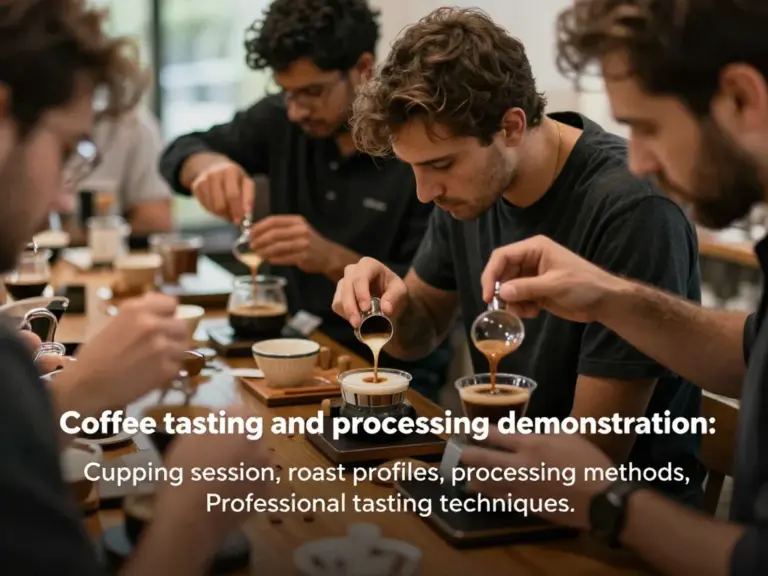
Cupping is the industry standard for evaluating coffee quality. In a tasting and processing demonstration, this is the most interactive part. You will be presented with several bowls of freshly ground coffee. The process involves smelling the dry grounds (fragrance), adding hot water, and then smelling the wet grounds (aroma) after breaking the ‘crust’ with a spoon.
How to Taste Like a Pro
To truly taste like a professional, you must master the ‘slurp.’ By slurping the coffee loudly from a spoon, you aerate the liquid, spreading it across your entire palate and allowing your olfactory system to pick up subtle notes. Look for the following attributes:
- Acidity: Is it bright like a lemon or soft like an apple?
- Body: Does it feel heavy like cream or light like tea?
- Aftertaste: Does the flavor linger pleasantly or disappear quickly?
The Cultural Context of Coffee in Laos
Coffee was introduced to Laos by the French in the early 20th century. Today, it is a vital part of the local economy and tourism. Visiting a local farm for a tasting and processing demonstration supports sustainable agriculture and provides a direct connection between the consumer and the farmer. You aren’t just drinking coffee; you are experiencing the history and resilience of the Lao people.
คำถามที่พบบ่อย (FAQ)
Q1: What should I wear to a coffee farm demonstration?
A: Wear comfortable, breathable clothing and closed-toe shoes, as you may be walking through muddy or uneven plantation grounds.
Q2: How long does a typical tasting and processing demonstration last?
A: Most tours last between 2 to 4 hours, depending on whether a full farm walk is included.
Q3: Can I buy beans directly from the farm?
A: Yes! Most farms offer freshly roasted beans for sale, which makes for an excellent and authentic souvenir.
Q4: Is Lao coffee mostly Arabica or Robusta?
A: Historically, Laos produced a lot of Robusta, but there is a significant and growing specialty Arabica market on the Bolaven Plateau.
References
- Official Laos Tourism Portal
- Specialty Coffee Association (SCA) Resources
- World Coffee Events – Cupping Standards
- Coffee Culture on the Bolaven Plateau: The Ultimate Guide to Coffee Farm Tours, Tastings, and Local Experiences
- Where is the Bolaven Plateau and what makes its coffee culture unique? — Origins, climate, and the people behind the beans
- How to plan and book a coffee farm tour on the Bolaven Plateau — best farms, tour types, seasons, and local guides