When and where does the morning alms procession take place in Luang Prabang, and how can travelers plan to observe it responsibly?
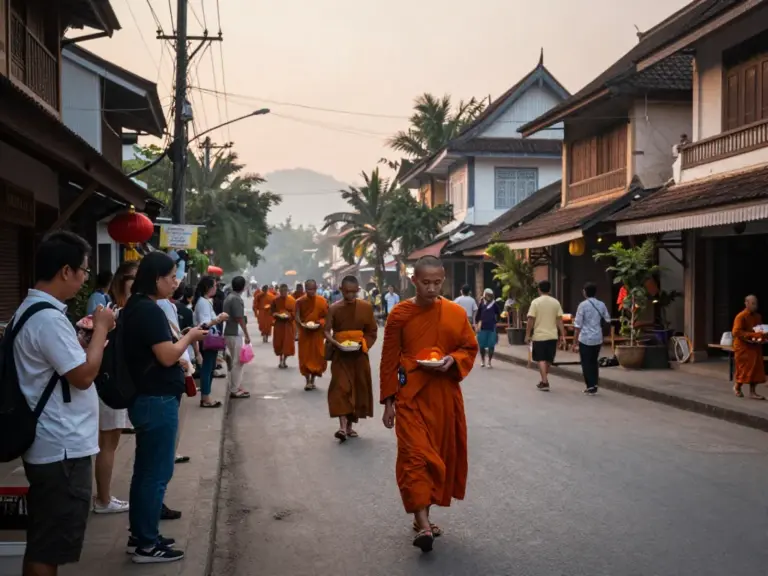
The morning alms procession in Luang Prabang, known locally as Tak Bat, is one of the most sacred and visually stunning spiritual traditions in Southeast Asia. This daily ritual, which has persisted since the 14th century, involves hundreds of saffron-robed monks emerging from the town’s many temples to collect offerings from the local community. For many visitors, witnessing this silent, meditative walk is a highlight of their journey through Laos.
Where to Witness the Morning Alms Procession in Luang Prabang
The procession takes place throughout the UNESCO World Heritage town of Luang Prabang. However, the most popular and dense concentrations of monks can be found along Sisavangvong Road (the main street) and the roads surrounding major temples like Wat Mai and Wat Sen. While the main street offers a grand scale, many travelers find that the side streets and quieter residential areas provide a more authentic and intimate atmosphere for observation.
Planning Your Visit: Time and Logistics
To experience the morning alms procession in Luang Prabang, you must rise early. The monks leave their respective pagodas as the first light of dawn breaks. It is recommended to arrive at your chosen location by 5:15 AM in the summer or 5:45 AM in the winter. This allows you to find a respectful vantage point without rushing or disrupting the locals who are preparing their mats and sticky rice.
How to Observe Tak Bat Responsibly
Responsible tourism is critical to ensuring this living tradition continues. If you wish to participate or observe, follow these essential guidelines to show respect to the monks and the local culture:
- Keep a Respectful Distance: Do not stand in the way of the monks or get too close for photos. Use a zoom lens instead of a flash.
- Dress Modestly: Shoulders, chests, and legs should be covered. A traditional Lao scarf (pha biang) is often worn by participants.
- Maintain Silence: This is a religious ceremony, not a street performance. Keep conversations to a minimum and speak in whispers.
- Positioning: Your head should always be lower than the monks’ heads. If you are observing, do not stand on a chair or elevated platform.
- Participating: If you choose to offer alms, buy fresh rice from the local morning market rather than street vendors selling low-quality rice. Remove your shoes and tuck your feet under you while kneeling.
The Significance of the Ritual
For the people of Luang Prabang, Tak Bat is a way to make merit and support the monastic community. The monks, in turn, provide spiritual guidance to the laity. This symbiotic relationship is the heartbeat of Lao Buddhist culture. By observing the morning alms procession in Luang Prabang with mindfulness, travelers can appreciate the deep spiritual roots that make this town so unique.
คำถามที่พบบ่อย (FAQ)
What time does the alms giving start?
It starts at sunrise, usually around 5:30 AM in the summer and 6:00 AM in the winter.
Can tourists participate in the alms giving?
Yes, tourists can participate, but they must do so with sincere intent and follow all traditional protocols, including dressing modestly and buying fresh rice.
Is there a fee to watch the procession?
No, it is a free religious event. However, travelers are encouraged to support the local community by purchasing offerings from local markets.
Where is the best place to avoid crowds?
Avoid the main Sisavangvong Road and explore the smaller residential streets near the Mekong or Nam Khan rivers for a more peaceful experience.
References
- Official Laos Tourism Portal
- UNESCO World Heritage Centre – Luang Prabang
- Lonely Planet Guide to Luang Prabang
- The Alms Giving Ceremony in Luang Prabang: A Respectful Visitor’s Guide
- What is the alms giving ceremony in Luang Prabang and why is it important for visitors to understand its cultural and religious significance?
- How should visitors prepare and dress appropriately for participating in or observing the alms giving—etiquette, dress code, and items to bring (offerings, photography guidelines)?